 Sewing Techniques
Faux Leather in Black
€8.95per 0.5 m
Unit price €17.90 / m · incl. VAT, plus shipping
Faux Leather in Black: 140 cm wide, 295 g/m², made from 40 % polyester, 4 % polyurethane and 56 % Polyvenylchlorid. Sold by the metre. Wash once before cutting.
in stock
Delivery time approx. 3–5 working days
Free shipping within Germany from €50
- Fabric type
- other
- Material
- 40 % Polyester, 4 % Polyurethan, 56 % Polyvenylchlorid
- Width
- approx. 140 cm
- Weight
- approx. 295 g/m²
- Colour
- Schwarz
- Care
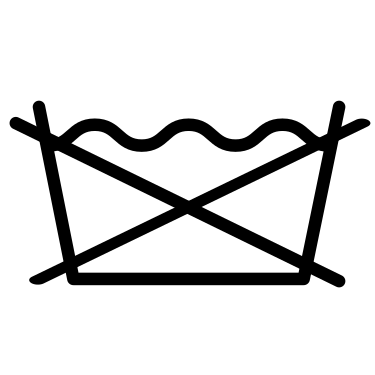
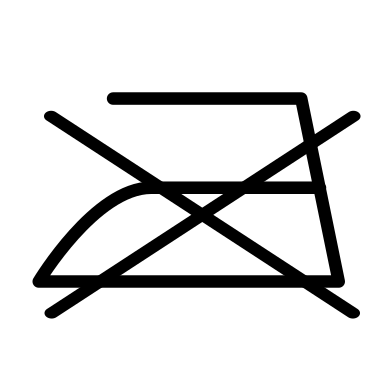
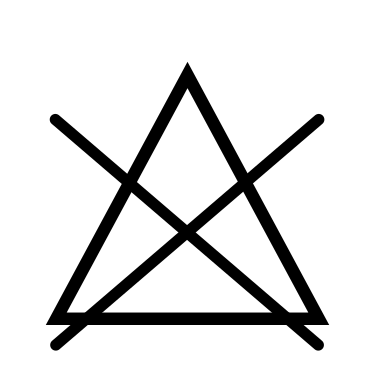
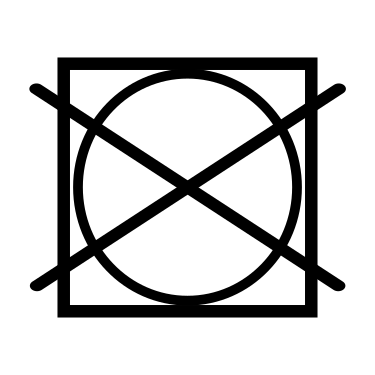
- Do not wash, Do not iron, Wash without fabric softener or bleach, Do not tumble dry
- Muster
- Steppoptik
- Gewicht
- 295 g/m²
- Breite
- 140 cm
Description
Faux leather looks like leather and works like fabric — with no tanning and no animal material. 140 cm wide, 295 g/m² — figures that tell you how heavily the fabric falls. Material: 40 % polyester, 4 % polyurethane and 56 % Polyvenylchlorid.
The tone Black lets cut and silhouette work, because it distracts with neither pattern nor colour. Fabrics with a pile are cut in one direction — otherwise the pieces read differently in brightness. Before cutting, a look at the care symbols on the article pays off. Fabric by the metre is cut in one piece; your ordered length arrives as a single cut.
What Kunstleder Debbie in Steppoptik Schwarz von Swafing is suitable for
- appliqué and patches
- decor and home accessories
- costumes and occasion wear
Care instructions:
Frequently asked questions
Does it suit appliqué?
Very well, especially when it does not fray. Cut the shape, lay it on and stitch around it with a close zigzag or by hand — no finishing needed.
The fabric sheds while cutting — what helps?
A sharp tool and patience. A rotary cutter produces less loose pile than scissors. Afterwards brush out the machine so nothing gathers in the hook area.
What is nap direction?
The direction the pile lies in. Run your hand over it and one way feels smooth, the other rough. All pattern pieces must lie the same way, otherwise they read differently in brightness.
How do I press these fabrics?
From the reverse, at moderate heat and with little pressure. On pile an iron flattens the fibres, and that spot stays visible. A pressing cloth between is always the safer option.