Matching sewing machine needles made easy

Is your seam skipping stitches, your jersey getting tiny holes, or your jeans hem testing your patience? Often it isn't the sewing machine or the fabric that's to blame, but a needle that's unsuitable or blunt. If you know how to match sewing machine needles correctly, you'll sew more neatly, treat your fabric more gently and save yourself lots of failed attempts.
A needle is a small part that wears out, but it has a big impact. It needs to suit the material, the thread weight and sometimes a specific task as well. The good news: with a few simple rules, you'll quickly find the right needle for most projects.
Check the needle system first
Domestic sewing machines usually take needles in the 130/705 H system. You'll find this marking on many needle packets, for example from Organ, Schmetz or Prym. The "H" stands for "Haushalt", German for household. These needles fit the common machines designed for home use.
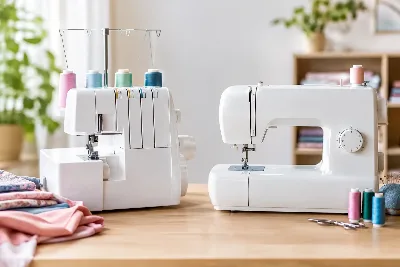
However, not every needle fits every machine. Overlockers and coverstitch machines often need different systems, depending on the model. Older machines and certain specialist machines may differ too. A quick look at your manual saves you from buying the right type of needle only to find you can't actually fit it.
Also important: needles are usually inserted with the flat side of the shank facing the back. That's the case on many domestic machines, but again, your machine's manual has the final say. If the needle isn't pushed all the way up or is in the wrong way round, it can break, make a knocking sound or cause skipped stitches.
Matching sewing machine needles to fabric type
The needle type mainly describes the shape of the point. It's this point that determines whether fibres are pushed aside, pierced or damaged. You don't need to own every specialist needle to get started. With universal, jersey, stretch, denim and Microtex needles, you'll be very well equipped for lots of sewing projects.
Universal needles for many woven fabrics
The universal needle has a slightly rounded point and is the handy all-rounder for woven fabrics. Cotton woven fabric, poplin, canvas, simple blended fabrics and lightweight home décor fabrics can usually be sewn reliably with it.
For a cotton dress, a cushion cover or a simple bag, it's often the right first choice. With very fine, densely woven or coated materials, though, a universal needle can leave visible puncture holes. In that case, a Microtex needle works more precisely.
Jersey needles for knit fabrics
Jersey, sweatshirt fabric, French terry, ribbing and other knits are made up of loops. A sharp universal needle can damage these loops. The result is small holes, ladders or damage that only shows up after washing.
The jersey needle has a ball point. It pushes the loops aside instead of piercing them. That makes it the right choice for jersey T-shirts, leggings, harem trousers or beanies. It's also worth using a jersey needle for drapey viscose jersey, as this fabric can react badly to the wrong kind of puncture.
Stretch needles for very stretchy fabrics
A stretch needle isn't simply another jersey needle. It's specially designed for very stretchy materials and tricky knits. Its special shaft helps to prevent skipped stitches when the fabric gives a lot while you sew.
It's particularly suitable for Lycra, swimwear fabric, sports jersey, stretchy lingerie fabric, power mesh and very stretchy ribbing. If your machine skips stitches on jersey with a jersey needle, a stretch needle is worth a try. On the other hand, not every ordinary cotton jersey necessarily needs a stretch needle.
Denim needles for dense, heavy fabrics
Denim needles are more robustly built and have a slim, strong point. They get through several layers of denim, sturdy canvas, twill, workwear fabrics or thicker bag straps without bending as easily.
A denim needle makes sense for a jeans hem, a sturdy bag or trousers made from firm twill. With several very thick layers, though, even this needle isn't always enough. Sew slowly, use a suitable quality thread and avoid racing over bulky seam intersections at full speed. That protects both the needle and the machine.
Microtex needles for fine and densely woven fabrics
The Microtex needle has a particularly slim, very sharp point. It's a good choice for fine cotton, woven viscose, silk, microfibres, taffeta, thin coated fabrics and precise sewing work.
Its clean punctures are ideal when a seam needs to sit exactly right, for example on collars, delicate blouses or small zip pockets. It isn't intended for stretchy fabrics, however. There, its sharp point can damage the loops.
Leather needles for real leather only
Leather needles have a cutting point that slices a small hole into the material. They aren't automatically the right solution for genuine leather, faux leather with a fabric backing or very thick vinyl. With faux leather in particular, a lot depends on the coating and the backing layer.
Always test on a scrap first. A leather needle leaves permanent holes, which makes it unsuitable for woven fabrics or knits. For thin faux leather, a Microtex or denim needle may work better, depending on the material.
Reading the right needle size
On every packet you'll usually find numbers such as 70/10, 80/12 or 90/14. The first number is the European size, the second the American one. The higher the number, the thicker and sturdier the needle.
As a guide, these combinations cover many projects:
- 60/8 or 70/10 for very fine fabrics such as lightweight woven viscose, fine cotton or silk.
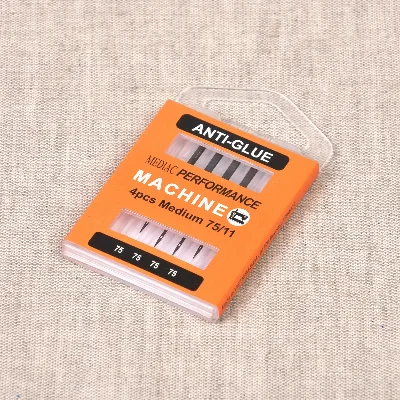
- 75/11 or 80/12 for most blouse fabrics, poplin, regular jersey and medium-weight cotton.
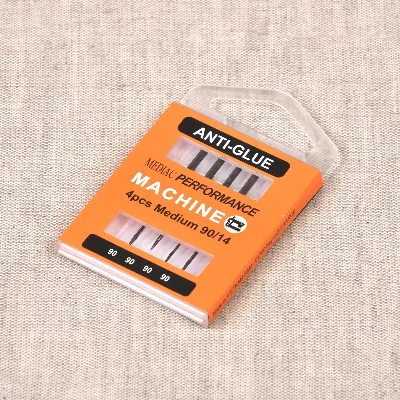
- 90/14 for sweatshirt fabric, softshell, canvas, heavier woven fabrics and multiple layers of fabric.
- 100/16 or 110/18 for heavy denim, very sturdy canvas or heavy-duty bag projects.
The size always needs to suit both the fabric and the thread. A fine thread can look messy with a very thick needle because the puncture hole is too large. Thick thread, on the other hand, runs poorly through an eye that's too small, snaps or leads to uneven stitches.
A practical example: for a cotton jersey T-shirt, a size 75 or 80 jersey needle with ordinary all-purpose thread often works well. For children's trousers in French terry, you might go for a size 80 or 90 jersey needle, depending on the thickness. If you're sewing a canvas rucksack with webbing, a size 90 or 100 denim needle is usually the better choice.
Think of thread, needle and fabric as a team
Even the best needle won't help much if the thread doesn't suit the project. For most garment and home décor sewing, a high-quality all-purpose thread is a reliable basis. For stretchy seams, such as on swimwear or very stretchy hems, elastic thread can be a good idea. In that case, you should use a stretch needle too.
Make sure the thread can run freely through the eye of the needle. If the thread keeps snapping, the cause could be a needle that's too small, but also incorrect thread tension, a damaged needle or poor-quality thread. Don't immediately change every setting on your machine. Check the needle, the threading path and the thread first.
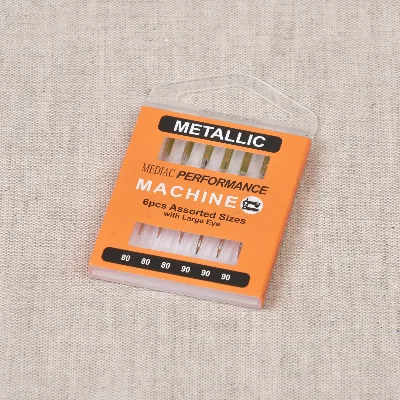
For decorative threads, metallic thread or embroidery thread, specialist needles are helpful. Embroidery needles have a larger eye and reduce friction. Metallic needles are designed for delicate effect threads. For the occasional decorative stitch, this can make the difference between snapped thread and an even result.
How to tell when your needle needs changing
A needle can be blunt or very slightly bent without you being able to see it straight away. Typical warning signs are knocking noises, skipped stitches, snapping thread, uneven stitches or small holes in the fabric. If the machine suddenly pulls the fabric or the seam puckers, it's also worth changing the needle.
As a handy rule of thumb, fit a new needle after roughly one larger project or after around eight hours of sewing. You should also change it after a needle breaks, after sewing over pins, or when switching from a very heavy fabric to a very fine one. Needles cost very little – damaging your favourite fabric costs a lot more in nerves.
Keep opened needle packets organised and label them if the sizes are no longer clearly visible. That way, you won't accidentally reach for the denim needle for your delicate viscose jersey on your next project.
When matching still doesn't work
Fabrics aren't always clear-cut. A thick, very stretchy sweatshirt fabric might sew beautifully with a size 90 jersey needle, while another of the same weight produces skipped stitches and needs a stretch needle. Coated fabrics, faux leather and softshell also vary considerably from one manufacturer to another.
So before starting the actual project, sew a small test sample with several layers of fabric. Test straight stitch, zigzag or whichever stitch you plan to use later. Don't just look at the top: the underside of the seam reveals whether the thread tension, stitch length and needle all work together.
If you're unsure, take a fabric scrap and make a note of which needle and thread worked well. Over time, you'll build up your own little sewing reference file. And if you still have questions about choosing materials, expert advice often gets you there faster than lots of guesswork. A well-chosen needle gives your project exactly the smooth, neat foundation it deserves.
Matching categories
Matching products
Machine Needles Anti-Glue 90/14, 4 pieces
€5.90per piece
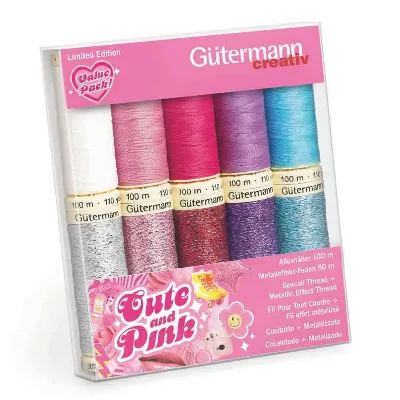
Thread, Hot Pink
€20.70per piece
Machine Needles Anti-Glue 75/11, 4 pieces
€5.90per piece
Appliqué, Hot Pink
€20.20per piece
Machine Needles Metallic, assorted, 6 pieces
€4.90per piece
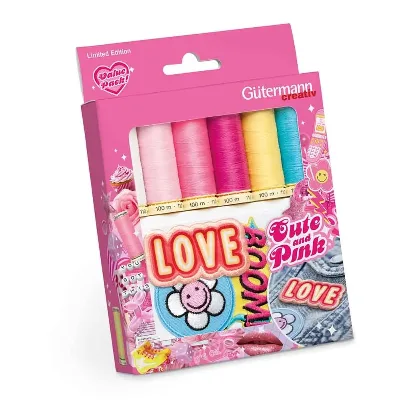
Gütermann Cute and Pink Nähfaden-Box, Hot Pink
€19.30per piece