How to Stiffen Fabric: Which Methods Work Best?
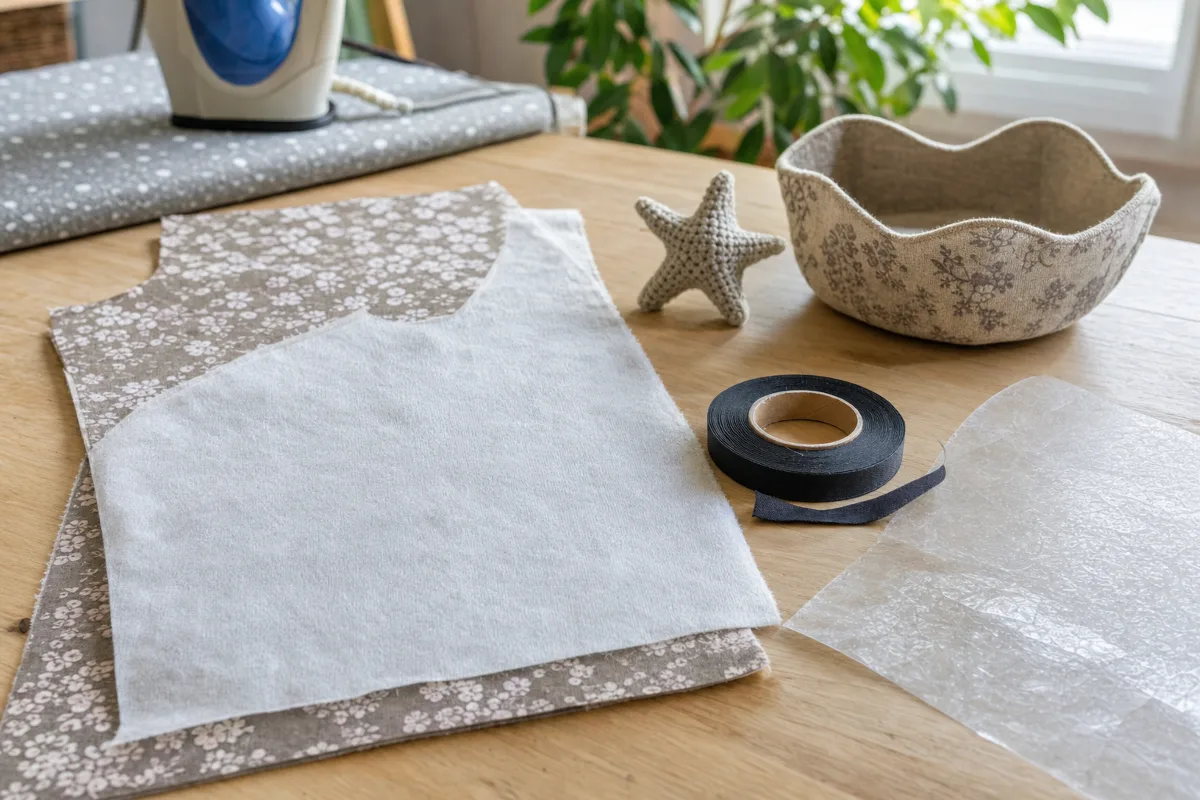
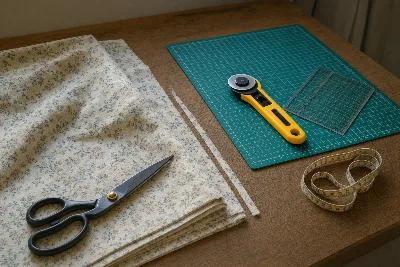
Image created with AI
The best way to stiffen fabric depends on whether the stiffness needs to last or is only needed while you sew. For permanently firm pieces such as bags, collars, waistbands or belts, fusible interfacing is the first choice: it bonds with the fabric and survives the wash. Edges and seams that shouldn't stretch out of shape can be stabilised precisely with a narrow stay tape.
If you only need support temporarily, for example when embroidering, appliquéing or sewing very fine fabrics, reach for an embroidery stabiliser: tear-away stabiliser is removed after sewing, while water-soluble stabiliser simply washes out. For decorations, crochet stars or a crisp shirt collar until the next wash, starch, sugar water or liquid fabric stiffener will do the job.
The methods compared
| Method | Effect | Lasts | Typical use |
|---|---|---|---|
| Fusible interfacing | firmer across the whole area, holds its shape | permanent, washable | bags, collars, cuffs, waistbands |
| Stay tape | edge or seam becomes stable | permanent, washable | shoulder seams, pocket edges, necklines |
| Iron-on tear-away stabiliser | fabric lies smooth and firm while sewing | until torn away | embroidery, appliqué, decorative stitches |
| Water-soluble stabiliser | support that disappears without a trace | until washed out | fine and sheer fabrics, freestanding embroidery |
| Starch | light to medium firmness | until the next wash | shirt collars, table linen, cutting slippery fabrics |
| Fabric stiffener or sugar water | firm to hard, mouldable | until exposed to moisture or washed | decorations, crochet stars, bows, little baskets |
Stiffening permanently with interfacing
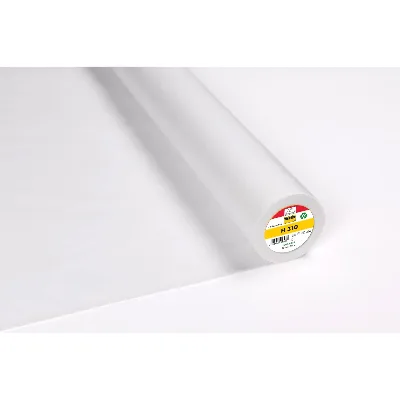
Fusible interfacing is the classic choice when a sewn piece needs to keep its shape. The coated side contains an adhesive that melts under heat and pressure and bonds with the fabric. Our Vlieseline H310 is 90 cm wide and made from 100% R-PES, i.e. recycled polyester. You fuse it at a medium temperature, and the finished piece can be washed at 30 °C.
How to fuse interfacing properly
- Place the interfacing with the adhesive side (it looks shiny or feels rough) on the wrong side of the fabric.
- Lay a pressing cloth on top so no adhesive gets onto the soleplate.
- Press the iron down section by section and apply firm pressure – don't slide it back and forth, or the interfacing will distort.
- Leave the piece to cool lying flat before you move it. The adhesive sets as it cools.
With firmer interfacings, it's worth trimming the seam allowance off the interfacing. That way, your seams won't become unnecessarily bulky. We explain in detail which interfacing suits which bag pieces in our guide Which interfacing for bags?. For delicate outer fabrics, you'll find tips in Which Vlieseline really works for blouses?. The full range is in our Fusing, Reinforcing & Interfacing category.
Stabilising edges precisely
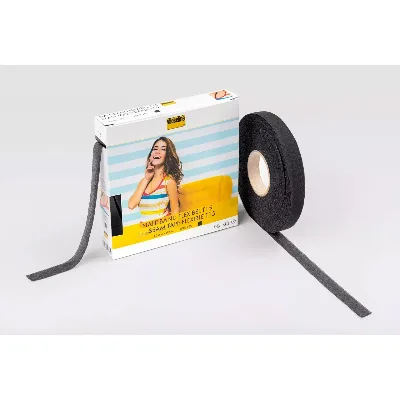
You don't always want the whole piece to be stiff. Often it's enough to secure an edge or seam so it doesn't stretch – for example on shoulder seams, pocket openings or bias-cut necklines. That's exactly what Vlieseline Flexible Stay Tape T15 is for: 15 mm wide and made from 100% polyester. It's fused at a low temperature. Wash the finished piece at 30 °C without fabric softener or bleach, and keep it out of the tumble dryer. The black version is handy for dark fabrics because nothing shows through.
Stiffening temporarily: embroidery stabiliser
When embroidering and appliquéing, the fabric needs to stay still under the needle but drape softly again afterwards. This is where you use stabilisers that disappear once you've finished sewing. Our Embroidery Stabiliser category gives you an overview, and in our guide The best stabilisers for embroidery we go into the choice in more depth.
Iron-on tear-away stabiliser
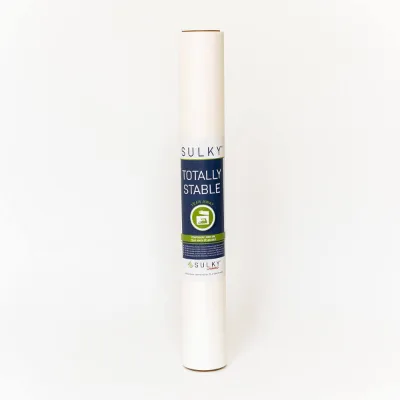
Simply iron Totally Stable by Sulky lightly onto the wrong side of the fabric, embroider or sew your design, then carefully tear the stabiliser away. It's made from 75% cellulose and 25% polyester and is certified to OEKO-TEX® Standard 100. It comes in 25 cm and 50 cm widths, in white for light fabrics and black for dark ones.
Water-soluble stabilisers and films
With fine, sheer fabrics or lace, leftover bits of stabiliser would spoil the look. Water-soluble stabilisers simply dissolve in water after sewing:
- Ultra Solvy by Sulky: a transparent film, 50 cm wide and 80 µ thick, made from 75% polyvinyl alcohol and 25% additives. It also works as a topper on towelling or plush so stitches don't sink into the pile.
- Sticky Fabri-Solvy by Sulky: a self-adhesive, printable stabiliser in sheets of 21.5 cm × 28 cm. Print your design onto it, stick the sheet onto the fabric and stitch along the lines – ideal for hand embroidery.
- Paper Solvy by Sulky: water-soluble paper made from 65% cellulose and 35% carboxymethyl cellulose, sheet size 21.6 cm × 28 cm. It gives fine fabrics support while sewing.
If you want a stabiliser to stick to the fabric without ironing or pins, a temporary spray adhesive such as KK 100 by Gunold from our Spray Adhesive category will help. It only holds the layers together for as long as you need to work on them. Always spray the stabiliser, not the fabric, and never near your sewing machine.
Stiffening without interfacing: starch, sugar water, fabric stiffener
Starch is the gentlest method. Spray starch is applied while ironing, while liquid laundry starch is diluted for a dipping bath. The more starch you use, the firmer the fabric becomes. The effect is gone after the next wash.
Sugar water is a household remedy for crochet stars, snowflakes or bows: dissolve plenty of sugar in hot water, soak the piece in it, shape it and leave it to dry completely. It becomes nice and firm, but softens again in humid air and can feel slightly sticky – so it's best for decorations that hang somewhere dry.
Liquid fabric stiffener works in a similar way but makes fabric harder and more durable. Dip or brush the piece, shape it over a bowl, a ball or a cardboard form and let it dry thoroughly. This is how you can make little baskets, decorative bowls or hat shapes. Follow the manufacturer's instructions, as the result will be more or less water-resistant depending on the product.
Common mistakes
- Starting without a test piece: interfacing and outer fabric react differently to heat. A small test shows whether bubbles form or the fabric becomes too stiff.
- Sliding the iron instead of pressing: the interfacing distorts and the adhesive bonds unevenly.
- Ironing too hot: fine or synthetic fabrics can go shiny or melt, and the adhesive seeps through.
- Moving the piece straight after ironing: while the adhesive is still warm, the interfacing can easily come loose again.
- Too much stiffness: an interfacing that's too firm makes clothes look like a board. It's better to choose something a little softer and only reinforce the edges if needed.
- The wrong stabiliser for embroidery: tear-away stabiliser under tulle or organza leaves visible remnants – water-soluble stabiliser is the better choice there.
- Sugar water on everyday textiles: it won't hold on clothes or bags and gets sticky when damp.
If you're unsure which method suits your fabric, feel free to bring it along to our shop in Neumarkt-Woffenbach – there you can touch and compare interfacings and stabilisers in person.
Frequently asked questions
How can I stiffen fabric without sewing?
For decorations, liquid fabric stiffener, sugar water or starch are all suitable. Soak the fabric, shape it and leave it to dry. For clothes or bags that will be washed, fusible interfacing is the longer-lasting solution.
Can you iron fusible interfacing onto a finished piece afterwards?
Only if you can easily reach the wrong side of the fabric, for example on open collars or unlined pieces. With lined items, it's better to unpick a seam, fuse the interfacing and then close the seam again.
How do I soften fabric again if it's become too stiff?
Starch and sugar water can be washed out. Fused interfacing, on the other hand, stays bonded to the fabric, as does a water-resistant fabric stiffener. So test on a scrap first to see how firm the result will be.
Which side of fusible interfacing goes on the fabric?
The coated side with the adhesive goes on the wrong side of the fabric. You can recognise it by small shiny dots or by the fact that it feels rougher than the other side.
Can I stiffen fabric for cutting?
Yes, slippery or very fine fabrics such as chiffon are much easier to cut and sew with spray starch, because they shift around less.
Matching categories
Matching products
Vlieseline hemming tape T15 15mm in Black
€0.68per 0.5 m
Unit price €1.35 / m
Vlieseline fusible interfacing H310 in White
€4.75per 0.5 m
Unit price €9.50 / m
Sulky Totally Stable 50 cm × 10 m in White
€23.00per piece
Unit price €4.60 / m²