Sewing Cork Fabric: Tips for Bags and Accessories
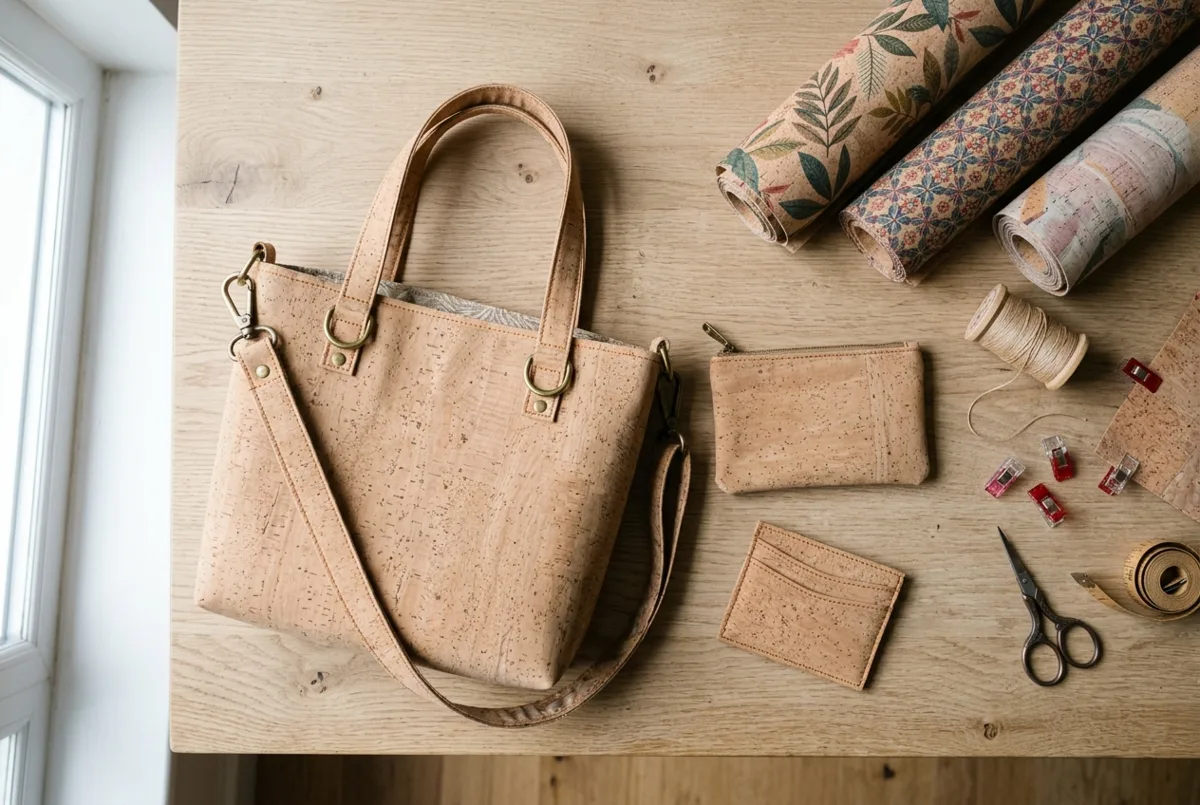
Image created with AI
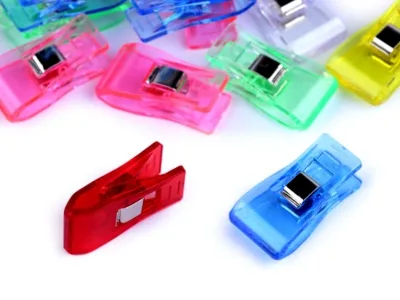
You can sew cork fabric on a perfectly ordinary domestic sewing machine. Four things make all the difference: hold the layers together with clips rather than pins, use a sturdy size 90 needle, set a longer stitch length of 3 to 4 mm and get it right first time. Every needle hole stays visible in cork, so a test piece is well worth it.
The big advantage: the cut edges don't fray. You can leave them raw and edgestitch them, which gives bags, cases and keyrings a clean, almost leather-like look.
What makes cork fabric special
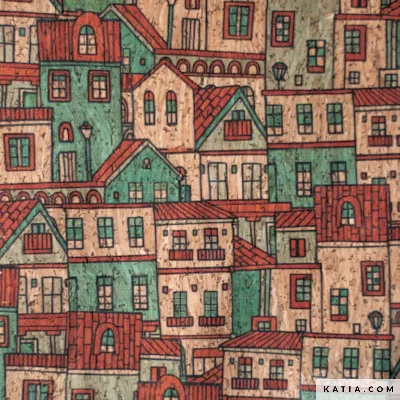
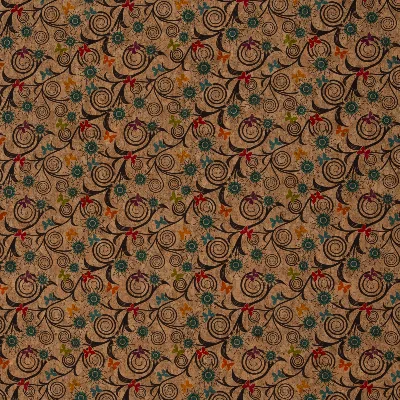
Cork fabric consists of a thin wood surface bonded to a textile backing. This makes it as flexible as a sturdy fabric while looking just like cork. The composition varies from fabric to fabric: our Houses cork fabric is 50% wood and 50% polyester and weighs around 122 g/m². That makes it lighter than the next two fabrics. The cork fabric with flowers and butterflies and the cork fabric with graffiti lettering are made of 14% cotton, 60% wood surface and 26% polyester and weigh about 160 g/m².
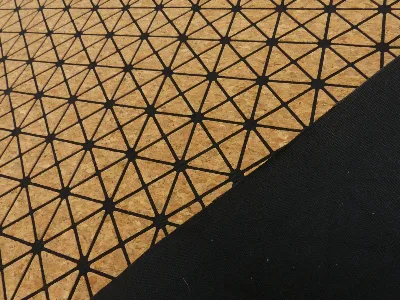
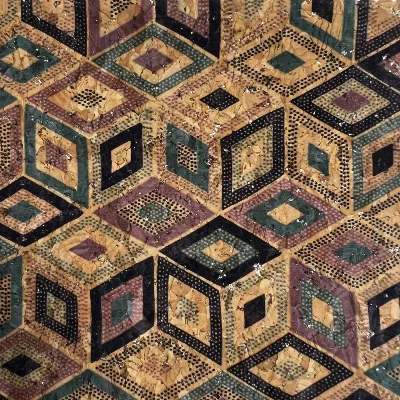
The cork fabric cut piece with dice is considerably sturdier at around 295 g/m². It holds its shape even without much interfacing and is ideal for pieces that need to stand up on their own. If you're looking for a ready-made piece for a bag, take a look at the cork panel with squares and canvas backing: the canvas backing adds extra stability. You'll find an overview of all the options in our cork fabric category.
Our cork fabrics at a glance
| Fabric | Composition | Size |
|---|---|---|
| Houses cork fabric | 50% wood, 50% polyester | approx. 67 cm wide |
| Cork fabric with flowers and butterflies | 14% cotton, 60% wood surface, 26% polyester | approx. 65 cm wide |
| Cork fabric with graffiti lettering | 14% cotton, 60% wood surface, 26% polyester | approx. 65 cm wide |
| Cork panel with squares and canvas backing | 14% cotton, 60% wood, 26% polyester | Panel approx. 100 × 60 cm |
| Cork fabric cut piece with dice | 14% cotton, 60% wood, 26% polyester | Cut piece 50 × 67.5 cm |
Cutting and preparation
Lay the cork fabric right side down and transfer the sewing pattern onto the back with a pencil or chalk. Cut with sharp fabric scissors or a rotary cutter in one smooth stroke for clean edges. Because the edges don't fray, you can leave visible edges unfinished later on.
When it comes to clips, size matters. For long, straight edges and several layers, the Wonderclips Large at 18 × 33 mm grip well, while the 4 × 27 mm mini clips are fine for small cases and tight curves. The 12 × 56 mm Wonderclips are handy too, as they reach well into the fabric.
If you need more structure, for example for a large bag made from the lighter cork fabric, add interfacing to the back. As cork fabric mustn't be ironed, use sew-in interfacing or simply tack the interfacing in place within the seam allowance. We explain which option suits your project in our guide Which interfacing for bags?.
Sewing: needle, stitch and seams
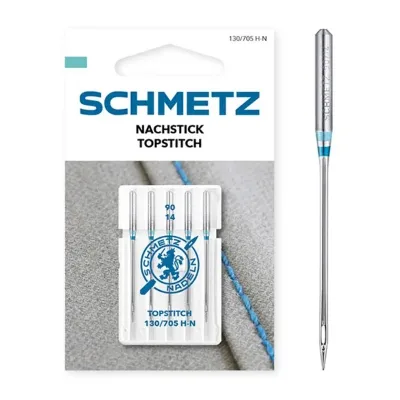
A size 90 needle pierces cork and backing cleanly. The Schmetz topstitch needles in size 90 have an extra-large eye, so even thicker topstitching thread runs smoothly. For topstitching visible edges, a stitch length of around 4 mm looks especially good; for construction seams, about 3 mm is enough.
Instead of backstitching several times at the start of a seam, you can leave the threads long, pull them through to the back and knot them. That way you avoid a dense row of holes that would weaken the cork. Sew evenly and fairly slowly, especially over bulky areas where several layers meet.
Seam allowances and corners
Cork fabric gets bulky in the seam allowances. After sewing, trim the allowances back to about half and clip the corners diagonally so they lie flat once turned. On curves, it helps to snip into the allowance at small intervals without cutting the seam. Instead of pressing, smooth the seam allowances open with your fingers and keep them flat with clips or a line of edgestitching.
Turning, lining and hardware
Plan a more generous turning gap for cork bags than you would for cotton, so you can turn the piece without pulling hard. Then shape the corners from the inside with a blunt tool, not with pointed scissors. For a matching inside, see our guide Choosing lining fabric for bags.
For handles and straps, the Rainbow bag hardware set in 32 mm is a great choice: with two swivel clasps, two D-rings and a slider buckle, you can make an adjustable, detachable shoulder strap. The loops for the D-rings are best sewn from a folded strip of cork, which is strong enough and doesn't fray at the edges. To protect the bottom of the bag, fit bag feet – for example our 12 mm diameter bag feet in antique brass or nickel. Fit them before you join the base to the side panels, and back the spot with a piece of interfacing or cork so they don't tear out.
Ideas for cork bags and accessories
- Pencil cases and glasses cases in the lightweight Houses cork fabric
- Purses and card holders with raw, topstitched edges
- Make-up bags and wash bags with a zip
- A tote or crossbody bag made from the panel with canvas backing
- Fabric storage baskets and little baskets from the sturdy cut piece with dice
- Keyrings and bookmarks from leftovers
Common mistakes
- Stitches too short: Closely spaced needle holes perforate the cork like a tear-off line.
- Iron directly on the cork: The surface can be damaged.
- Turning gap too small: The piece gets squashed when turned and ends up with creases.
- Too many layers where seams cross: Without trimmed allowances, the machine stalls and the stitches become uneven.
If you'd rather feel fabrics before making your choice, you can get advice in person at our shop in Neumarkt-Woffenbach.
Frequently asked questions
Can you wash cork fabric?
No, the cork fabrics mentioned here shouldn't be washed, ironed or tumble dried. It's best to wipe off any marks with a slightly damp cloth and leave the area to air dry.
Which presser foot is best for cork fabric?
The standard foot usually works fine. If the cork surface sticks on top while you're topstitching, a Teflon foot or a walking foot helps, as the fabric is then fed through evenly.
What do I need to bear in mind with self-adhesive cork fabric?
Adhesive tends to build up on the needle as you sew, causing skipped stitches. That's what anti-glue needles are for, for example in size 90/14 – their coating repels adhesive residue. For pure craft projects with no stitching, you can simply stick self-adhesive cork in place.
Is cork fabric suitable for sewing beginners?
Yes, because it doesn't fray, hardly distorts and is forgiving of slightly uneven cut edges. Start with a small, flat project such as a pencil case or card holder before you tackle a bag with a base and lining.
Can you glue cork fabric instead of sewing it?
Fabric glue works well for small decorative pieces or for holding layers in place before sewing. For bags that will carry weight, though, you should also sew the pieces so that handles and seams hold for the long term.
Matching categories
Matching products
Cork Fabric in Multicolour
€8.45per 0.5 m
Unit price €16.90 / m
Cork Fabric Flowers in Brown Multicolour
€7.45per 0.5 m
Unit price €14.90 / m
Canvas Black
€37.90per piece
Unit price €63.17 / m²
Second Quality Korkstoff in Petrol
€7.50per piece
Unit price €22.22 / m²
Bag Hardware Set 32 mm Rainbow, 5 Pieces
€5.90per piece
Wonderclips / Stoffklammern Groß
€3.50per piece
Machine Needles
€4.90per piece