What Is Gobelin Fabric and What Is It Good For?

Image created with AI
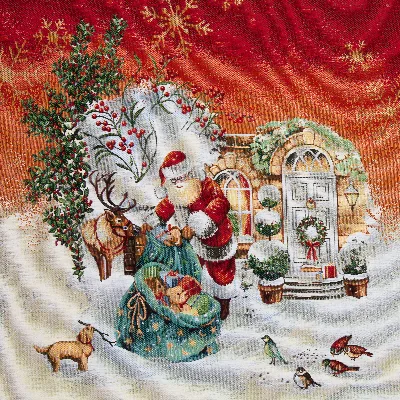
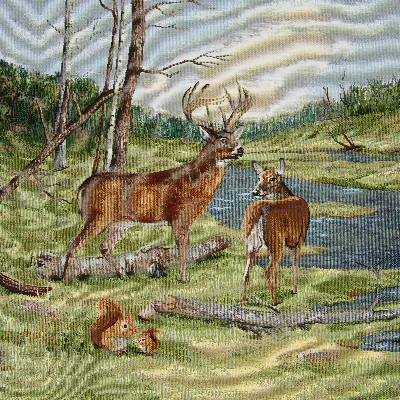
Gobelin is a tightly woven jacquard fabric in which the motif isn't printed on but woven directly into the cloth using threads of different colours. This makes it look like a miniature tapestry: rich in colour, with a slightly raised surface and a pleasantly firm handle. The Gobelins featured here are panels – individual, ready-composed pictures in cushion size.
Gobelin works best for decorative cushions, wall hangings, small bags and covers for stools or seat pads. It's not really suited to garments that need to move and drape, as it's too stiff and not fluid enough.
Where the name comes from and how Gobelin is woven
The name goes back to the Gobelin family of dyers in Paris, whose workshops later became home to the famous tapestry manufactory. Those tapestries were still woven by hand. The Gobelin fabric you buy today, on the other hand, is made on jacquard looms, which control each warp thread individually and can therefore weave highly detailed pictures.
The reverse side is typical of Gobelin: there you'll see the motif in different colour proportions, often with longer floating threads (floats) that aren't needed on the front at that point. These floats are part of the weaving technique and not a flaw, but they can catch on sharp objects.
Gobelin panels: pictures ready to sew
In our Gobelin category you'll find panels with portraits such as Charlie Chaplin, Marilyn Monroe or Bob Marley, plus the Gobelin panel with stags for country-style and winter decor. These panels measure approx. 47 × 47 cm and are made of 22 % cotton, 3 % polyacrylic and 75 % polyester.
For the run-up to Christmas there's the Father Christmas Gobelin cushion panel. At approx. 45 × 45 cm it's slightly smaller and is woven from 50 % cotton and 50 % polyester, so it contains noticeably more cotton.
If you'd rather have the Gobelin look by the metre, take a look at our cotton jacquards. The ones mentioned here are 100 % cotton and range from light to heavy: the vintage-style cotton jacquard weighs around 110 g/m², the Xaver cotton jacquard by Swafing around 220 g/m² and the Long Story cotton jacquard by Swafing around 250 g/m².
The fabrics mentioned here at a glance
| Fabric | Material | Size/width | Use | Needle |
|---|---|---|---|---|
| Gobelin panels (Chaplin, Monroe, Marley, stags) | 22 % cotton, 3 % polyacrylic, 75 % polyester | approx. 47 × 47 cm | Cushion front, wall hanging, bag front | Universal 90 |
| Father Christmas Gobelin cushion panel | 50 % cotton, 50 % polyester | approx. 45 × 45 cm | Christmas cushions | Universal 90 |
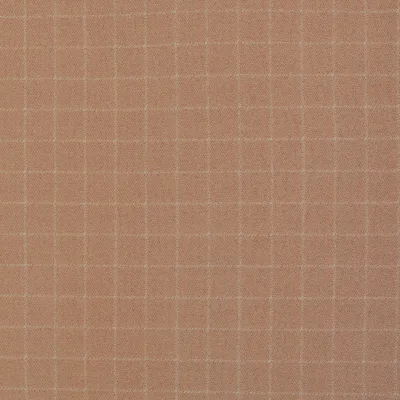
| Vintage-style cotton jacquard | 100 % cotton | approx. 140 cm | Table runners, curtains, light decor | Universal 70–80 |
| Xaver cotton jacquard by Swafing | 100 % cotton | approx. 137 cm | Cushions, bags, cushion backs | Universal 80–90 |
| Long Story cotton jacquard by Swafing | 100 % cotton | approx. 140 cm | Bags, cushions, decor | Universal 90 |
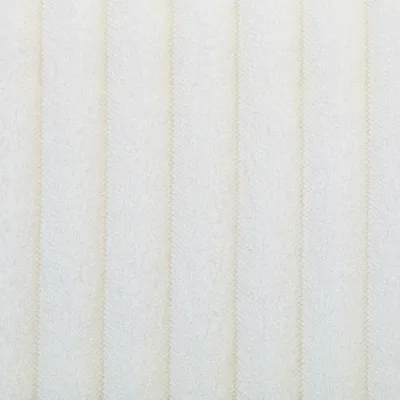
| Plön plush wide-wale cord by Swafing | 100 % polyester | approx. 140 cm | Cushion backs, upholstery | Universal 100 |
What Gobelin is good for
Decorative cushions
The classic. The panel becomes the front and you sew the back from a matching fabric. If you allow a 1 cm seam allowance all round on the 47 cm panels, you'll end up with a 45 × 45 cm cushion cover to fit a cushion pad of the same size. With the same seam allowance, the Father Christmas panel gives you a cover of roughly 43 × 43 cm; a 45 cm pad will fill it out nice and plump.
A cosy upholstery fabric from our upholstery fabrics category is ideal for the back. The Plön plush wide-wale cord by Swafing weighs around 420 g/m², making it very firm, while the Montevideo plush wide-wale cord by Swafing is a little lighter at around 350 g/m². Both match the weight of the sturdy Gobelin well. A cotton jacquard back, on the other hand, makes the cushion a little softer.
Bags and small covers
Gobelin is hard-wearing and holds its shape, which is why it has always been a popular choice for bags. One panel is enough for the front of a small shoulder bag or clutch. To protect the bottom of the bag when you put it down, you can add antique brass bag feet with a 12 mm diameter, which go nicely with warm Gobelin tones; a base insert gives the bottom its stability. You can also sew stool covers or chair pads from a panel.
Sewing Gobelin: how to get it right
- Line your cutting up with the motif: Cut along the woven-in edge of the picture rather than by eye. That way the motif will sit centrally later on.
- Finish edges straight away: Gobelin frays quickly at cut edges. Finish all the edges immediately after cutting with an overlocker or a wide zigzag stitch.
- Clips instead of pins: Fabric clips hold the layers together without pulling out the floating threads on the reverse.
- Stitch and needle: Use a straight stitch with a stitch length of about 3 mm and a sturdy universal needle in size 90; when combining it with thick plush cord, you can go up to a 100.
- Take thick spots slowly: Several layers meet at the corners. Sew slowly here and trim the seam allowance diagonally before turning.
Common mistakes
- Leaving edges unfinished: Threads come loose just from handling the fabric, and the motif frays at the edge.
- Using too fine a needle: A size 70 needle can break in the dense weave or skip stitches.
- Cutting the panel crooked: If you cut along the fabric edge instead of following the picture, you'll end up with a distorted motif.
- Choosing a lightweight back: A very thin fabric will pull out of shape next to the firm Gobelin, making the cushion look lopsided.
- Overlooking the reverse side: The floating threads can catch on zips or hook-and-loop tape. In bags, a lining protects them.
Feel the fabrics and sew together
Gobelin feels quite different in your hands than it looks on screen. In our shop in Neumarkt-Woffenbach you can lay panels and matching backing fabrics side by side. And if you'd rather not sew your first Gobelin cushion on your own, you'll find a sewing space and help in the Royal Sewing Room.
Frequently asked questions
What's the difference between Gobelin and jacquard?
Jacquard is the umbrella term for fabrics whose pattern is woven in on a jacquard loom. Gobelin is one type of it: with its many colours and pictorial motifs it imitates historical tapestries, whereas jacquard also includes simple patterns such as checks or ornaments.
How do I wash Gobelin fabric?
Wash the Gobelin panels mentioned here at 30 °C without fabric softener or bleach, and don't put them in the tumble dryer. Iron them on a low setting only, ideally on the reverse. The cotton jacquards are also washed at 30 °C but should not be ironed.
Is Gobelin suitable as an upholstery fabric?
Yes, for small areas such as stool covers, seat cushions or chair pads, as Gobelin is firm and hard-wearing. The panels are limited to cushion size, though. For armchairs or sofas you'll need fabric by the metre, such as a plush wide-wale cord.
Can I use a Gobelin panel as a wall hanging?
Yes, it's a lovely alternative to a cushion. Stretch the panel over a canvas stretcher frame and staple it in place on the back, or sew a casing along the top for a wooden batten and hang it like a small tapestry.
Matching categories
Matching products
Jacquard / Gobelin
€6.50per piece
Unit price €29.41 / m²
Jacquard / Gobelin
€6.50per piece
Unit price €29.41 / m²
Plush Wide Cord Montevideo by Swafing Natural White
€7.95per 0.5 m
Unit price €15.90 / m
Plush Wide-Wale Corduroy Plön by Swafing Beige
€8.45per 0.5 m
Unit price €16.90 / m
Woven Jacquard Check in Peach
€8.45per 0.5 m
Unit price €16.90 / m
Bag Foot Stud, Antique Brass, 12 mm
€1.50per piece