Microtex Needle: Which Fabrics Is It For?
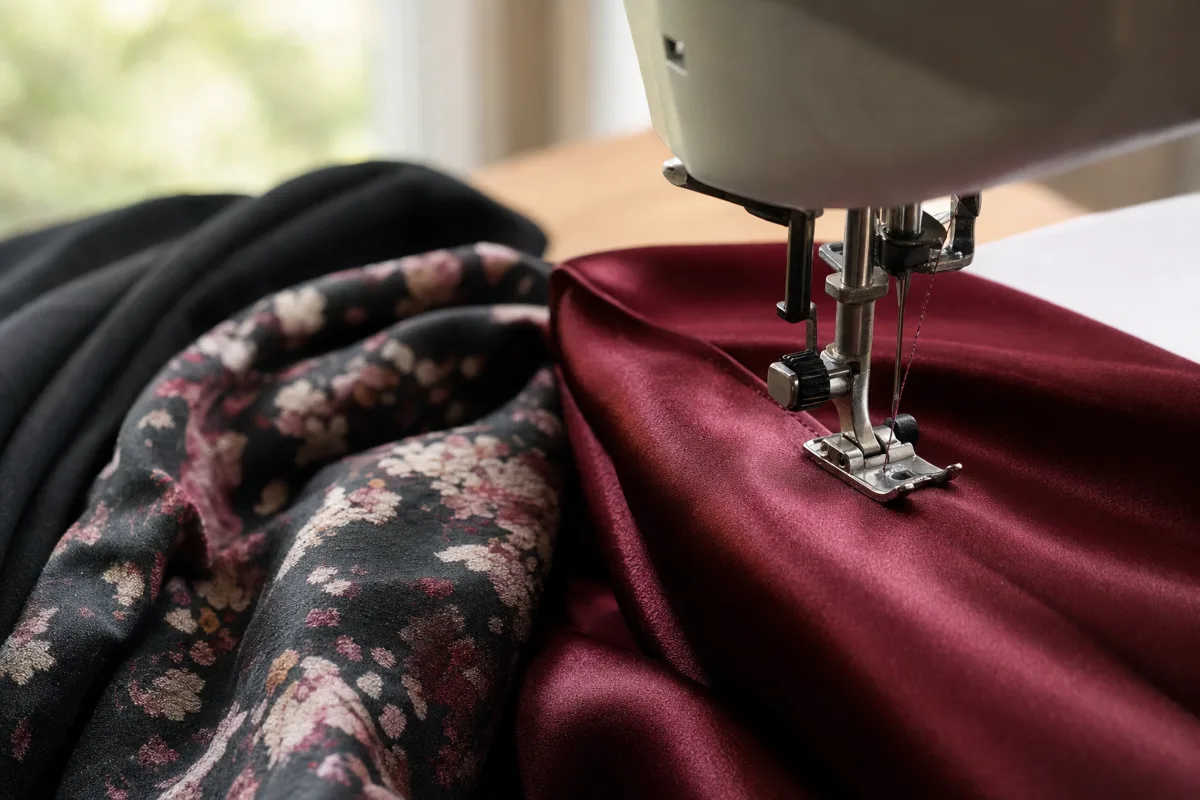
Image created with AI
The Microtex needle is designed for fine, densely woven fabrics: microfibre, polyester satin, silk, woven viscose, cotton sateen, taffeta and coated materials. Its point is especially slim and sharp. It pierces cleanly between the tightly packed threads instead of pushing them aside or snagging them.
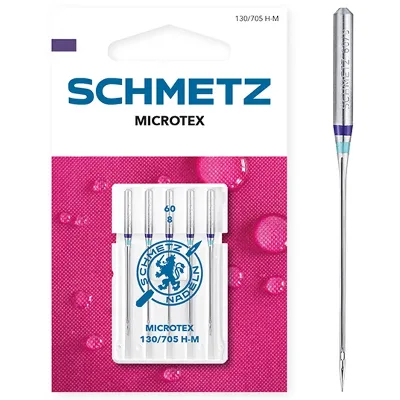
For lightweight fabrics such as the satins and viscoses mentioned here, size 60/8 or 70/10 is ideal. Our Schmetz Microtex in size 60 is made precisely for these fine woven fabrics.
What makes the Microtex needle special?
The Microtex uses the 130/705 H-M system. That's the standard for domestic sewing machines, so it fits most common models. The “M” stands for its special point: long, slim and tapering to a very sharp tip.
In densely woven synthetics and microfibres, the threads lie so close together that a rounder point has to force them apart. You'll notice it later: the fabric puckers along the seam, or individual threads get pulled out and shine as loops on the surface. The sharp Microtex point pierces the weave cleanly and leaves only a tiny hole. This matters especially with shiny fabrics, because every irregularity catches the light.
Choosing the right size
The number on the needle tells you its diameter. A size 60 needle measures 0.6 mm at the blade above the eye; the shank is thicker. The second number (8) is the American designation for the same size. Rule of thumb: the lighter and finer the fabric, the thinner the needle. A needle that's too thick punches visible holes in satin and viscose. One that's too thin will bend or break on dense layers.
Which fabrics suit the Microtex?
The table below shows the fabrics mentioned here and which needle to use for each.
| Fabric | Composition | Weight | Recommended needle |
|---|---|---|---|
| Polyester satin | 100% polyester | approx. 90 g/m² | Microtex 60/8 |
| Plain viscose | 100% viscose | approx. 110 g/m² | Microtex 60/8 to 70/10 |
| Cotton sateen | 100% cotton | approx. 115 g/m² | Microtex 60/8 to 70/10 |
| Viscose twill | 100% viscose | approx. 130 g/m² | Microtex 70/10 |
| Viscose Peonies by Swafing | 100% viscose | approx. 135 g/m² | Microtex 70/10 |
| Softshell by Swafing | 100% polyester | approx. 300 g/m² | a heavier needle, 80/12 to 90/14 |
Satin: the classic Microtex fabric
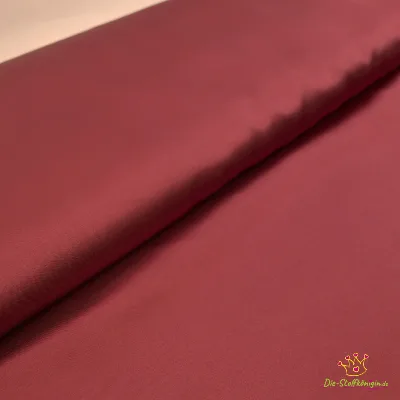
Our Burgundy Satin weighs around 90 g/m² and is made of pure polyester, so a size 60 Microtex suits it well. With polyester satin in particular, with its smooth, long floats, you'll see the difference straight away. The cotton sateens with floral and retro graphic prints from our satin category also sew up beautifully precisely with the Microtex. At around 115 g/m² they have a little more body, but are still fine enough for size 60 or 70.
Viscose: flowing and slippery
Woven viscose drapes wonderfully softly but distorts easily under the presser foot. On our Plain Viscose in Black, at around 110 g/m², the Microtex leaves only fine needle holes that are barely noticeable on the dark fabric. The slightly heavier twill and printed viscoses from our viscose range, at 130 to 135 g/m², take size 70/10 well. For viscose blouses and dresses, the Microtex is a great choice.
Softshell: better suited to thicker needles
Our Swafing softshells may be polyester, but they weigh around 300 g/m². A size 60 needle is too fine for that. Here you'll want a sturdier size of around 80/12 to 90/14. If your softshell has noticeable stretch, a stretch needle is the safer choice.
Microtex for patchwork and precise stitching
The slim point lands exactly where you guide it. That's why many quilters like to use the Microtex for piecing patchwork when every millimetre counts. If you're planning a project right now, our guide Choosing the right fabrics for patchwork projects will help you pick the perfect fabrics.
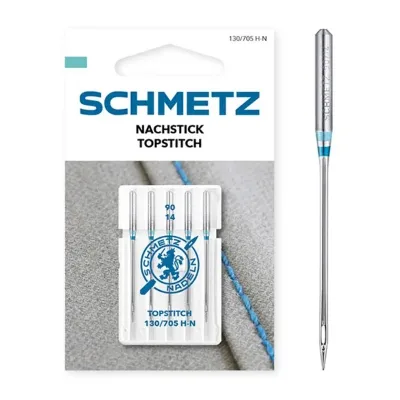
The Microtex isn't designed for visible decorative stitching with thick thread or metallic thread, though, as its eye is narrow. For that there's the Schmetz Topstitch/Metallic 90 with a larger eye. You'll find more specialist needles, such as the anti-glue needle, among our machine needles.
How to sew with the Microtex
- Choose a fine thread: A size 60 or 70 needle pairs well with a thin sewing thread. A thick thread rubs in the narrow eye and snaps.
- Adjust your stitch length: For lightweight fabrics, a stitch length of 2 to 2.5 mm works well. Very short stitches perforate fine fabrics too much.
- Sew a test seam: Stitch on a double layer of scrap fabric first. This lets you check the thread tension and needle size.
- Start slowly: Hold both threads briefly as you begin so the fabric doesn't get pulled down into the needle plate hole.
Common mistakes
- Using a Microtex on jersey: The sharp point can cut through the loops of knit fabrics, causing holes and ladders. Find out which needle to use instead in our guide Which needle for jersey?.
- Too thick a needle on satin: A size 90 leaves visible needle holes in fine satin that won't disappear.
- Microtex for heavy fabrics: The fine sizes are too delicate for thick layers such as denim and will bend. Find out more in our guide Which needle really works for denim?.
- Carrying on with a blunt needle: That fine point in particular wears quickly. If you hear a faint popping sound as the needle goes in, or you spot snags, it's time for a new needle.
- Not inserting the needle fully: On most domestic machines, the flat side of the shank faces the back. If the needle isn't pushed all the way up, you'll get skipped stitches.
Frequently asked questions
What's the difference between a Microtex and a universal needle?
The universal needle has a slightly rounded point and copes with many woven and some knit fabrics. The Microtex is noticeably slimmer and sharper. On densely woven, smooth fabrics such as satin or microfibre, it pierces more cleanly and prevents puckered seams and pulled threads.
How can I recognise a Schmetz Microtex needle?
Schmetz marks the Microtex with a purple colour band on the shank. The system designation 130/705 H-M is also printed on the packaging.
How often should I change my Microtex needle?
As a rule of thumb: after about six to eight hours of sewing, or at the latest after every larger project. With fine fabrics, you'll notice a worn point sooner than with sturdy cottons.
Can I sew faux leather or coated fabrics with the Microtex?
Yes, the sharp point pierces coated surfaces and thin faux leather precisely. Choose the size to match the thickness of the material: thicker faux leather needs a sturdier Microtex than 60/8.
Which sizes do Microtex needles come in?
Microtex needles come in several sizes, from very fine (60/8) to sturdy (110/18). For lightweight blouse fabrics, 60/8 and 70/10 are enough; for medium-weight woven fabrics, use 80/12 or 90/14.
Matching categories
Matching products
Schmetz Microtex Machine Needles 60
€3.90per piece
Machine Needles
€4.90per piece
Satin Burgundy
€2.75per 0.5 m
Unit price €5.50 / m
Woven viscose, black
€6.45per 0.5 m
Unit price €12.90 / m