What Are Summer Sweat and French Terry? The Fabric with the Loops
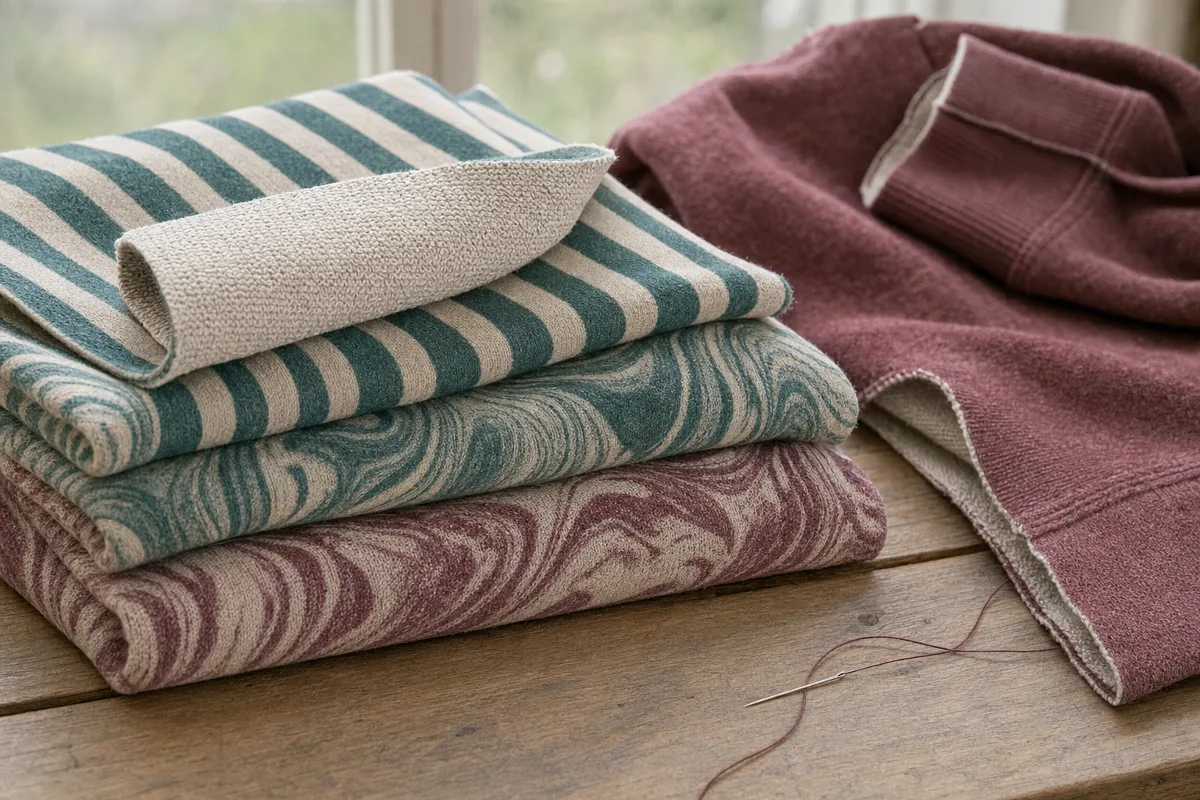
Image created with AI
Summer sweat and French terry are two names for the same fabric. It's a stretchy knit that looks smooth on the outside, like a sturdy jersey, and has lots of small loops on the inside. These loops aren't brushed. That's exactly what sets summer sweat apart from winter sweat, where the inside is brushed to give it a fluffy, fleecy feel.
Thanks to the open loops, French terry stays breathable and absorbs moisture well. It's thicker and more stable than jersey, but lighter and cooler than brushed sweatshirt fabric. That's why it's the go-to fabric for jumpers, hoodies, joggers, dresses and children's clothing that you'll wear from spring right through to autumn.
How French terry is made
During knitting, extra loops of yarn are formed on the reverse, similar to towelling but flatter and denser. The front shows the fine knit structure you'll know from T-shirt fabric. This smooth side is also where the prints sit, for example the marble and floral designs or the stripes on the fabrics mentioned here.
In the finished garment, the looped side is the inside. It feels lovely against the skin, doesn't trap heat and gets a little softer over time. If you're unsure which is the right side: the printed, smooth side goes on the outside.
Summer sweat or winter sweat?
If the looped side is brushed after knitting, it creates a soft, warm pile – that's winter sweat, or brushed French terry. The names overlap in the shops, so it's worth looking closely: you'll find all our brushed versions together under Winter sweat / brushed French terry. Incidentally, the brushed French terry animal print with flowers shows that brushed doesn't automatically mean heavy: it weighs only around 210 g/m². We've compared in detail which of the two fabrics suits your project better in our guide Sweat or French terry – which is the better fit?
Fibres: cotton, modal and elastane
The summer sweats mentioned here are mainly cotton with a small proportion of elastane. The elastane makes sure the fabric springs back into shape after stretching – important at elbows, knees and cuffs.
- Cotton with 5% elastane: the classic blend – firm to the touch, holds its shape and easy to handle. The French Terry Flowing Bloom by Swafing, for example, is made this way.
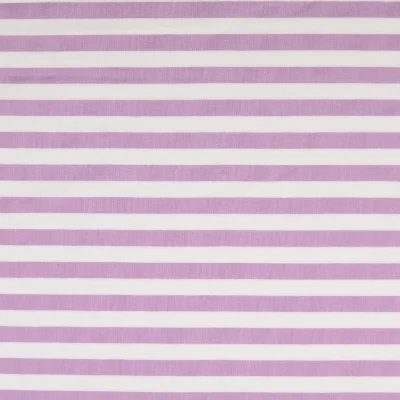
- Cotton with 8% elastane: a little more recovery, as in the French terry stripes in lilac/white.
- 48% cotton and 48% modal with 4% elastane: modal is a cellulose fibre that makes the fabric especially soft and fluid. This gives the Modal French Terry Connected to Universe by Swafing a beautiful drape for dresses and loose tops.
The fabrics mentioned here compared
| Fabric | Fibres | Weight | Width | Good for |
|---|---|---|---|---|
| Modal French Terry Connected to Universe (Swafing) | 48% cotton, 48% modal, 4% elastane | approx. 260 g/m² | approx. 145 cm | Dresses, drapey tops, jumpers |
| Modal French Terry Velvet Bloom (Swafing) | 48% cotton, 48% modal, 4% elastane | approx. 260 g/m² | approx. 145 cm | Dresses, tunics, tops |
| French Terry Flowing Bloom (Swafing) | 95% cotton, 5% elastane | approx. 250 g/m² | approx. 145 cm | Jumpers, hoodies |
| French Terry Waldfreunde (Swafing) | 95% cotton, 5% elastane | approx. 250 g/m² | approx. 145 cm | Children's jumpers, trousers |
| French Terry Sören (Swafing) | 95% cotton, 5% elastane | approx. 245 g/m² | approx. 180 cm | Jumpers, joggers, co-ords |
| French terry stripes lilac/white | 92% cotton, 8% elastane | approx. 255 g/m² | approx. 150 cm | Tops, jumpers, dresses |
All the summer sweats mentioned here weigh between roughly 245 and 260 g/m² – substantial enough for a jumper that isn't see-through, yet still light enough for warm days. Width matters when cutting out: with the roughly 180 cm of the French Terry Sören, you can often fit more large pattern pieces side by side than on a 145 cm fabric.
Prints, stripes and panels
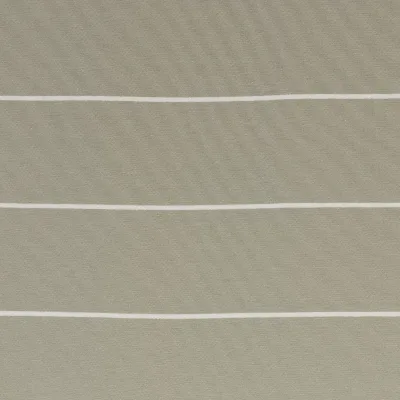
You'll find printed summer sweats, from marble to flowers to animal designs, under Summer sweat / French terry prints. If you're after striped summer sweat, take a look at our summer sweat stripes. The French Terry Sören by Swafing combines wide coloured stripes with narrow white ones, while the stripes on the French terry stripes in lilac/white are about 1.3 cm wide.
Panels are handy for children's jumpers: one large design intended for the front piece. The French Terry Panel Monsta by Swafing is around 85 cm long and weighs about 245 g/m². Paired with a matching plain summer sweat for the sleeves and back, it quickly becomes a favourite jumper.
Sewing summer sweat: the essentials
French terry is easy to work with because it's thicker than jersey and barely curls while you sew. A few basic rules help:
- Needle: Use a jersey or stretch needle in size 80 to 90. The rounded tip pushes the knit loops aside instead of piercing them.
- Seams: An overlocker is the quickest option. Set the differential feed so the edge doesn't go wavy.
- Cutting out: Lay the pattern pieces on the grain, i.e. parallel to the wales of the knit. With stripes, pin the stripes so they match exactly at the side seams.
- Ribbing: For sleeves, hems and necklines, use ribbing and stretch it slightly as you sew it on.
You'll find more tricks for neat seams, hems and necklines in our guide Sewing French terry – tips for neat seams.
Care
Wash the summer sweats mentioned here at 30 °C, without fabric softener or bleach. They shouldn't go in the tumble dryer and aren't ironed. Fabric softener settles in the loops and reduces their absorbency, so it's worth leaving it out. To dry, it's best to lay the garment flat or hang it loosely so it doesn't stretch lengthways.
Common mistakes
- Sewing with the looped side out: This happens easily with plains. The smooth side is the right side.
- Using a universal needle: This leads to skipped stitches or small holes next to the seam.
- Straight stitch with no stretch: The seam splits when you put the garment on because it can't stretch with the fabric.
- Pulling the fabric while sewing: Necklines and hems get baggy and wavy. Let the fabric feed through loosely – only the ribbing is stretched.
- Ironing over the print: The fabrics mentioned here aren't ironed – press seams flat with your fingers instead.
- Expecting summer sweat to make a winter jumper: For really cold days, brushed sweat is the warmer choice.
Frequently asked questions
Can I sew summer sweat on a regular sewing machine?
Yes. Use a stretch stitch, such as a narrow zigzag or your machine's stretch stitch, and a jersey or stretch needle. A walking foot helps stop the layers shifting against each other.
What is denim-look summer sweat?
It's French terry that looks like denim thanks to printing or yarn dyeing. You get the look of jeans, but with the stretch and soft feel of sweatshirt fabric – popular for children's trousers and comfy jackets.
Does summer sweat shrink in the wash?
Knits with a high cotton content can shrink a little in the first wash. So wash the fabric before cutting out, the same way you plan to wash the finished garment.
Isn't summer sweat too warm for summer?
On really hot days it is a bit on the heavy side. Its name comes from being lighter and more breathable than brushed winter sweat. It's ideal for cool summer evenings, spring and autumn.
Matching categories
Matching products
Modal French Terry Connected to Universe Galaxy Turquoise by Swafing by Christiane Zielinski
€9.45per 0.5 m
Unit price €18.90 / m
French Terry Flowing Bloom Marble in Gold/Red by Swafing by Sarah Mariam
€8.95per 0.5 m
Unit price €17.90 / m
French Terry Stripes in Lilac/White
€8.45per 0.5 m
Unit price €16.90 / m
French Terry Stripes in Beige
€8.95per 0.5 m
Unit price €17.90 / m
Summer Sweat French Terry Panel Monsta Purple
€16.90per piece
Unit price €19.88 / m
French terry, animal print with flowers, natural
€8.95per 0.5 m
Unit price €17.90 / m