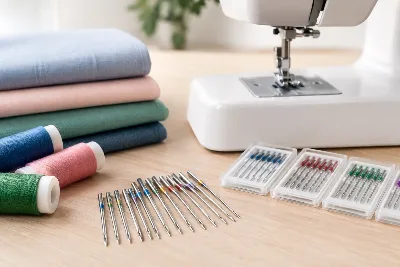
Which needle for jersey? How to keep your seams looking lovely
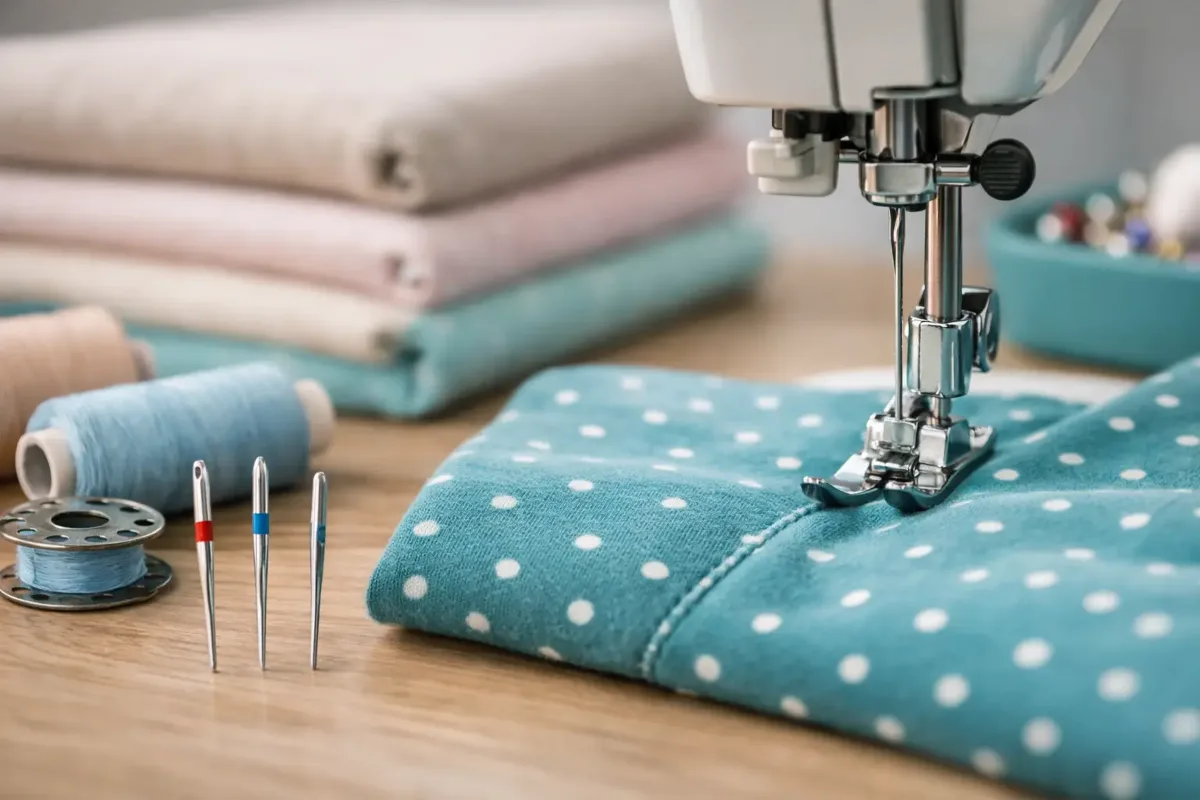
A freshly cut jersey T-shirt is ready to go, the machine is threaded – and after the first few stitches, tiny holes appear next to the seam. More often than not, it isn't the fabric or the sewing machine that's to blame. The question of which needle to use for jersey is crucial, because the fine loops of a stretchy knit need different treatment from woven fabric.
For most jersey projects, a jersey needle in the right size is the best choice. As it enters the fabric, it gently pushes the loops aside rather than piercing individual fibres. That keeps the surface looking lovely and lets the seam move with the fabric. Which type really suits you, though, depends on the material, the fabric weight and the project.
Which needle for everyday jersey?
For classic cotton jersey, so popular for T-shirts, leggings, harem trousers and children's clothes, your best bet is a jersey needle in size 70 or 80. These needles have a rounded ballpoint tip that finds its way between the loops without damaging them.
Size 70 is particularly good for fine, lightweight jerseys, such as thin viscose jersey, fine cotton jersey or soft fabrics for tops and summer dresses. For standard, slightly firmer cotton jersey, size 80 is a reliable all-rounder. It's sturdy enough for several layers of fabric, for example at hems, ribbing or on a hoodie with pockets.
A universal needle may work with some jerseys, but its point is sharper than that of a jersey needle. Especially with very stretchy or very fine fabrics, this increases the risk of ladders, small holes and skipped stitches. If you sew jersey regularly, it's well worth making jersey needles a permanent part of your basic kit.
Jersey needle or stretch needle?
The two terms are often mixed up, but they do different jobs. A jersey needle is the tried-and-tested standard for knits with normal to medium stretch. A stretch needle is designed for particularly elastic and tricky materials.
Reach for a stretch needle if your fabric has a high elastane content or if a jersey needle skips stitches. This applies, for example, to sports jersey, Lycra, swimwear fabric, performance fabrics, very stretchy rib knit or some thin viscose jerseys. Its special eye and scarf shape helps the machine form stitches on fabrics that move a lot while you sew.
So there's no simple better or worse. For a cotton jersey T-shirt, a jersey needle is usually just right. For close-fitting sports leggings, a stretch needle can be the far better choice. If you're unsure, a test piece of the same fabric will help. Sew a few centimetres, then gently pull the seam apart and check the surface for holes or skipped stitches.
Choosing the right needle size for your fabric
It's not just the type of needle but also its size that makes a visible difference. A needle that's too thick leaves unnecessarily large holes. A needle that's too fine can bend in thick or firm fabric and cause uneven stitches.
As a handy guide: size 70 for fine jersey, size 80 for most medium-weight jerseys and size 90 for thicker, denser fabrics such as sweatshirt fleece, French terry or heavy ponte di Roma. A jersey needle often works well for sweatshirt fabric too, as long as it isn't exceptionally thick. Where several thick layers meet, for example at a hood, ribbing or a pocket seam, sew slowly and support the fabric only lightly.
Also check the needle system for your domestic sewing machine. Standard jersey and stretch needles for domestic machines are usually labelled 130/705 H. An overlocker or coverstitch machine, on the other hand, may need a different system depending on the model. A quick look at the manual saves you from buying the right needle only to find it doesn't fit your machine.
Twin needles for jersey hems
The classic T-shirt hem with two parallel rows of stitching on the outside can be sewn with a jersey twin needle. On the reverse, this creates a zigzag thread that makes the seam stretchy. It looks neat and is a lovely alternative if you don't have a coverstitch machine.
The spacing between the two needles matters. For narrow hems and fine tops, 2.5 millimetres often works well. The 4-millimetre twin needle gives a slightly sportier look and suits many classic T-shirts. Here, too, the needle should match the fabric: for jersey, choose a jersey twin needle; for very stretchy fabrics, a stretch twin needle is the better option.
To stop the hem from going wavy, a neatly pressed turn-up and even fabric feed both help. Always test the thread tension on a scrap first. If the fabric bunches up between the two rows of stitching, reducing the upper thread tension can help. A water-soluble stabiliser or thin tissue paper under the hem gives very soft jerseys extra stability and is removed after sewing.
When your machine still doesn't like jersey
Skipped stitches, wavy seams or tiny holes are frustrating, but usually easy to fix. Change the needle first, even if it still looks fairly new. After many hours of sewing, stitching over pins or tackling a thick seam, a needle can already be blunt or slightly bent. A fresh needle is often a good idea for a new jersey project.
Next, check your thread and stitch. Good-quality polyester all-purpose thread is an easy choice for most jersey projects because it has a little give. A straight stitch will quickly snap when the seam is stretched as you put the garment on. A small zigzag, your machine's stretch stitch or a narrow triple straight stitch for areas under particular strain are better options. The latter is strong but can be bulky, so it isn't suitable for every fine seam.
Waves often appear when the fabric is stretched while sewing or the presser foot applies too much pressure. Never pull jersey through behind the needle – just guide it loosely. On some machines you can reduce the presser foot pressure. A walking foot can also help if the top and bottom layers shift at different rates.
Good preparation also saves frustration. Instead of thick pins, fabric clips on the seam allowance are handy, especially when sewing several layers. If you do need pins, place them at right angles to the seam and remove them before they reach the needle. That way you protect both the needle and your machine.
A quick guide for your project
For a children's T-shirt in cotton jersey, start with a size 80 jersey needle. For a lightweight viscose dress, a size 70 jersey needle is usually the finer choice. For swimwear, sportswear and very stretchy leggings fabrics, use a stretch needle, often also in size 75 or 80. Sew a classic T-shirt hem with a jersey twin needle, testing the spacing and tension beforehand.
If your first seam doesn't look the way you'd hoped, it's no sign of a lack of skill. Jersey behaves very differently depending on its composition. A small test piece quickly shows you whether needle, thread and stitch work well together – and saves your carefully cut favourite garment from unnecessary holes.
At Die Stoffkönigin, we're happy to help you match jersey, suitable thread and the right needle to your specific project. Simply bring your sewing pattern or a photo of your fabric along to our shop. That way, your sewing starts not with guesswork but with a seam that stays beautifully stretchy.