What Is Jersey Fabric? Properties, Types and What It's Good For
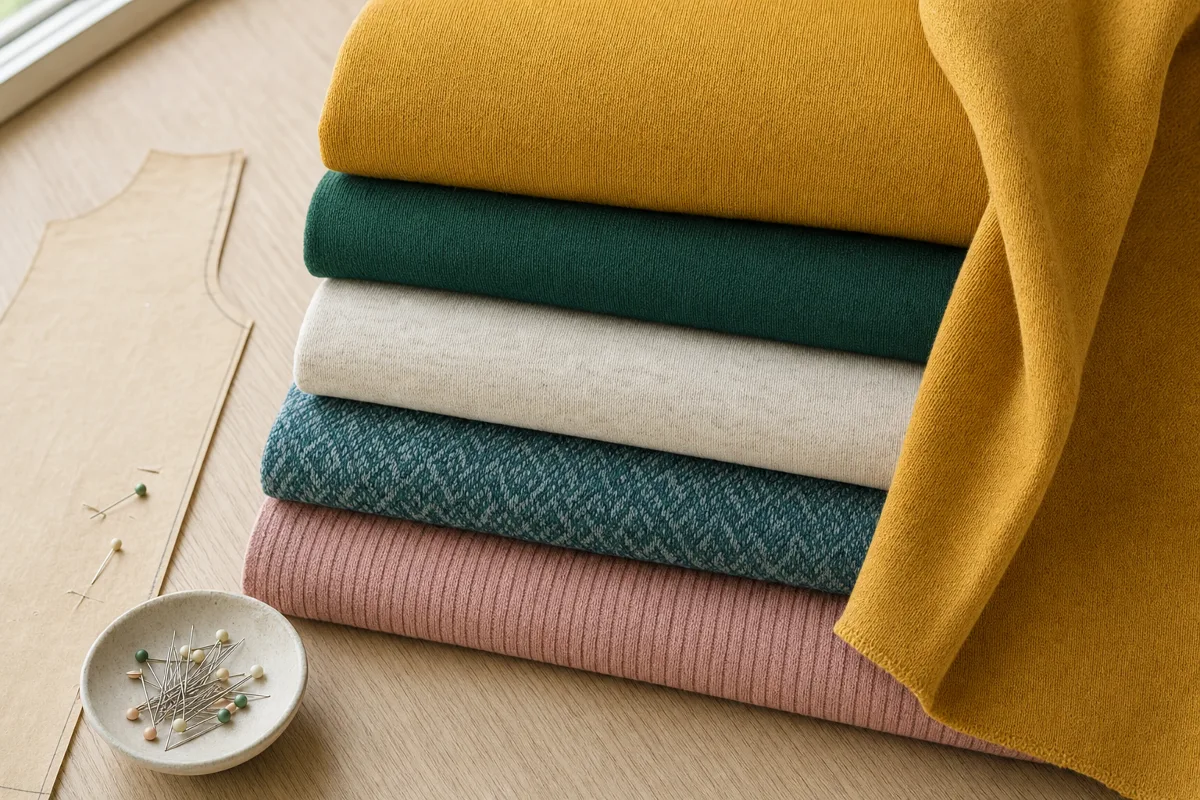
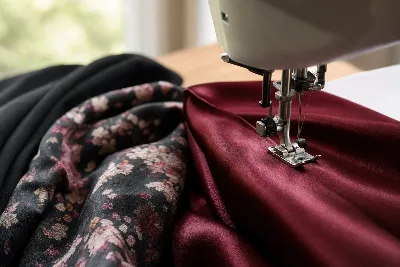
Image created with AI
Jersey is a knit fabric: it is knitted, not woven. Instead of threads crossing at right angles as in woven fabric, the yarn forms interlocking loops called stitches. These loops can stretch and then pull back together again. That's where jersey's typical elasticity comes from: it gives mainly across its width, even without any elastic fibres at all.
For you, this means jersey is comfortable, hardly creases and drapes softly against the body. It's the classic choice for T-shirts, dresses, leggings, children's clothes, hats and pyjamas. Depending on the fibre and the knit, it can be light and flowing or sturdy and stable.
How jersey is structured
Take a close look at a piece of jersey. On the right side you'll see fine vertical rows of small V-shaped stitches, known as wales. On the wrong side there are loops running crosswise. The wales run parallel to the selvedge and, when cutting out, take on the role that the grain line plays in woven fabric. Jersey stretches most at right angles to them, i.e. from selvedge to selvedge. For tops and dresses, this direction should go around the body.
Key properties
- Stretchy with good recovery: The stitches give and spring back. A small percentage of elastane ensures the fabric doesn't go baggy, even after many days of wear.
- Crease-resistant: You can stuff jersey into a suitcase and still take it out looking tidy.
- Curls at the cut edges: Single jersey in particular curls up after cutting. We explain why this happens and how to deal with it in Why does jersey curl?
- Barely frays: The cut edges don't unravel into threads as woven fabric does, so you can even leave hems raw on sporty garments.
- Comfortable on the skin: Made from cotton or viscose, jersey is soft and breathable, ideal for anything worn right next to the body.
Types of jersey at a glance
Jersey can be categorised in two ways: by the type of knit and by the material. Together, they determine how your fabric feels and behaves.
By type of knit
- Single jersey: The simplest and most common form, knitted on a single bed, with a smooth right side and a looped wrong side. Light to medium weight, good for tops and dresses, but it curls the most.
- Interlock: Knitted on a double bed, so both sides look like a right side. Denser, slightly thicker and hardly curls at all, which makes it pleasant for beginners and baby clothes.
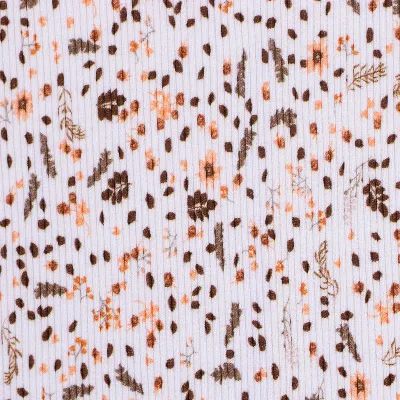
- Rib jersey: Knit and purl stitches alternate in vertical ribs. This gives it particularly strong widthways stretch and a close fit, good for fitted tops and dresses.
- Ponte di Roma: A firm, double-knit jersey with a fine horizontal texture. It holds its shape and has a heavier drape, making it better suited to trousers, skirts, dresses and light jackets.
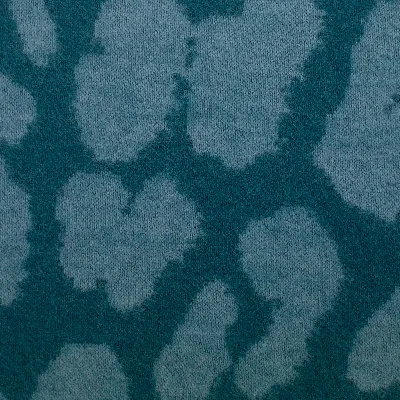
- Jacquard jersey: The pattern is knitted in rather than printed on. The reverse often looks like a negative of the front.
By material
- Cotton jersey: The all-rounder: substantial to the touch, absorbent and easy to sew.
- Organic jersey: Cotton jersey made from certified organic cotton, often GOTS certified.
- Viscose jersey: Fluid, smooth and cool on the skin, with a lovely drape for dresses and relaxed tops.
- Performance jersey: Usually made of polyester, it wicks moisture away and dries quickly; designed for sports and outdoor clothing.
Our jerseys compared
The table below shows the fabrics from our shop mentioned here side by side, so you can quickly see which one suits your project.
| Fabric | Material | Weight | Width | Ironing | Suitable for |
|---|---|---|---|---|---|
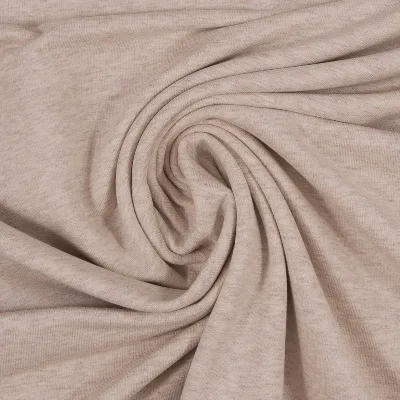
| Jersey Vanessa by Swafing (plain) | 95 % cotton, 5 % elastane | approx. 220 g/m² | approx. 155 cm | low heat | Tops, dresses, basics, coordinating fabric for prints |
| Cotton jersey Nara by Swafing (patterned) | 95 % cotton, 5 % elastane | approx. 210 g/m² | approx. 145 cm | do not iron | Children's tops, dresses, pyjamas |
| Rib jersey Pia by Swafing | 95 % cotton, 5 % elastane | approx. 230 g/m² | approx. 145 cm | do not iron | fitted tops, dresses |
| Jacquard jersey Emily by Swafing | 100 % cotton | approx. 220 g/m² | approx. 130 cm | low heat | Jumpers, dresses, textured tops |
| Plain viscose jersey | 92 % viscose, 8 % elastane | approx. 150 g/m² | approx. 145 cm | do not iron | flowing dresses, tops, summer T-shirts |
Which jersey for which project?
For basics and everyday tops
Plain cotton jersey is a staple of every fabric stash. Our Jersey Vanessa by Swafing weighs around 220 g/m² and its width of approx. 155 cm makes it economical to cut. It is certified to OEKO-TEX® Standard 100. You'll find the full colour range under Plain Cotton Jersey.
For children's clothes with motifs
Tractors, woodland animals, squirrels: printed cotton jerseys from Swafing, such as the cotton jersey Nara, bring colour to children's tops and pyjamas. At approx. 210 g/m² they are slightly lighter than Vanessa and combine nicely with a plain jersey. You can see the selection among our patterned cotton jerseys.
For fitted styles and texture
If you want a top that fits closely yet stays comfortable, go for the Rib jersey Pia by Swafing. At approx. 230 g/m² it is the heaviest of the fabrics mentioned here. If you like patterns with depth, the Jacquard jersey Emily by Swafing offers a knitted-in leopard print in pure cotton. It contains no elastane and, at approx. 130 cm, is narrower, so allow a little extra length when working out how much fabric you need.
For flowing summer garments
Our plain viscose jersey weighs around 150 g/m² and drapes softly against the body. Its 8 % elastane content makes it very stretchy. It's better suited to dresses, tops and loose T-shirts than to garments that need structure. You'll find our colours under Plain Viscose Jersey.
Caring for the jerseys mentioned here
Wash all the fabrics in the table at 30 °C, without fabric softener or bleach, and don't tumble dry them. They differ when it comes to ironing, as shown in the table above.
Common mistakes
- Sewing with a universal needle: For jersey, your machine needs a jersey or stretch needle with a ballpoint tip.
- Straight stitch on seams that need to stretch: It can't move with the fabric and will snap when you put the garment on. Side seams, necklines and sleeves need a stretch stitch.
- Pulling or pushing the fabric: This makes the seam go wavy.
- Placing pattern pieces at an angle to the wales: T-shirts will then twist after washing or stretch in the wrong direction.
- Letting fabric hang over the edge of the table when cutting: Jersey distorts under its own weight, especially lightweight viscose jersey. Lay the whole length of fabric out flat.
- Mixing up the right and wrong sides: This happens easily with plain jersey. The right side shows the fine V-shaped stitches.
Find jersey at our shop
In our jersey category you'll find all our jerseys in one place, from plain and printed designs to rib, jacquard and viscose. If you prefer to feel fabrics before deciding, visit our shop in Neumarkt-Woffenbach. And if you'd rather not sew your first jersey top on your own, you can rent a sewing space in the Königliches Nähstübchen and get help as you sew.
Frequently asked questions
Is jersey cotton?
Not necessarily. Jersey describes how the fabric is made, i.e. a knitted fabric, not the material. Jersey comes in cotton, viscose, modal, wool or polyester, often blended with a little elastane. Cotton jersey is simply the best-known variety.
What are the disadvantages of jersey fabric?
Jersey is trickier to sew than woven fabric because it easily distorts while you sew. Qualities without enough recovery can lose their shape over time, and some fabrics develop small bobbles in areas of friction (pilling). It also lacks the stiffness needed for garments with sharp edges or pressed creases.
Do I need to wash jersey before sewing?
Yes, wash it before cutting out, in the same way you'll wash the finished garment later. Our Jersey Vanessa by Swafing has a shrinkage rate of approx. 5 %. If you don't prewash, the finished top will shrink.
Do I need an overlocker for jersey?
No. A standard domestic sewing machine is fine if you choose a stretch stitch or a narrow zigzag stitch. An overlocker is quicker because it sews, neatens and trims the edge all at once, but it isn't essential.
Where does jersey get its name?
The name comes from Jersey in the Channel Islands, where knitted woollen goods were once made for fishermen's jumpers. Today the term is used generally for fine-gauge knitted fabric, in English and German alike.
Matching categories
Matching products
Cotton Rib Jersey Pia Ditsy Flowers on Natural White by Swafing
€8.45per 0.5 m
Unit price €16.90 / m
Cotton Jacquard Jersey Emily Leopard Smoke Blue on Petrol by Swafing
€9.45per 0.5 m
Unit price €18.90 / m
Baumwolljersey Natural White
€7.45per 0.5 m
Unit price €14.90 / m