
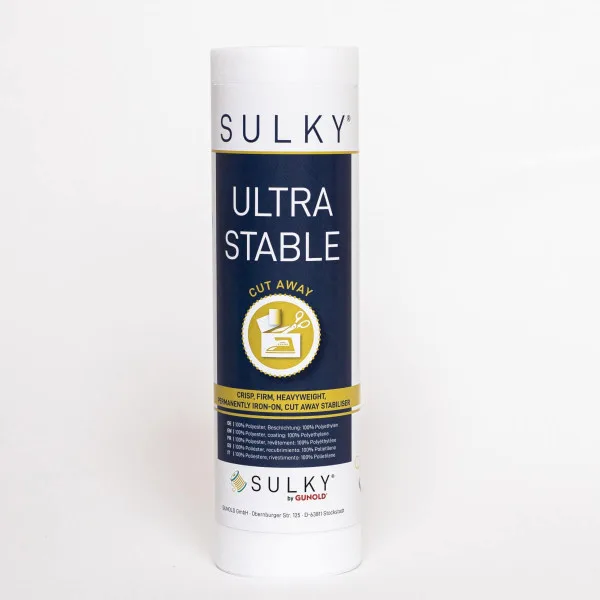
Sulky Ultra Stable – the heaviest stabiliser in the range
€15.90per piece
Unit price €12.72 / m² · incl. VAT, plus shipping
At 115 g/m², Ultra Stable is the heaviest stabiliser in the Sulky range: iron-on and made to be cut away. It carries designs with high stitch counts and fine detail, and gives bags and textile decoration noticeable body.
Size: 25 cm × 5 m3 options
Colour: White2 options


Sulky Ultra Stable 25 cm × 5 m in White
in stock
Delivery time approx. 3–5 working days
Free shipping within Germany from €50
- Material
- 100 % Polyester
- Colour
- Weiß
- Certificate
- OEKO-TEX® Standard 100
- Breite
- 25 cm
- Farbe
- Weiß
- Länge (m)
- 5 m
- Manufacturer
- Gunold / Sulky
All 2 variants in 25 cm × 5 m
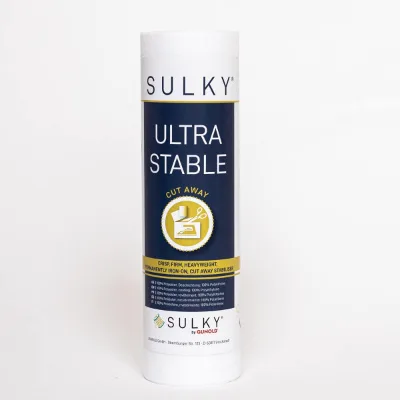
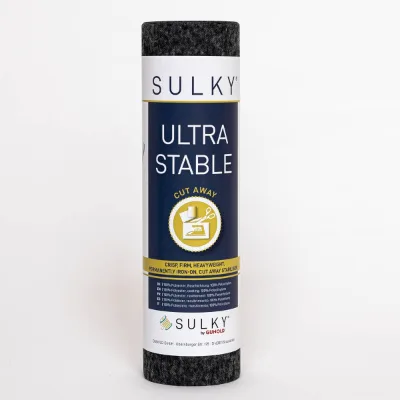
All 6 combinations
About this range
Ultra Stable ist das schwerste Stickvlies der Reihe: 115 g/m², aufbügelbar und zum Abschneiden gedacht. Es trägt Motive mit hoher Stichzahl und vielen Details und bleibt dauerhaft im Stück. Als Einlage für Stofftaschen und textile Deko gibt es dem Material spürbar Stand. Erhältlich in Weiß und Schwarz.
Sewing tips
- Dauerhaft aufbügeln, dann besticken.
- Nach dem Sticken rund um das Motiv abschneiden.
- Bei sehr dichten Motiven eine zweite Lage unterlegen.
- Als Einlage für Taschenböden und Deko flächig aufbügeln.
- Die Farbe zum Stoff wählen, weil das Vlies im Stück bleibt.
Where a design carries very many stitches and fine detail, the backing has to do more than hold: it must support the area for good, so outlines still sit true after washing. Ultra Stable is the heaviest answer the range offers.
Ironed on, it bonds firmly with the fabric and stays in the piece after trimming. That makes it interfacing as well: for fabric bags, baskets and textile decoration it gives the material body which no single layer could provide.
Because it is so sturdy, it does not belong under every design. On light fabrics and simple outlines it would be too much; there the lighter stabilisers remain the better choice.
Frequently asked questions
When is the heaviest stabiliser worth it?
For designs with high stitch counts and fine detail, and wherever the material itself should gain body. For simple outlines on light fabric it is too much and makes the piece needlessly stiff.
Can I use it as interfacing for bags?
Yes, that is a second use. Ironed on, it gives fabric bags and baskets their shape without cutting separate interfacing — the embroidery then brings its own support along.
What is the right order of work?
Iron it on permanently first, then stitch, then trim around the design. That order matters: pressing after stitching flattens the stitches and costs the design its raised effect.