 Projects and Ideas
French Terry in Hot Pink/Black
€9.95per 0.5 m
Unit price €19.90 / m · incl. VAT, plus shipping
French terry in Hot Pink/Black, 145 cm wide and 245 g/m², made from 95 % cotton and 5 % elastane. Sold by the metre. Wash once before cutting.
in stock
Delivery time approx. 3–5 working days
Free shipping within Germany from €50
- Fabric type
- sweat
- Material
- 95 % Baumwolle, 5 % Elasthan
- Width
- approx. 145 cm
- Weight
- approx. 245 g/m²
- Colour
- Pink/Schwarz
- Care
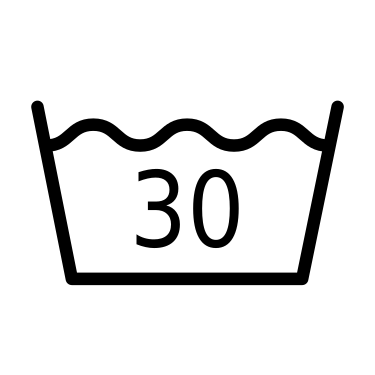
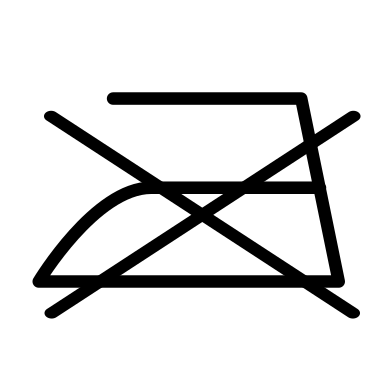
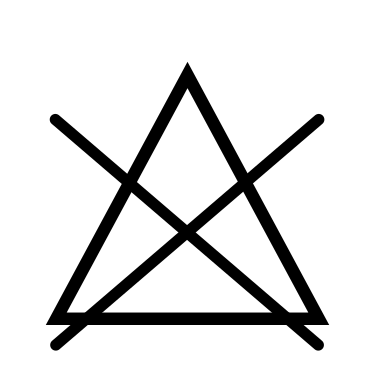
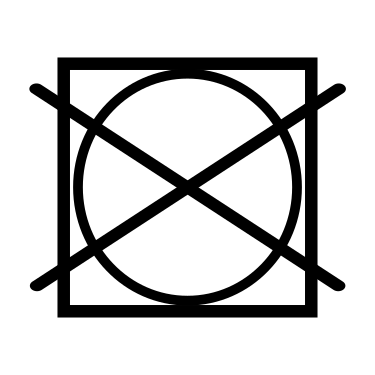
- Wash at 30°C, Do not iron, Wash without fabric softener or bleach, Do not tumble dry
- Gewicht
- 245 g/m²
- Breite
- 145 cm
Description
This French terry stretches but sits considerably firmer than jersey — it holds its shape at hood and pockets. 145 cm wide, 245 g/m² — figures that tell you how heavily the fabric falls. Material: 95 % cotton and 5 % elastane.
The tone Hot Pink/Black sits between red and white: delicate enough for baby things, strong enough not to read washed out. Sweat adds more bulk than jersey — on children's clothes cutting a size up pays off. Before cutting, a look at the care symbols on the article pays off.
What French Terry Kombi Pink Edddy the Crab von Thorsten Berger by Swafing is suitable for
- children's clothes for autumn and winter
- snoods and hats
- jumpers
Care instructions:
Frequently asked questions
What do I do with offcuts?
Sweat offcuts become pockets, hood linings, cuffing alternatives or appliqué. The goods do not fray, so even small pieces work without finishing. The edge does not fray, so even narrow strips work without finishing.
Which needle and which stitch?
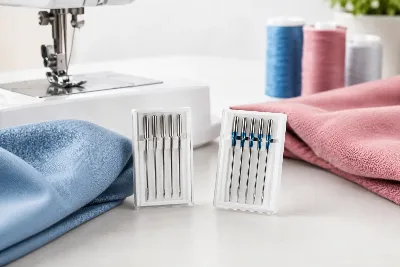
A jersey needle with a ball point, one size up for several layers. Sew with a stretch stitch or an overlocker — a straight seam will not survive the stretch at cuffs and hood.
Which cuffing suits it?
Fine rib for sleeves and hem, coarse rib for sturdier jackets. Cuffing is cut shorter than the circumference and sewn on stretched, otherwise the finish stands away.
How do I press sweat?
From the reverse and at moderate heat. On the face an iron flattens the loops, and that spot stays visibly flatter than the rest of the surface.