Choosing the Right Cotton Fabric for a Patchwork Quilt
If you're sewing a quilt for the first time, you'll soon notice that not every pretty print automatically makes a good cotton fabric for a patchwork quilt. With patchwork, it's not just about looks – it's also about how the fabric behaves when you cut, pin, sew and, later on, wash it. If you want your pieces to fit together neatly, it pays to choose your fabric carefully from the very start.
Which cotton fabric works best for a patchwork quilt
For most patchwork quilts, woven cotton is the safest choice. By this we mean a classic cotton woven fabric without elastane, which holds its shape and can be cut precisely. That's exactly what makes the difference in patchwork, because small inaccuracies quickly add up to wonky blocks or wavy seams.
Patchwork cotton, also known as quilting cotton, is particularly popular. These fabrics are usually densely woven, fairly smooth on the surface and neither too thin nor too stiff. They press well, fray only a normal amount and stay predictable as you sew. For beginners, this is often the most comfortable choice.
Ordinary cotton fabrics can work well too, as long as they're woven in a similar way. What matters is less the name on the label than how the fabric actually behaves. If it feels stable, hardly distorts and has an even weave, it's often suitable for patchwork. Very loose, coarse or very slippery fabrics, on the other hand, make more work.
What to look for in cotton fabric for a patchwork quilt
The most important point is stability. Patchwork is made up of lots of small pieces that need to be sewn together precisely. Stretchy fabrics or weaves with too much give make this much harder. That's why jersey, muslin or drapey viscose usually aren't the first choice for classic patchwork quilts.
Fabric weight plays a role too. If the fabric is too thin, the finished quilt can quickly look less high-quality and tends to wear through in places that get a lot of use. If it's too thick, the seam allowances become unnecessarily bulky where seams cross. This can be especially annoying with more intricate designs. A medium-weight, firm quality is therefore often just right.
A calm surface is also important. Fabrics with a smooth, even texture are easier to work with neatly than heavily textured ones. If you've ever tried to cut exact squares from a very uneven weave, you'll know how quickly small discrepancies creep in.
Then there's colourfastness. A patchwork quilt should look good not just in your sewing room but after plenty of washes too. Especially with strong reds, blues or dark shades, it's worth choosing good quality and prewashing your fabrics before cutting if you want to play it safe.
Combining patterns, colours and prints thoughtfully
Patchwork thrives on variety, but not every mix automatically looks harmonious. Often a lovely idea doesn't fall down because of the individual fabrics but because of how they work together. If all the prints are a similar size and equally loud, the quilt can quickly look busy. If everything is very delicate, it can lack a bit of contrast.
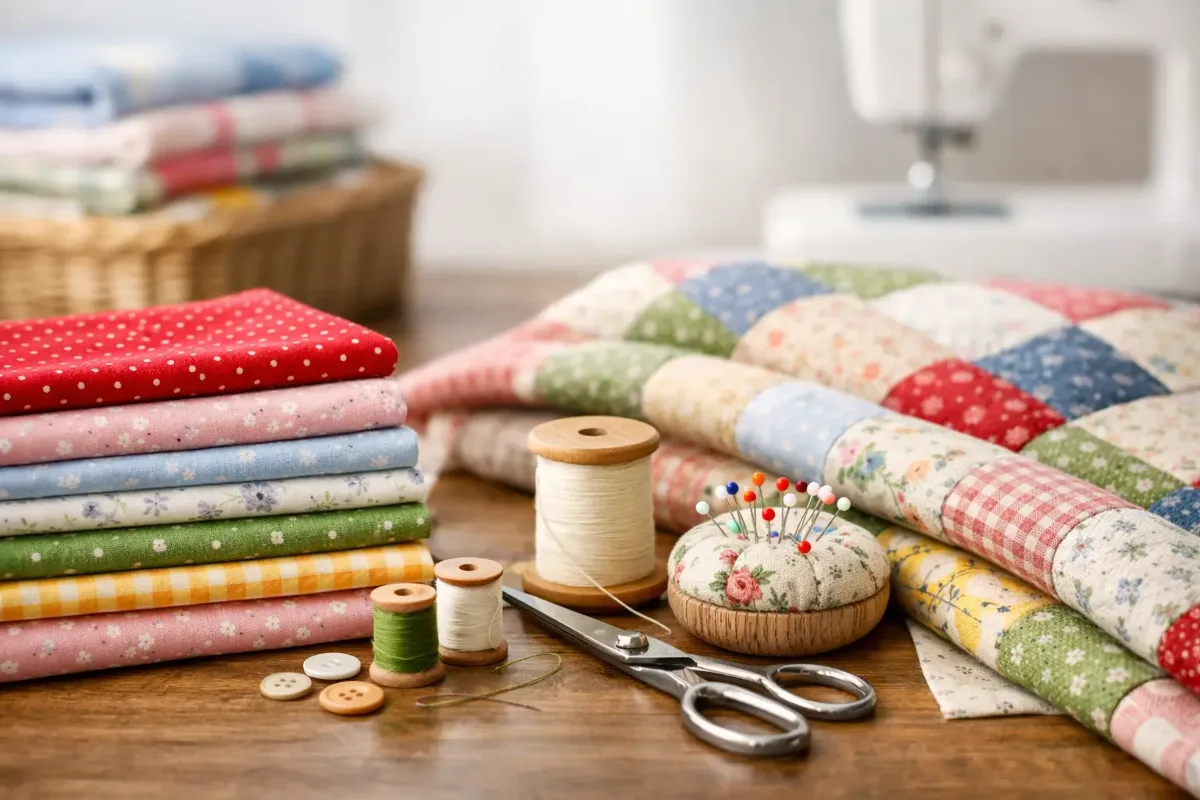
A mix of calm and lively fabrics helps. Small ditsy florals, graphic prints, plain fabrics and one or two accent prints often create a balanced look. Differences in tone matter too. When light, medium and dark fabrics are all represented, patchwork designs usually stand out better.
For baby or children's quilts, many of our customers deliberately choose soft colour families or playful motifs. That works well as long as the fabric qualities stay similar. For throws in the living room, you can go for modern contrasts, muted natural shades or classic combinations such as blue and white, dusky pink and grey, or green and beige.
If you're unsure, lay the fabrics side by side and take a photo in daylight. In a picture, it's often easier to spot whether one fabric sticks out or whether you're still missing a calmer counterpart.
How much fabric do you really need?
The amount of fabric depends heavily on the design. A simple quilt made of large squares needs different calculations from a quilt with lots of small blocks, borders and a backing. On top of that come seam allowances, any wastage and whether the front and back are to be made from different fabrics.
For the quilt top alone, small projects often only need several pieces of fabric in modest amounts. That's exactly why low minimum order quantities are so handy when you want to put colours together first without having to buy too much of each design. With patchwork in particular, this is a real advantage, because so many projects rely on the mix.
Don't forget the binding and the backing when planning. The backing in particular is often underestimated, even though it has a big impact on the overall look. If you're making a quilt as a gift, you'll be glad later on of a backing that doesn't look like a leftover solution.
To prewash or not?
There's no hard-and-fast right or wrong here. Many people prewash cotton fabric because it can shrink slightly and any excess dye gets rinsed out beforehand. This gives peace of mind, especially if you're combining very different fabrics or the quilt will be washed often.
Others deliberately skip it, because unwashed fabrics can be cut more accurately and stay smoother while sewing. This is particularly nice with very precise designs. If you don't prewash, at least make sure all your fabrics are of comparable quality so they behave as similarly as possible later on.
If you do prewash, it's best to do it the same way you'll care for the finished quilt. Afterwards, press the fabrics thoroughly. It takes a little time but often saves you nasty surprises.
Which fabrics are less suitable
Not every cotton fabric is automatically ideal for patchwork. Very coarse canvas fabrics can be wonderful for bags but quickly become too heavy for a classic snuggly quilt. Poplin can work if it's stable enough, although some qualities are fairly slippery and lightweight. That needn't be a bad thing, but it does call for a bit more care when cutting.
Coated cotton, heavily textured home décor fabrics or very thick upholstery fabrics are usually not a good choice for a patchwork quilt. They're hard to work with, create bulk at the seams and often don't feel as nice as a quilt.
Fabrics with elastane are also problematic. Even a slight stretch is enough to make edges distort. If you want to enjoy relaxed patchwork sewing, you'll be much better off with classic, non-stretch woven fabric.
Cotton fabric for patchwork quilts for beginners
If you're just starting out, feel free to make things easy for yourself. Choose fabrics of the same material and as similar a weight as possible. A clear colour plan helps more than an overflowing mix of twenty designs. A quilt made from six to eight well-coordinated fabrics often looks more harmonious than a very colourful hotchpotch.
Designs where small inaccuracies aren't immediately visible are handy, for example squares or simple rectangles. Pair them with a cotton fabric that presses neatly and cuts precisely. This is exactly where a well-stocked specialist retailer shows its value: if you have plenty of choice but still get guidance, you'll avoid quite a few wrong decisions.
At Die Stoffkönigin, this very combination of a wide selection and personal, practical advice is worth its weight in gold for many sewing projects – especially when you want to coordinate colours or plan fabric quantities realistically.
Don't forget the backing and the filling
Even the most beautiful top fabric only looks half as good if the backing and wadding don't suit the project. Cotton is often chosen for the backing too, because it's easy to care for, feels pleasant against the skin and goes well with the patchwork top. If you like things cosier, you can also opt for softer alternatives for the backing, but bear in mind that different materials behave differently when you sew them.
The same applies to wadding: it all depends on how the quilt will be used. A bedspread can be a little firmer, while a play mat or snuggle quilt should be softer. The top fabric should match. Very lightweight fabrics can quickly look overwhelmed by thick wadding, whereas a slightly firmer cotton brings more calm to the overall look.
Small quality features that matter in everyday sewing
You can tell straight away whether a fabric looks nice. Whether it's pleasant to sew with day to day often only becomes clear later. Good cotton fabrics press neatly, don't keep distorting as you cut and hold their shape well even after the first wash. It's exactly these things that turn a nice project into a truly successful one.
So do pay attention to the overall feel: how does the fabric sit in your hand, how densely is it woven, how crisp does the print look? Especially with a patchwork quilt, where lots of fabrics come together, consistent quality pays off. It not only makes sewing easier but also ensures the finished quilt looks cohesive.
If you take your time choosing your fabrics, combine colours thoughtfully and rely on a dependable cotton quality, you won't just end up with a quilt. You'll create something that's loved, used, given as a gift and treasured for years.