Assessing waterproof raincoat fabrics
A good raincoat fabric should do more than simply make water bead off. When your little ones are standing in the rain on the way to school, when the wind picks up on a walk, or when your handmade jacket is worn every single day, comfort, durability and how easy the fabric is to sew matter just as much. So when it comes to assessing the quality of waterproof raincoat fabric, it helps to look at the material as a whole – not just at a single figure on the spec sheet.
There is no one perfect fabric for a raincoat, puddle suit or weatherproof bag. What matters is what you are sewing, how heavily the item will be used, and whether its main job is to keep the rain out or whether it also needs to be nicely breathable. With a few clear criteria, the choice becomes much easier.
Assessing waterproof raincoat fabrics: what really counts?
Waterproof fabrics are often made from a woven or knitted base with a coating or membrane. The face can be smooth, slightly textured or look more like a classic textile, while the back – depending on the quality – is coated, laminated or bonded to a lining. This construction determines how the fabric feels, how well it keeps out the rain and how straightforward it is to sew.
For simple rainwear, a lightweight coated fabric is often a good choice. It packs down small and offers reliable protection in a shower. For a jacket that will be worn outdoors for hours at a time, a multi-layer fabric may be more comfortable. It rustles less, sits more pleasantly against the skin or offers extra comfort thanks to a soft textile backing.
So the key question isn't just: is the fabric waterproof? It's also: does it suit my project and the person who will be wearing it?
Understanding hydrostatic head
Hydrostatic head (sometimes called the water column) describes how much water pressure a material can withstand before moisture gets through. It is given in millimetres. As a general rule, the higher the figure, the better the protection against water getting in.
For a lightweight jacket worn in ordinary showers, mid-range values are often perfectly adequate. If the jacket is going to be worn on soggy playgrounds, while cycling or on longer hikes, a fabric with a higher hydrostatic head is worth it. Pressure doesn't only come from heavy rain, either: sitting on a wet bench, carrying a rucksack or kneeling down puts considerably more strain on particular spots.
A high hydrostatic head isn't a free pass, though. If the seams are left unsealed, water can get in right there. Zips, pocket openings and the hood also need well-thought-out construction. The figure is therefore a useful way to compare fabrics, but not a complete assessment of quality.
Breathability: comfortable on the move
Children run about, adults cycle or take the dog for a brisk walk – and heat builds up under the jacket. Breathable fabrics are better at letting water vapour escape and reduce that clammy, sweaty feeling inside your jacket.
For a thin emergency rain jacket that you only pull on occasionally, this is often less important. For an everyday jacket or outdoor clothing, however, breathability is well worth considering. It doesn't depend only on the membrane or coating, but also on the cut, any linings and ventilation options such as a relaxed fit.
This is where a typical compromise comes in: heavily coated materials offer excellent protection from the wet but can be less breathable. A breathable performance fabric is often more comfortable when you're active, but can sometimes call for a little more care when sewing and may be more expensive.
The surface makes all the difference day to day
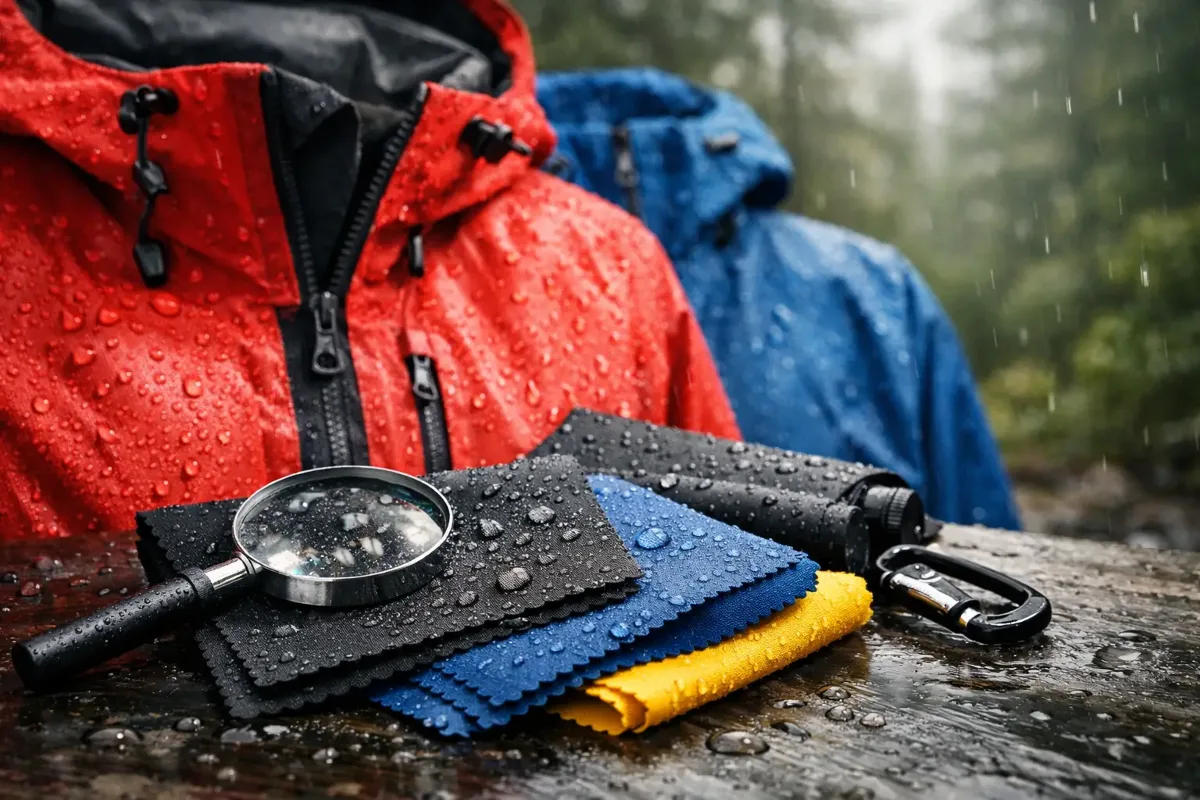
Many raincoat fabrics have a water-repellent finish on the outside. Raindrops then form little beads and roll off more easily. It doesn't just look good – it also stops the outer surface from quickly soaking up water.
Over time, abrasion, dirt and frequent washing can make this effect wear off. The fabric won't necessarily start leaking straight away, but it will feel wet more quickly in the rain and take longer to dry. Gentle care is therefore part of choosing your material. Check the care instructions before you start sewing and think realistically about how often the jacket will need washing.
For puddle trousers, sit mats or bags, the surface can be extra easy-care and hard-wearing. For a city raincoat, a softer, less technical handle may be more important. Smooth fabrics are also usually easier to wipe clean of mud and splashes, while textured surfaces often look more premium and more like a classic textile.
Weight, drape and noise when worn
A fabric can look fantastic in a photo and still feel wrong for the sewing pattern you have in mind. Lightweight rain fabrics drape more softly and work well for jackets with a slightly roomier silhouette, capes or over-layers. Sturdier qualities give bags, cap peaks or puddle trousers more structure.
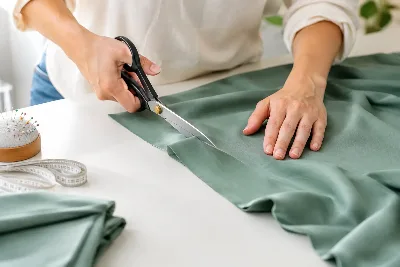
Rustling is a matter of personal taste, too. Some people like the classic, light raincoat sound. Others prefer a fabric that is as quiet as possible for children's clothing or an everyday jacket. If you're unsure, it helps to order a small amount and feel it, scrunch it up and do a test seam before cutting out. With fabric sold by the metre from 20 cm, details such as pocket flaps or hood trims are wonderfully easy to try out.
It takes good construction to make a jacket waterproof
Even the best fabric loses its advantage if the seams let water through. Every seam is made up of needle holes. In heavy rain, moisture can get in there, especially at the shoulders, hood and sleeves.
For truly weatherproof clothing, seams are sealed with seam tape after sewing. Depending on the product, this is ironed on or fixed with heat and pressure. Always test on a scrap first to see what temperature your fabric can take. Too much heat can damage coatings; too little and the tape won't stay stuck for long.
When it comes to the sewing itself, a fine microtex or universal needle, matching polyester thread and as few unnecessary rows of topstitching as possible all help. Pins leave holes, so use fabric clips instead, especially along the outer edges. If you're sewing on a domestic machine, don't pull the fabric through. A walking foot or a steady, unhurried sewing speed will often give you a much neater stitch.
For hems and edges, facings, bindings or attached ribbing are often a better option than folding the fabric over several times. Thick layers of coated material can become unwieldy and are harder to seal. A sewing pattern with clear, not overly fiddly details makes getting started easier.
Which raincoat fabric suits which project?
For your first children's raincoat, a lightweight, easy-to-sew fabric with a straightforward coating is usually a pleasure to work with. Choose a fairly simple pattern with raglan sleeves or just a few panel seams. That way there are fewer places that need sealing afterwards.
For puddle trousers, abrasion resistance, freedom of movement and easy cleaning are what count. Here the fabric can be a little sturdier. Reinforcements at the knees and bottom make sense but also add to the thickness of the material. Make sure the trousers fit over shoes and other clothing – a cut that's too snug quickly becomes a test of patience.
For an adult's raincoat, how it feels to wear and breathability are usually more important. A fabric with a soft backing or a separate lightweight lining can make it noticeably more comfortable. If you'll be wearing the jacket on your bike, you'll benefit from a longer back, a well-fitting hood and wind-protected fastenings.
For bags, handlebar bags or weatherproof wash bags, a firm, coated fabric is often ideal. Here, durability matters more than breathability. Plan in sturdy reinforcements at zips and straps, as these areas take a lot of strain.
Before cutting out: a quick hands-on test saves frustration
Hold a piece of fabric under running water or drip a few drops onto it. Does the water bead off? Does the back stay dry? It isn't a standardised lab test, but it gives you a good feel for the surface. Then sew two scraps together and check how the seam looks, whether the fabric feeds through properly and how seam tape behaves on it.
Only wash raincoat fabrics before cutting out if the care instructions for that particular fabric recommend it. Many coated materials don't need pre-washing. What matters more is working neatly and not creasing the fabric unnecessarily or exposing it to high heat.
A raincoat doesn't have to survive every weather adventure a mountaineer might face. It should suit your project, your everyday life and your sewing confidence. When fabric, pattern and construction all come together, you'll end up with a favourite piece that naturally earns its place on the coat hook whenever grey clouds roll in.