Cutting viscose without distortion: how to get it right
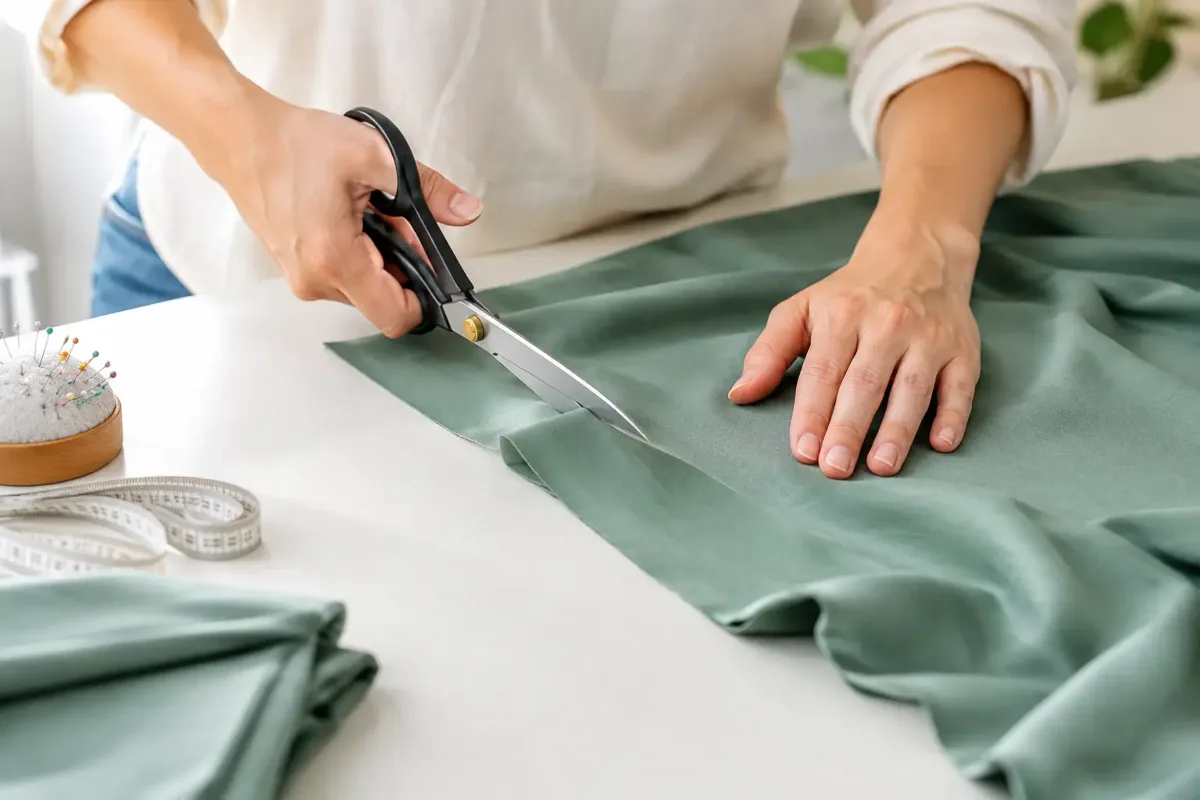
Viscose drapes beautifully, feels lovely against the skin and is made for blouses, dresses, skirts and lightweight trousers. Yet it's precisely this fluid drape that can make cutting a real test of patience: the fabric slips, shifts or hangs over the edge of the table. But cutting viscose without distortion works reliably if you give the fabric a little time to settle, a flat surface and the right cutting technique.
Why viscose slips so easily when cutting
Viscose is a regenerated cellulose fibre and is mostly available as a woven fabric. Many qualities are finely woven, smooth and soft-draping. That's a big advantage once you're wearing it, but a bit of a challenge when laying it out. Even a slight tug on the fabric or a section hanging over the edge can cause the edges to shift.
Take particular care with viscose containing elastane, satin weaves and very lightweight qualities. They react more sensitively to pressure and pulling than a sturdy woven cotton. An off-grain cut will also be far more noticeable later on in a flowing dress or a loose-fitting blouse.
The good news: there's no need to be afraid of viscose. It's less about specialist knowledge and more about careful preparation and not working against the fabric.
Before cutting: wash, press, let it rest
Before you cut into your viscose, wash it the way you intend to care for the finished garment. Viscose can shrink a little in its first wash. Skip this step and you risk your carefully sewn dress suddenly being shorter or tighter after laundering.
After washing, let the fabric dry completely and press it at a medium temperature. It's best to test the setting on a scrap first. A damp pressing cloth protects delicate surfaces and prevents unwanted shine. Don't drag the iron firmly across the fabric; instead, press down and lift it again. That way you won't distort the woven fabric before you've even started cutting.
Afterwards, let the viscose lie flat and relax. If it goes straight from the ironing board onto the table, the warmth can create small tensions in the fabric. With tricky qualities, a rest of ten to 20 minutes is worthwhile.
Checking the grainline
Before placing your pattern pieces on the fabric, check the grain. With woven fabric, carefully pull out a single crosswise thread, or cut along a clear selvedge if it's straight. This shows you whether the edge of the fabric really is at right angles to the grain.
With printed viscose, the selvedge isn't always a reliable reference point. In that case, also follow the grain of the weave rather than just the printed design. With stripes, large florals or graphic prints, it's also worth planning the pattern placement deliberately. It takes a little more fabric, but gives a much more harmonious result.
Cutting viscose without distortion: the right workspace
Accurate cutting starts with a sufficiently large, smooth surface. Ideally, use a big table on which the fabric can lie completely flat. If viscose hangs down on one side, its own weight pulls on the fabric. That alone can shift the bottom layer or stretch pattern pieces lengthways.
If your table is too small, it's better to cut in sections. Lay out only the area you need at the time and gently slide the fabric along rather than pulling it. A clean floor can also work for long lengths, as long as it's dust-free and you can work comfortably.
Wherever possible, cut viscose in a single layer. It's a little more effort, but it's the most precise method, especially with slippery fabrics. It stops the top and bottom layers from creeping against each other. For pieces that the sewing pattern says should be cut on the fold, you can use a mirrored half of the pattern piece or carefully flip the pattern along the fold line.
With more stable viscose, you can work in a double layer. In that case, it's important to align both layers really smoothly and not to stretch the fabric apart with your hands. Just smooth it gently from the centre outwards.
Preparing your sewing pattern properly
Thin pattern paper can easily slide around on viscose. It's more stable if you use pattern pieces made from heavier paper, card or transparent pattern plastic. Weight the pieces generously, especially at curves, corners and along long edges.
Pins aren't forbidden, but with fine viscose they're often not the first choice. They can lift the fabric, shift it while cutting or leave visible holes in delicate weaves. Pattern weights keep the fabric flat and give you more control. You don't need special weights for this: smooth washers, small fabric bags filled with rice or flat weights from your sewing room all do a good job.
If you do use pins, choose fine, sharp ones and place them within the seam allowance. That way any holes will stay invisible later. Insert the pins flat and as parallel to the cutting edge as possible.
Scissors or rotary cutter?
For many viscose fabrics, a sharp rotary cutter on a cutting mat is the most comfortable option. It cuts without you moving the fabric as you would when lifting scissors. This is a real advantage, particularly for long straight edges and gentle curves. Guide the rotary cutter evenly along the pattern, without pressing too hard.
Good fabric scissors work just as well, provided they're really sharp. Don't lift the fabric as you cut, and use long, steady strokes. Small, hurried snips are more likely to produce jagged edges. Important: scissors that cut paper or craft materials should never touch your dressmaking fabric. With viscose in particular, a dedicated, well-maintained pair of fabric scissors really pays off.
Always test chalk or marking pens on a scrap first. Some marks are harder to remove from smooth viscose or show through on light fabrics. Small snips in the seam allowance are often the safer choice for notches. Cut them just two to three millimetres deep so the seam allowance stays stable.
Step by step to precise pattern pieces
First, lay out the fabric right side or wrong side up, depending on which lets you see the print and markings more clearly. Align the grain and let the fabric lie flat. Then place the largest pattern pieces first. This makes good use of your fabric and lets you fit smaller pieces such as facings, pockets or sleeves into the gaps afterwards.
Weight each pattern piece before you cut it out. Check the grainline arrow with a tape measure at two points: the distance to the selvedge should be the same at the top and bottom. For long pieces such as dress fronts or trouser legs, this check makes a big difference.
Then cut out one piece at a time. Don't try to turn several layers or the whole length of fabric at once. If the pattern piece stays in place until all the markings have been transferred, nothing will shift. Only then should you carefully lift it off the table and set it aside flat.
For mirror-image pieces, a little routine helps: cut the first piece, flip the pattern over and cut the second piece separately. This guarantees you a right and a left front, a pair of sleeves or a pair of pockets. Especially with directional prints, this is much safer than a hastily folded cut.
If the viscose still slips
Very smooth or featherlight viscose sometimes needs extra stabilising. Tissue paper underneath the fabric is a tried-and-tested aid: it provides grip without permanently changing the drape. Lay the paper smoothly under the fabric, weight the pattern piece and cut through both layers together. The paper can then be carefully peeled away.
Another option is spray starch, though only with care. It can give the fabric more grip for cutting and the first sewing steps, but depending on the product it changes the feel and drape. So be sure to test it on a scrap and, if necessary, wash the fabric again before sewing. For very fluid dressmaking fabrics, tissue paper alone is often enough, with no extra treatment.
Room conditions can play a part too. In dry, centrally heated air, viscose occasionally becomes charged with static and clings annoyingly to your hands or tools. A slightly damp cloth nearby or a little more humidity in the room can help. However, don't mist water directly onto the fabric, as some qualities can develop water marks.
After cutting: handle the edges gently
Don't drape cut viscose pieces over the back of a chair or leave them hanging up for long. Their own weight can cause stretching, especially on bias-cut edges. Store the pieces flat until you sew them. If you're not carrying on straight away, stack them with tissue paper in between.
Edges cut on the bias, such as necklines or armholes, are best stabilised promptly with fine stay tape or a narrow strip of lightweight fusible interfacing. Which solution is right depends on the design and the weight of the fabric: a loose blouse needs less stability than a dress with a deep neckline or a wrap top.
It's worth taking a few extra minutes when cutting. Viscose rewards this care with pattern pieces that fit neatly together, and with a finished garment that has exactly the beautiful, flowing drape you chose it for.
Matching categories
Matching products
Viscose Peonies Peonies on Lime Green by Swafing by Cherry Picking
€7.95per 0.5 m
Unit price €15.90 / m
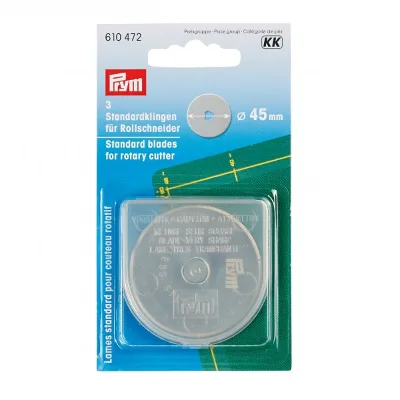
Prym replacement blade 45 mm in Silver
€19.90per piece
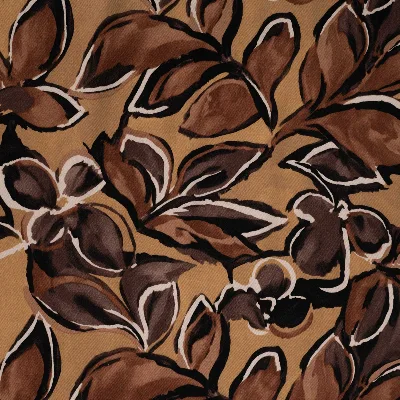
Viscose, leaves, taupe
€7.45per 0.5 m
Unit price €14.90 / m
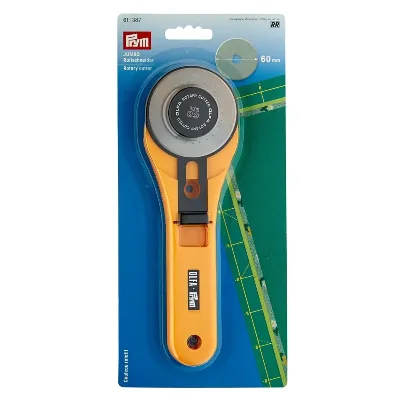
Prym OLFA Jumbo rotary cutter 60mm in Yellow
€32.50per piece
Woven viscose, black
€6.45per 0.5 m
Unit price €12.90 / m
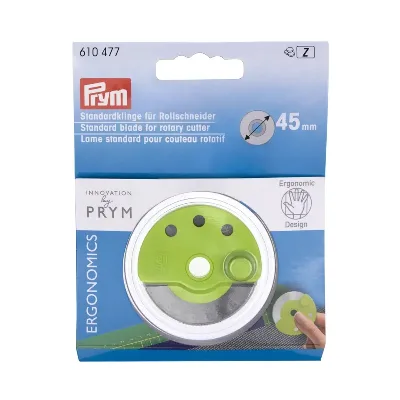
Prym Ergonomics replacement blade in Silver
€10.90per piece