Jersey or Rib Jersey: Which Fabric Is Right?
A T-shirt should drape softly, a baby bodysuit has to move with every wriggle, and your new ribbed top can happily sit close to the body - but which fabric is right for the job? When it comes to jersey or rib jersey, it isn't about which fabric is better in general. What matters is the pattern, the fit you're after and the everyday life your handmade piece will need to keep up with.
Both are knit fabrics, feel lovely and have plenty of stretch. Even so, they behave quite differently when you sew, wear and wash them. Once you know these differences, choosing fabric becomes much easier, and you avoid a perfectly lovely sewing pattern ending up too tight, too loose or simply not draping the way you hoped.
Jersey or rib jersey: the difference at a glance
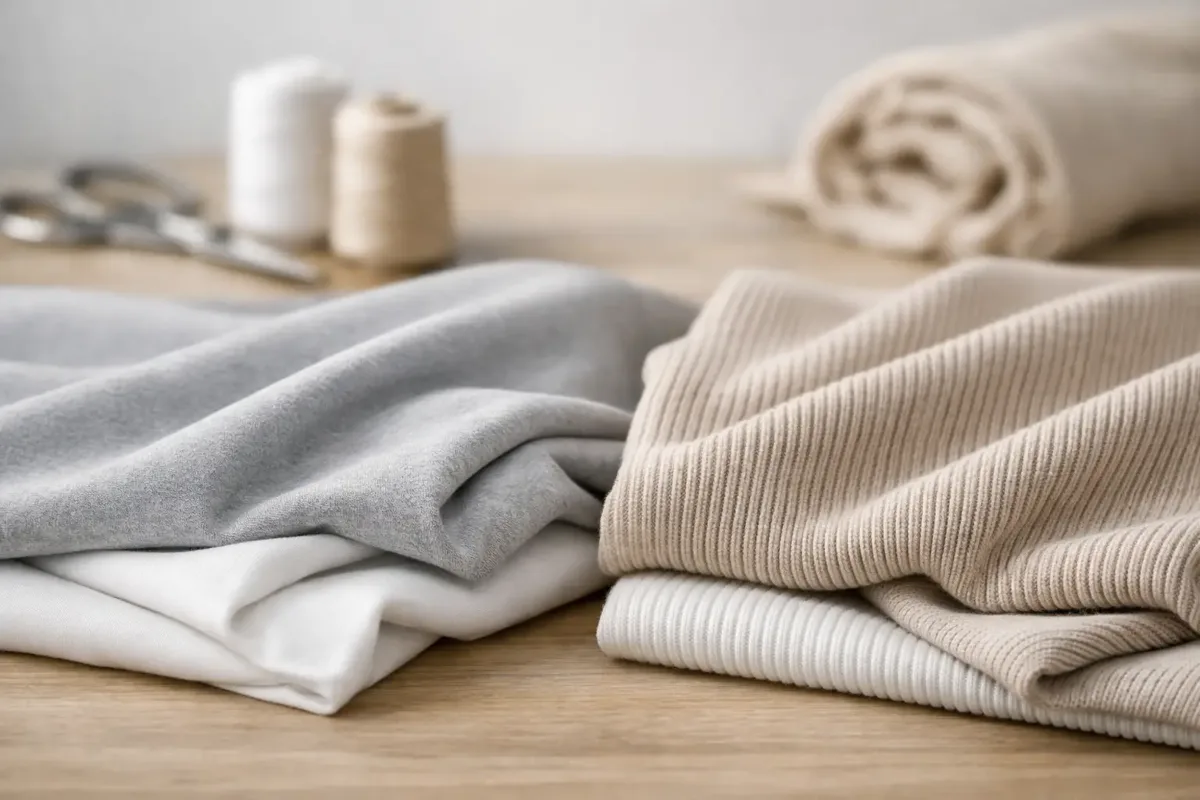
Classic jersey, usually called single jersey, has a smooth, even look on the right side. The wrong side shows tiny loops. It's the familiar all-rounder for T-shirts, leggings, dresses, pyjamas and lightweight children's clothing. How much it stretches depends mainly on the fibre content and the amount of elastane. Cotton jersey with elastane is a reliable choice for lots of garment projects: soft, easy to work with and comfortable against the skin.
You can recognise rib jersey by its fine or more pronounced vertical ribs. These come from a special knitting technique, not a printed effect. The fabric is often considerably stretchier than single jersey, especially across the ribs. At the same time, it hugs the body more closely and has a lively, textured surface.
Worth knowing: the term rib jersey isn't always used consistently. Some fabrics have very fine ribs and drape softly, while others, sold as 1x1 or 2x2 rib jersey, are much more pronounced and firmer. So don't just go by the name - check the weight, fibre content and stated stretch too. If you're unsure, give the fabric a quick stretch between your fingers and see how well it springs back into shape afterwards.
How the fabrics feel and drape
Single jersey lies smoothly against the skin and, depending on its weight, drapes anywhere from relaxed to fluid. A lightweight viscose jersey moves especially softly and is wonderful for airy T-shirts or dresses. Cotton jersey usually has a little more body and makes a great basis for everyday tops, harem trousers and comfy children's clothing.
Thanks to its texture, rib jersey often looks a little fuller, even though it isn't necessarily heavier. It sits closer to the body and moves with you beautifully. That's ideal for a fitted T-shirt, a tank top or a bodysuit. In a loose, flowing dress, however, it may hang differently than you expect: the ribs draw together, the fabric looks narrower and the design takes on more shape.
You can see the difference too. Smooth jersey lets large prints, panel prints and bold colours really stand out. Rib jersey already brings its own texture. Plain colours look especially lovely on it, whereas very small, busy prints can look a little restless across the ribs.
Stretch isn't everything
A very stretchy fabric isn't automatically better for close-fitting clothes. What really counts is recovery - whether the fabric returns to its original shape after being stretched. Good-quality rib jersey with elastane can perform very well here. With loosely knitted or very soft qualities, though, a garment can gradually stretch out over time.
Classic rib jersey isn't always the best choice for neckbands, cuffs or hems. Dedicated ribbing is usually more tightly knitted, stretchier and designed specifically for this purpose. A fine rib jersey can work for a relaxed finish, but it won't replace firm ribbing in every project.
Which fabric suits your sewing project?
For a classic T-shirt, cotton jersey is an easy place to start. It works with lots of sewing patterns, pairs well with other fabrics and suits children and adults alike. If the T-shirt should be particularly close-fitting - say, as a basic layer under a cardigan - rib jersey may be the nicer choice. In that case, make sure the pattern is designed for stretch fabrics and has enough ease.
Both fabrics are popular for baby and children's clothing. Jersey is perfect for T-shirts, harem trousers, dresses and hats. Rib jersey is especially comfortable for bodysuits, leggings, rompers and slimmer trousers because it moves with every movement. For very active children, it's worth looking at the fibre blend: cotton with elastane holds its shape well, while viscose blends drape more softly but can be a little more delicate.
For women's and men's clothing, the silhouette you want is the deciding factor. Loose-fitting T-shirts, oversized French terry jumpers and airy dresses often benefit from smooth jersey. Tops, roll-neck tops, slim dresses and close-fitting long-sleeve tops gain from the stretch and texture of rib jersey.
Underwear, sleepwear and loungewear are also typical uses. Here, the feel against the skin matters most. A soft cotton or modal rib jersey often feels wonderfully comfortable. For leggings or cycling shorts, the fabric should be sufficiently opaque and have good recovery. A quick stretch test before cutting saves you from unpleasant surprises.
Reading your sewing pattern correctly
Many sewing patterns state a minimum stretch, for example 30 or 50 per cent. This figure matters more than the fabric's name. A pattern intended for a very stretchy rib jersey may come out too tight in a cotton jersey with little stretch. Conversely, a loose pattern made in a very stretchy rib jersey can end up looking bigger than you planned.
Also check the recommended fabric type. If it says “jersey”, it usually means a smooth, stretchy garment fabric. If “rib jersey” or “rib knit” is recommended, the close fit is often part of the design. Especially with patterns for bodysuits, tank tops or slim dresses, it's worth taking this recommendation seriously.
With fabrics that have vertical ribs, you'll usually cut the pieces so that the ribs run from top to bottom. This has a lengthening effect and makes the most of the widthways stretch. If you turn the ribs, it's not only the look that changes - the way the garment stretches can shift unfavourably too.
Sewing jersey and rib jersey: tips to make it easier
Ideally, sew both fabrics with a jersey or stretch needle. Its rounded tip pushes the loops aside rather than piercing them, so small holes and ladders are far less likely. With fine, very stretchy rib jersey, a fresh, suitable needle is especially important.
An overlocker makes quick, stretchy seams. But a domestic sewing machine is perfectly adequate too: a narrow zigzag stitch, a stretch stitch or a slightly stretched straight stitch are all good options. Sew a test seam on a scrap first. That way you'll see straight away whether the seam snaps when stretched or whether the fabric ripples under the presser foot.
Because it's so stretchy, rib jersey can distort more easily. Lay it out flat when cutting without pulling it, and use plenty of clips or fine pins. When sewing, you can guide the fabric, but don't stretch it forwards or backwards. If it still ripples, try reducing the presser foot pressure, adjusting your stitch settings or placing water-soluble stabiliser under the seam.
For hems, a twin needle, coverstitch or stretch zigzag stitch work well. With rib jersey, don't sew the hem too tightly, or it will pull in and lose its lovely, smooth line. On many tops, a narrow hem works better than a wide turn-up.
Care, shrinkage and how much fabric you need
Jersey and rib jersey should be washed before cutting - ideally the same way you plan to care for the finished garment. Natural fibres can shrink, cotton in particular. Skip this step and you may find a T-shirt suddenly sits shorter or tighter after its first wash.
It's best to wash the fabrics and finished pieces inside out, with similar colours and at no higher a temperature than necessary. Tumble dryers can put extra strain on the fibres and change the shape. If you plan to wear a garment often, a careful pre-wash is especially worthwhile.
As for fabric quantity: because it stretches more, rib jersey may need slightly less width for slim-fitting patterns. Still, rely on the quantity given in your sewing pattern. Print direction, cutting direction and the length you want all play a part. Thanks to small order quantities from 20 cm, at Die Stoffkönigin you can also pick out matching coordinating fabrics or a small piece for ribbing, pocket bags and details.
If you're torn between the two fabrics, picture the pattern alongside the fabric: should the piece skim loosely or gently hug the body? That's usually where the right decision lies - and a test garment will help you find it with even more confidence.