A Guide to Pre-Washing Fabric Properly
Your fabric is ready, you've chosen your sewing pattern - and you'd love to start cutting straight away. This is exactly the moment to pause for a minute: this guide to pre-washing fabric properly will help you avoid the frustration of shrunken T-shirts, twisted seams or favourite pieces ruined by colour run. Many fabrics change far more in their first wash than in any wash that follows.
Pre-washing isn't a hard-and-fast rule for every fabric you buy by the metre. It depends on what you want to sew, how the finished piece will be cared for and what your fabric is made of. With a few simple decisions, you can prepare your project reliably - without any unnecessary effort.
Why wash fabric before sewing?
Natural fibres absorb moisture, relax and can shrink in the process. This particularly affects cotton, linen, viscose and wool, but blends can change too. Jersey also often becomes a little more compact after washing and may behave slightly differently in width or length.
If you sew a garment from unwashed fabric and then wash it for the first time, the fit may no longer be right. A child's jumper suddenly ends up too short, a pair of trousers feels tighter or a handmade dress twists at the side seams. When you pre-wash, this change happens before cutting - before you've put time and care into your project.
Colour is another reason. Strongly dyed fabrics, especially red, navy, black or intense turquoise shades, can release excess dye in their first wash. Washing them separately protects your other fabrics and lets you see straight away how colourfast the material is.
The golden rule: wash it the way you will later
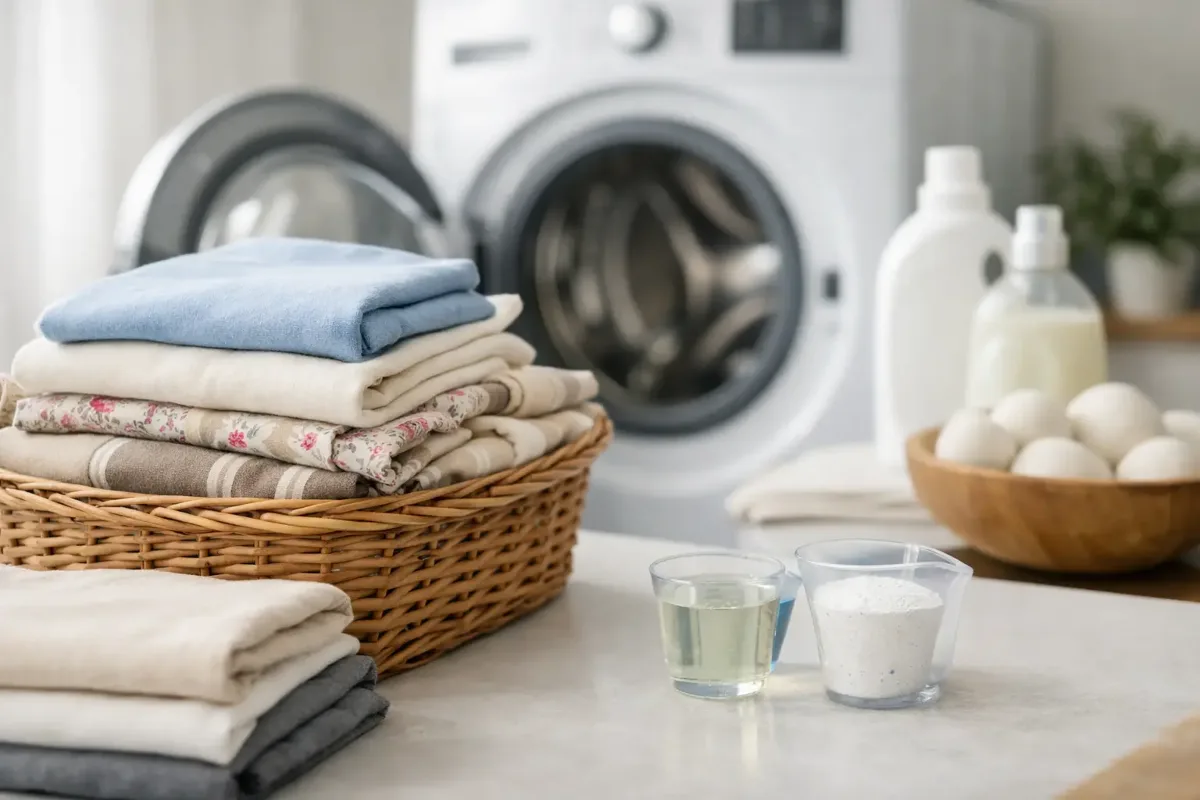
The best guideline is simple: prepare the fabric the same way you plan to care for the finished piece. Will your T-shirt regularly go in the machine at 40 degrees and then into the tumble dryer? Then the fabric should get the same treatment before cutting. If a blouse will later be washed on a delicate cycle and dried on a hanger, the same applies to the fabric.
You don't automatically have to choose the highest temperature on the care label. What matters is how you'll actually use the item. Baby bibs, flannels or kitchen accessories are often washed hotter than a dress or a light scarf. For cotton jersey garments, 30 or 40 degrees is usually right. For hard-wearing projects, a higher temperature can make sense, as long as the fabric details allow it.
Drying matters too. Many fabrics shrink not only in the washing machine but especially in the tumble dryer. If the finished piece will never go in the dryer, there's no need to put the fabric in it either. If, on the other hand, you're planning everyday clothes that can be tumble dried, it's wise to replicate that care before you sew.
How to pre-wash fabric by material
Cotton, muslin and poplin
Cotton woven fabric is pleasantly straightforward for lots of sewing projects. It's great for children's clothes, shirts, patchwork, cushions or pocket linings and can usually be pre-washed. Still, always check the care recommendations for each fabric, especially with metallic prints, coatings or very dark colours.
Muslin often visibly crinkles up after washing and takes on its typical soft texture. That's normal and actually desirable. So only sew it into burp cloths, summer clothes or airy blankets once it's been washed and dried.
Jersey, sweatshirt fabric and ribbing
Stretch fabrics should always be relaxed and dry before cutting. Jersey and sweatshirt fabric can shrink, twist slightly or show a different stretch after the first wash. It's best to wash them inside out and with similar colours. A mild detergent without bleach is kind to prints and colours.
Ribbing can be washed together with the main fabric if you'll be sewing them together later. That way, the cuffs and bands behave much like your jersey or sweatshirt fabric after washing. It makes a noticeable difference, especially for T-shirts, hoodies and harem trousers.
Viscose, Tencel and lightweight blouse fabrics
Viscose is wonderfully soft and drapey, but it can shrink considerably in the wash. It also becomes more delicate when wet and shouldn't be rubbed hard or spun vigorously. A delicate cycle at a low temperature, a laundry bag and gentle drying are a good choice.
Lightweight fabrics sometimes fray at the cut edges. If you're washing several metres, you can secure the short cut edges beforehand with a zigzag stitch or your overlocker. It's not essential, but it stops long threads coming loose in the machine and tangling in the fabric.
Linen and linen blends
Linen changes its feel with every wash and usually gets softer. At the same time, it can shrink more at first than many cotton fabrics. For summer trousers, table linen or tunics, you should definitely pre-wash it - in line with how you'll care for it later.
Be generous when calculating linen. If you work out your sewing pattern to the exact centimetre, the fabric may end up too short for some pattern pieces after pre-washing. A little extra makes sense for many projects, especially if you want to align a print or match stripes and checks.
Wool, silk and delicate fabrics
The rule here is: check first, then wash. Pure wool, boiled wool, silk or fabrics with a delicate finish need different treatment from cotton. Some wool fabrics can be carefully hand-washed in cold water, while others should only be aired or professionally cleaned. If you're unsure, a small test piece is the safest option.
Boiled wool is often not pre-washed, as washing can cause it to felt heavily or change its surface. For jackets, waistcoats or outdoor projects, it's often better to clean the finished piece only rarely and very gently. Silk can get water marks or lose its sheen. With these materials, follow the care instructions especially closely.
Softshell, rainwear fabric and coated materials
With softshell, rain jacket fabric, coated cotton and similar technical fabrics, pre-washing usually isn't necessary. It can affect water-repellent properties, coatings or the smooth surface. If you want to remove marks or a smell, a short, gentle wash without fabric softener is often enough, depending on the care instructions.
Faux leather, oilcloth and many laminated fabrics don't belong in the washing machine either. A damp cloth is normally all you need. With materials like these, it's better to allow a little extra seam allowance than to count on possible shrinkage.
How to prepare your fabric in practice
Wash new fabrics separately the first time, or only with similar colours. This is particularly sensible for bold plain fabrics and colour-rich prints. A colour catcher sheet can help, but it's no substitute for caution with fabrics that release a lot of dye.
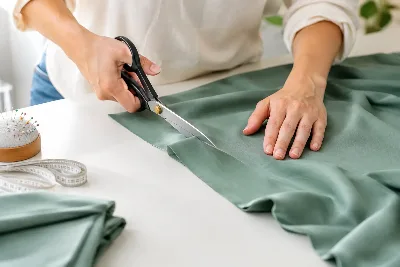
Let the fabric dry completely after washing before you cut it. Then iron it, or at least smooth it out. Creases, twisted edges and an off-grain fabric make cutting unnecessarily difficult. With woven fabric, you can use the selvedge as a guide. With jersey, lay the fabric edges neatly on top of each other without pulling the material.
Very large pieces of fabric sometimes look skewed after washing even though they aren't really distorted. Spread them out on a smooth surface, gently smooth them into shape and only then fold them up. Don't forcefully stretch them lengthways - that will change the measurements again.
How much extra fabric should you allow?
Shrinkage can never be predicted to the millimetre for every batch. That's why the fabric requirement on a sewing pattern is more of a minimum than a safety margin. With cotton, jersey, viscose and linen, it's worth ordering a little more if you plan to pre-wash. This is especially true for long dresses, larger sizes, curtains or projects with a directional print.
Extra fabric is also handy for a wash and ironing test. Before cutting out your pattern pieces, cut off a small piece and use it to check temperature, colour, handle and, if needed, how it works with iron-on interfacing. That way, you don't have to experiment on your finished favourite piece.
What shouldn't you forget?
Wash fabrics that will be joined together in a project under similar conditions where possible. If an outer fabric and lining go into a bag or jacket together, they shouldn't behave completely differently later on. Take care with interfacing: fusible interfacing isn't usually pre-washed, as the adhesive layer can be affected. Instead, test ironing it on a scrap of your already-washed fabric.
Trims, lace and ribbons also deserve a quick look at their care properties. For decorative elements that can't be washed with the rest, a careful test can help. For a garment that's going to go in the machine regularly, washable materials are usually the more practical choice.
Feel free to set aside an evening for pre-washing before you start your new project. When the fabric is lying in front of you the next day, smooth, dry and ready to cut, you'll sew more calmly - and your finished piece can bring you joy for just as long as you'd like.