
Paper or PDF Sewing Patterns: Which Suits You?
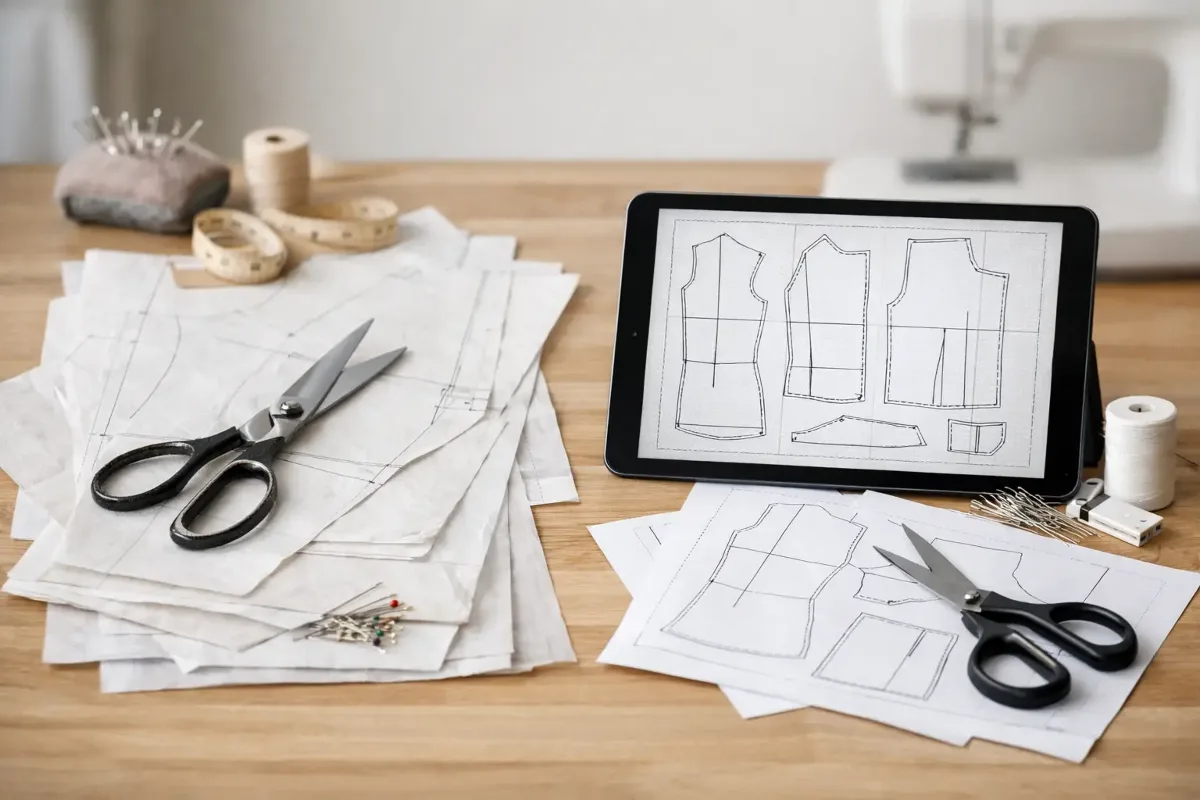
Your fabric is ready and your sewing machine is threaded. Now there's just one decision left: a paper pattern or a PDF sewing pattern? Both lead to the same result, whether that's a garment, a bag or a lovingly sewn gift. The journey there feels quite different, though. Neither option is right or wrong. What suits you better depends on how you sew, how much space you have and whether you like to start straight away or prefer to prepare at your own pace.
Paper or PDF sewing pattern: the difference
A paper pattern is a ready-printed sewing pattern on one large sheet or several sheets, often with an instruction booklet. You buy it, unpack it and can trace off your size straight away. Depending on the pattern and your own preference, you can also cut it out. Many well-known pattern companies offer their designs in this classic format.
A PDF sewing pattern is bought digitally, and you download the files afterwards. You usually get the instructions, a file to print at home on A4 and often a file for large-format printing. Some designers also include a projector file. This means the pattern can be yours the moment you buy it, even when your project suddenly takes shape on a Sunday evening.
Important: the quality of the pattern, the fit and the difficulty level don't depend on whether it comes on paper or as a PDF. What matters is how well the pattern is drafted, how clear the instructions are and whether the design suits your experience and your plans.
When a paper pattern is the easier choice
Paper patterns are ideal if you want to keep preparation to a minimum. There's no downloading, no fiddling with printer settings and no taping pages together. The sheet is in front of you and you can get started. This is especially handy for bigger patterns with lots of pieces, such as a coat, a jacket or a booklet with several variations, because everything stays nice and clear.
Many sewists also love working with something they can actually touch. Spreading the pattern sheet out on the table, marking your size, laying tracing paper on top and tracing it off is a familiar routine. If you want to sew several sizes, perhaps for siblings or because your own size changes, the original sheet stays intact. Tracing takes a little time, but it means you can keep using the pattern in lots of ways for years to come.
A paper pattern often makes a lovelier gift, too. Paired with matching fabric, thread, ribbing or buttons, it becomes a real creative kit rather than a download the recipient has to sort out for themselves.
The main drawback is availability. You have to wait for delivery or buy the pattern in a shop. The sheets also take up space. If you collect lots of patterns, you'll know the question: where on earth are the pieces for that dress from last summer?
Who the classic pattern sheet is best for
If you like to get started without any tech, collect patterns or regularly sew for different people, a paper pattern is often the relaxed choice. It also suits beginners who want to focus on fabric, cutting and the sewing machine first. Having a ready-made sheet removes one small hurdle from your first project.
The case for a PDF sewing pattern
The biggest advantage of a PDF sewing pattern is speed. You choose the design, pay for it and can usually download the file straight away. That's handy when you finally want to sew up some fabric from your stash or are planning a project shortly before a special occasion.
PDFs also save storage space. You can keep lots of patterns neatly organised on your computer or tablet, or in a well-sorted cloud folder. With sensible file names such as ‘Kids' hoodie sizes 98-140’ or ‘Women's dress woven fabric’, you'll find what you're looking for much more quickly later on. It's best to save a backup copy of the files somewhere safe right after you buy them.
Another plus: many digital patterns come with layers. These let you print only the size you need. The pattern pieces look much less cluttered, and there's less risk of cutting along the wrong line. Some files even offer different size ranges or extra variations that you can print as needed.
In return, a PDF needs a bit of preparation. With a pattern on A4 pages, you have to print the sheets, line them up using the markings and tape them together. Depending on the size of the project, this can turn into one large sheet of paper. For a small child's T-shirt, this is usually done in no time, but a maxi dress or a jacket can take considerably longer.
Printing PDF sewing patterns correctly: what matters
The most common mistake when printing a PDF is the wrong scaling. In the print menu, always select ‘Actual size’, ‘100%’ or a similar setting. Options such as ‘Fit to page’ or ‘Shrink oversized pages’ must be switched off. Even a few millimetres out can later mean a sleeve ends up too tight or a neckline too small.
Always print only the page with the test square first. Measure the square with a ruler. If it matches the stated measurements exactly, you can print the rest of the pages. Only then is it worth sticking them together.
For patterns with several pages, it helps to lay the pages out on a large surface first. Only then should you deal with the margins that the instructions tell you to overlap or trim off. Clear sticky tape is practical because the lines stay visible. If you use PDF patterns often, you can also use a glue stick, as the result often lies flatter on your cutting table.
For large formats, printing at full size is a convenient alternative. You skip the taping and get one continuous sheet. Die Stoffkönigin offers a printing service for this, which can save time and nerves, especially with bigger projects. Check beforehand whether your pattern file is set up for large-format printing and whether you only want the sizes you need to be printed.
Weighing up cost, time and sustainability realistically
A PDF is often cheaper to buy than a printed pattern, but it isn't automatically the more economical option. Printer paper, ink, tape and, where needed, large-format printing all add to the bill. If you only use a pattern once for a small item, the difference may be small. If you want to use it again and again, the effort pays off.
With a paper pattern, you usually pay more for the finished product but save on printing and taping time. If you handle the sheet with care, you can use it for a long time. Tracing it off keeps it in especially good condition.
Sustainability can't be judged across the board either. A PDF avoids shipping and packaging but can produce a lot of printed pages. A paper pattern arrives as a physical product but lasts a long time if you use it repeatedly. The most sensible approach is to print only the sizes and pages you really need, keep your pattern pieces and sew test garments from fabric scraps you already have.
Fit matters more than format
A perfectly printed sewing pattern is no guarantee of a good fit. Body measurements, fabric properties and the amount of ease you want are what make the difference. Before cutting, measure the bust, waist and hips, plus the height for children. Compare these figures with the size chart from the pattern company in question, not just with the dress size you buy in shops.
Pay attention to the fabric, too. A T-shirt pattern designed for stretchy jersey needs stretch; made in woven fabric, it will hardly go over your head. On the other hand, a dress intended for viscose woven fabric can suddenly feel stiff and tight if made in sturdy canvas. That's why the fabric recommendation in the instructions isn't a minor detail but part of the fit.
With a new pattern, it's worth making a toile, especially for trousers, jackets or a dress for a special occasion. It doesn't need to be beautiful fabric. An inexpensive cotton, a leftover piece of jersey or an old bed sheet can show you whether the length, width and fit are right. Making small adjustments to the pattern at this stage saves you not only money later on, but often disappointment too.
How to make your decision
If you want to start sewing straight away, can keep digital files well organised and either enjoy taping pages together or use large-format printing, a PDF sewing pattern is very practical. If you prefer a ready-made, analogue pattern, want to avoid tech steps or love collecting pattern sheets, a paper pattern is probably the better choice.
But you don't have to commit to one for good. A simple PDF might be just right for a quick child's T-shirt, while you might prefer a printed pattern sheet for an elaborate coat. Decide project by project, and you'll have more time for the best parts of sewing: choosing fabric, cutting out and turning an idea into something of your own.


