Guide: Choosing the Right Cotton Fabrics for Home Decor
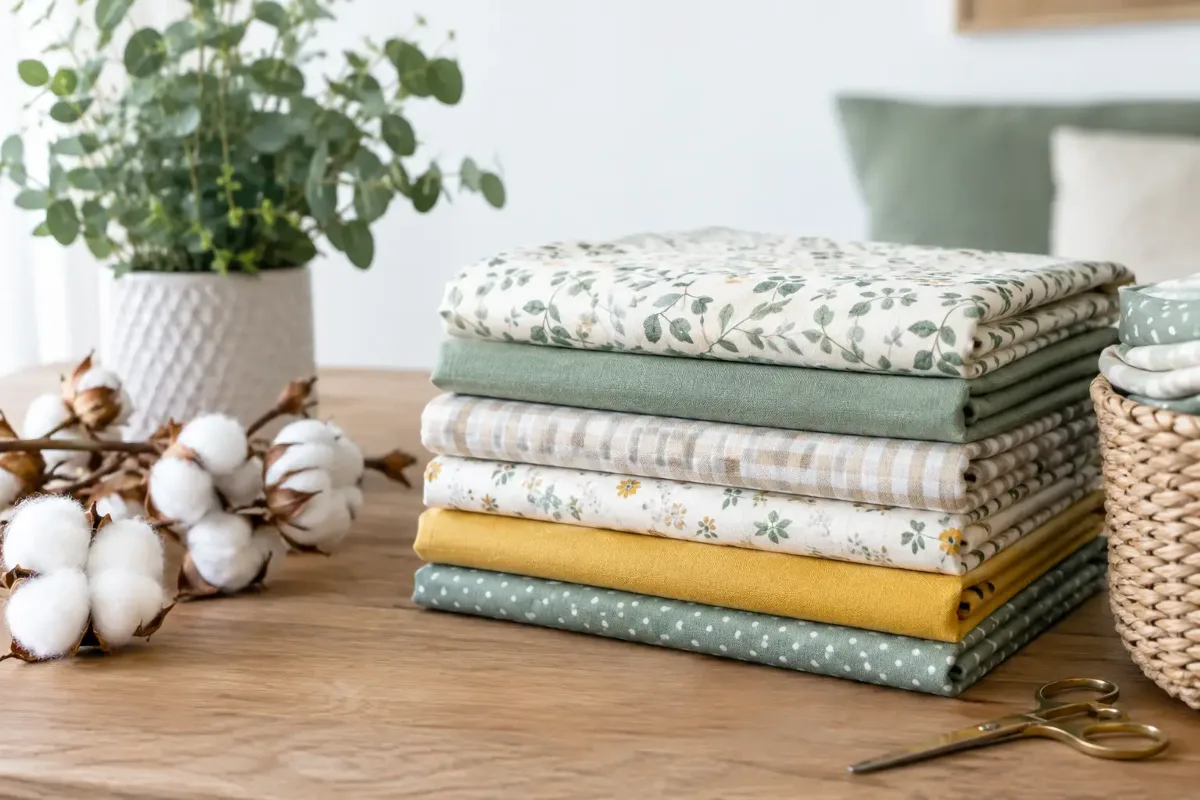
A new cushion, a table runner or a pair of curtains can often change a room more than a new piece of furniture. To make sure the joy isn't spoilt after a short while by faded colours, limp edges or see-through fabric, it pays to choose your material carefully. This guide to cotton fabrics for home decor shows you what really matters when buying fabric by the metre for your home – clear, practical and tailored to your project.
Why cotton is so popular for home decor
Cotton feels pleasant to the touch, takes all kinds of prints beautifully and is easy to sew on a domestic sewing machine. That makes it a reliable classic for cushion covers, table linen, fabric organisers, fabric baskets, garlands and small gifts. From playful children's prints and florals to calm plain colours, there's a suitable option for almost every interior style.
Not every cotton quality serves the same purpose, though. A fine fabric can be just right for light window decor but too thin for a heavily used bench cushion. Conversely, a sturdy canvas is wonderful for bags and baskets but tends to hang rather stiffly as a curtain. So the best decor fabric isn't chosen by pattern alone, but by how the finished item should look and how it will be used.
Cotton fabrics for home decor: finding the right quality
Three questions help when shopping: should the fabric drape softly or hold its shape? Will the item be washed often or take a lot of wear? And should light shine through? With those answers, you can narrow down your choice quickly.
Woven cotton for cushions, table runners and light decor
Classic woven cotton, often also called quilting cotton or cotton woven fabric, is the easy-going all-rounder. It is usually densely woven, pleasantly smooth and available in a particularly wide range of designs. It's an excellent choice for cushion covers, placemats, table runners, bunting, gift bags or a decorative fabric garland.
Beginners love working with this quality too, because it doesn't slip when cutting and allows neat seams. For simple cushions it is usually perfectly sufficient. If the cushion will sit on the sofa every day, be washed now and then and still look lovely for a long time, look for a fabric with a solid density and finish your seams carefully.
With light-coloured or very fine qualities, a cushion pad may show through. A suitable lining fabric, a slightly denser decor fabric or a colour-matched cushion pad will help. It's well worth taking a quick look before cutting, especially with white, pastel or large pale motifs.
Poplin for light curtains and delicate accents
Cotton poplin is fine, smooth and usually lighter than classic decor fabrics. It works beautifully for delicate café curtains, light tiebacks, small fabric flowers or decorative projects in a child's room. Poplin also looks great as a lining for fabric baskets or combined with a sturdier outer layer.
On its own, poplin is usually not the best solution for opaque curtains or heavy window dressings. It lets plenty of light through and offers little privacy. That may be exactly what you want at a kitchen window or as an airy accent. In a bedroom or living room, however, you'll often need a denser quality, an additional lining fabric or a fabric specifically designed for curtains.
Canvas and panama for shape, stability and everyday use
If your decor needs to stand up to a bit of wear, canvas, decor canvas or panama weave is often the better choice. These cotton fabrics are more robustly woven and have more body. They are ideal for fabric organisers, storage baskets, seat cushion covers, bags, aprons, wall organisers and sturdy placemats.
In a plain colour, canvas can look very modern, but it also carries large prints and graphic patterns superbly. For fabric baskets, you can reinforce the shape further with interfacing. With a firm canvas, though, this isn't always necessary – too much interfacing quickly makes small projects needlessly stiff and hard to turn through.
Panama often has a more distinctive, slightly coarser texture. This gives table runners, cushions and rustic decor a cosy, natural look. It is less suited to very fine appliqué or intricate sewing, but all the better for clean shapes and long-lasting home accessories.
Judging weight, handle and drape
The fabric weight in grams per square metre is a useful guide, but not a verdict on quality in itself. A lightweight fabric can be high quality and ideal for its intended use – it just won't form sturdy baskets. As a rough guide: lighter cottons suit delicate decor and linings, medium-weight woven fabrics suit many classic home projects, and firmer qualities suit hard-wearing accessories.
The handle matters at least as much. Imagine holding the fabric in your hand: if it's soft and flowing, it's better suited to light curtains or ruffles. If it feels compact and firm, it's a better match for cushions, table linen or bags. In a shop, you can feel and compare fabrics directly. When buying online, the material description, weight and suggested uses give you valuable guidance.
For large curtains, also check the fabric width. Many cotton fabrics are around 140 cm wide. Depending on your window measurements and the amount of gathering you want, you'll need several widths. A pattern may run across or along the fabric – this affects not only the look but also how much fabric you need.
Planning for pattern, colour and light
A fabric that looks gorgeous on your sewing table can look different at the window. Daylight brightens colours, while direct sunlight can take its toll on them over time. For curtains at a sunny window, very dark or particularly vibrant colours are often put under more strain than cushions in a sheltered living area. It's worth keeping treasured favourites out of constant bright sunshine.
With large motifs, placement is key. Lay your pattern pieces on the fabric before cutting and check which motif should end up in the centre of the cushion or on the front of a fabric basket. A single animal, flower or lettering shouldn't accidentally disappear into the seam.
Pattern repeats need a little more fabric. This is especially true of stripes, checks and motifs with a clear direction. On a table runner or two cushions of the same size, it looks harmonious when patterns and stripes are deliberately aligned. It's better to allow a little extra than to be annoyed later by a motif that's been cut off.
Before you sew: washing, pressing and the right reinforcement
Cotton can shrink the first time it's washed. If your finished decor is to be washable, it's a good idea to prewash the fabric according to the care instructions. That way, a cushion cover keeps its shape better after the first wash, and when combining different fabrics you reduce the risk of one part shrinking more than another.
After washing, press the fabric and only then cut it. A universal needle in a suitable size and good-quality sewing thread are enough for many cotton projects. For edges that need to withstand a lot – such as on seat cushions or baskets – slightly shorter stitches and careful backstitching provide extra strength.
Interfacing should support the project, not dominate it. For a table runner, a lightweight interfacing can help it lie flat. For a soft cushion cover, it's usually unnecessary. Fabric baskets often benefit from firmer interfacing, volume fleece or a combination of outer and lining fabric. Which option suits depends on whether the basket should be soft and flexible or stand in a clearly defined shape.
Making clever use of small amounts for decor
Many decor projects don't need large amounts of fabric. With just 20 or 30 cm you can sew coasters, hanging decorations, small pennants, cutlery pouches or appliqués. That's handy if you want to try out colours, combine fabric scraps or create several cushions with different accents.
A calm plain fabric paired with a patterned cotton often gives a more cohesive result than a room full of different prints. Repeat a colour from the pattern in the piping, zip, back panel or binding. This creates a well-thought-out overall look without making the sewing any more complicated.
At Die Stoffkönigin, many fabrics are available from just 20 cm. This makes it easier to shop specifically for small decor ideas while still having plenty of choice for coordinating fabrics, linings or colour accents.
A good decor fabric doesn't have to do everything. It should suit your project exactly: soft for an airy window accent, dense for a favourite cushion, firm for a basket that's in daily use. If you think briefly about use, drape and care before you buy, a beautiful fabric becomes decor that will grace your home for years to come.