Choosing fabric by purpose
If you choose your fabric by purpose, you'll save yourself a lot of frustration later at the cutting table and the sewing machine. A fabric can look absolutely gorgeous and still simply be the wrong choice for the project you have in mind. A floaty viscose won't make you happy as a sturdy bag, any more than stiff canvas will work for a softly draping summer dress.
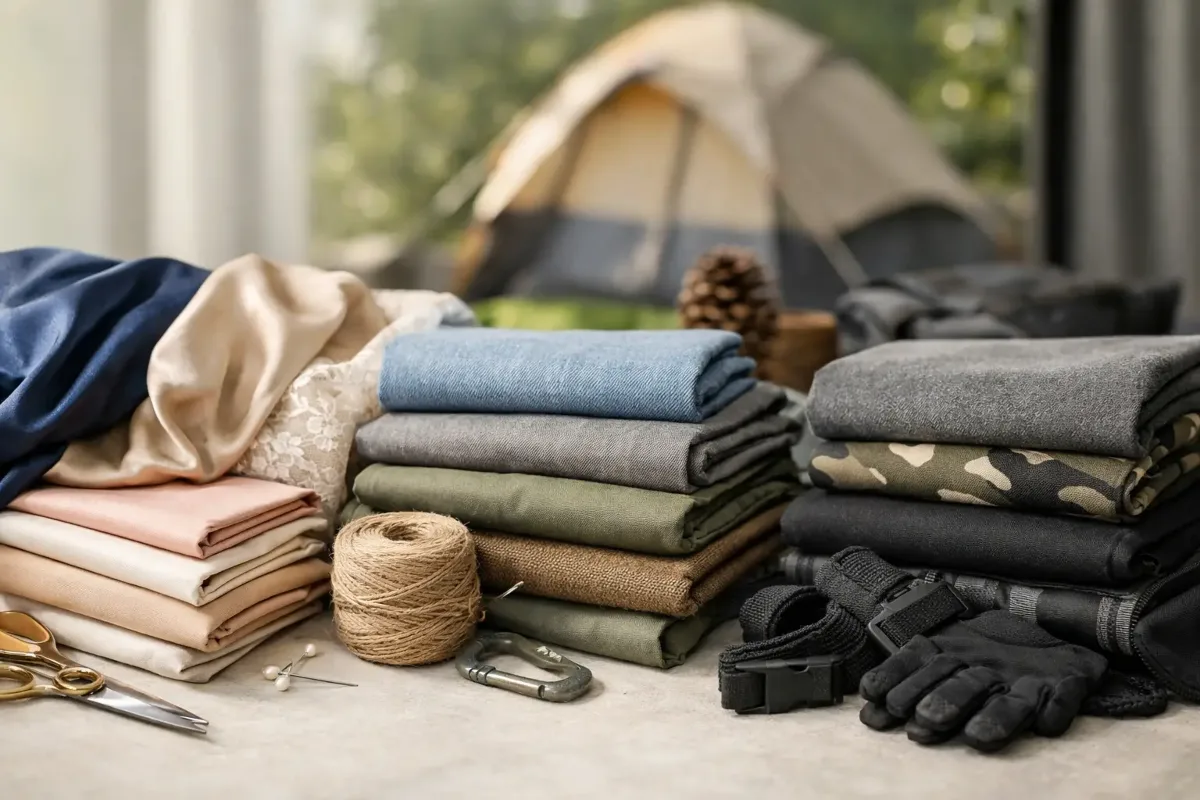
This is exactly why it pays not to look at colour or print first, but at what the fabric actually needs to do in the end. Should it stretch, keep you warm, hold its shape, cope with moisture or simply drape beautifully? Once that question is answered, choosing becomes much easier – especially when you're faced with lots of different materials.
Choosing fabric by purpose – what really matters
In everyday life, fabrics are often bought by their material name. Cotton, jersey, softshell or fleece already tell you quite a bit, but not everything. What really counts is always the combination of fibre, weave or knit, weight, handle and surface. Two cotton fabrics can behave completely differently depending on whether they're poplin, muslin or canvas.
That's why a simple way of thinking helps: don't just ask what the fabric is made of, but what it's meant for. Clothing needs different qualities from home décor, bags or outdoor projects. And even within one category there are differences. A T-shirt, a hoodie and a rain jacket are all clothing – but they're certainly not sewn from the same fabric.
The four key questions before you buy
Before you make up your mind, four practical questions will help. First: should the fabric drape softly or have more body? Second: does it need to stretch? Third: how much wear and tear will the finished piece get? And fourth: how easy does it need to be to care for day to day?
These points sound simple, but they often decide whether a project succeeds or fails. Children's clothing, for example, usually needs washing far more often than a decorative cushion. A make-up bag needs more structure than a blouse-style top. And with curtains, how much light gets through often matters more than stretch.
Which fabric suits clothing?
With clothing, comfort almost always comes first. The fabric should feel pleasant against the skin, suit the style of the pattern and be easy to wear every day. For many sewing projects, jersey, woven cotton, viscose, sweatshirt fabric or ribbing are the usual candidates – but each has a different job to do.
Jersey is ideal for anything that should be comfortable and stretchy. T-shirts, leggings, bodysuits and children's clothing all benefit, because the fabric moves with you and is lovely to wear. With closer-fitting styles in particular, that's a big advantage. However, jersey needs a little more care when sewing than woven cotton, because it stretches and behaves differently depending on its quality.
Woven cotton, on the other hand, is more stable and often easier to sew. It works well for blouses, shirts, light dresses, harem trousers, baby accessories or patchwork. If a pattern doesn't call for stretch, it's often the more straightforward choice. In return, it's less flexible on the body and can quickly look stiff in close-fitting styles.
Viscose scores with its soft, fluid drape. For summer dresses, loose blouses or wide-leg trousers, that's often just right. It's pleasantly light to wear and tends to look a little more elegant. The downside: viscose can be slippery to cut and needs a bit of patience under the machine.
For warmer clothing, sweatshirt fabric, French terry or fleece come into play. Sweatshirt fabric and French terry are popular for hoodies, joggers, children's jumpers and comfy loungewear. Fleece is especially warm and dries quickly, but in terms of look and drape it isn't the best choice for every garment. Here, the project really decides.
Children's clothing has its own rules
With fabrics for children, skin-friendliness, freedom of movement and easy care matter most. That's why jersey, French terry and soft cottons are often a good choice. At the same time, the fabric needs to stand up to everyday life. If something loses its shape after the second wash or pills quickly, it soon becomes impractical in a busy family.
For areas that take a lot of strain, such as knees, cuffs or jackets, it's worth looking a little more closely. Not every soft fabric copes equally well with rough and tumble. Sometimes a slightly firmer fabric is the better decision, even if it seems less cosy at first.
Fabrics for bags, baskets and accessories
As soon as a project needs to hold its shape, soft dressmaking fabrics often aren't enough. For bags, fabric storage pots, rucksacks or baskets, you need fabrics with body. Canvas, heavy cotton or coated fabrics are particularly popular here, because they're more hard-wearing and bring more structure.
Canvas is excellent when you don't want a bag to collapse in on itself. It has a firm handle, is durable and very versatile. For shopping bags, wash bags or storage baskets, it's often a very good choice. Depending on the pattern, you can also add wadding or interfacing if you need even more stability.
Coated cotton or water-repellent fabrics are handy when a project needs to take a bit of punishment or be wipe-clean. That's a real advantage for changing mats, lunch bags or make-up bags. At the same time, these fabrics can be a little trickier to sew, because they tend to stick under the presser foot. So it's worth choosing the material not just for its looks, but also for how easy it is to sew.
Home textiles and décor – more than just pretty
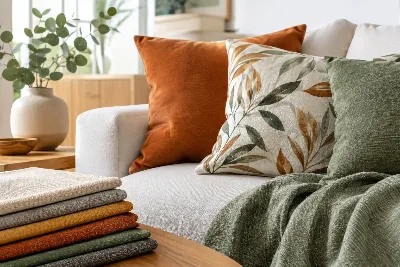
For cushions, table runners, curtains or other décor projects, it's not just the print that counts. Here too, the purpose makes the difference. A cushion cover in the living room has to work differently from a curtain in a child's bedroom or a table linen for daily use.
For cushions and light décor, woven cotton is often a rewarding all-rounder. It's easy to sew, available in lots of designs and combines well with other fabrics. If you want more structure, firmer fabrics such as canvas can also work well. For curtains or softly draping home textiles, on the other hand, lighter or more fluid fabrics are often a better fit.
With table linen or heavily used home textiles, don't underestimate the care involved. A delicate fabric might look fantastic on the roll, but it can quickly become impractical in everyday life. Especially in households with children, pets or lots going on, easy-care fabric by the metre is usually the more relaxed solution.
Outdoors, rain and in-between seasons
For jackets, puddle trousers, gilets or weatherproof accessories, a fabric needs different qualities from those used around the home. Softshell is a typical favourite here, because it's wind-resistant, fairly hard-wearing and comfortable to wear. For spring and autumn jackets, children's all-in-ones or outdoor gear, it's often a very practical choice.
Rain jacket fabrics or specially water-repellent materials come into play when you really need to keep the wet out. It's worth taking a closer look here: not every fabric that feels smooth or firm is automatically waterproof. And waterproof isn't always breathable. For the daily walk to school, something different may make sense than for longer outdoor adventures.
This shows particularly well that there's rarely one perfect fabric. More protection from rain can mean less breathability. More warmth can make the fabric heavier. That's why it helps to think as realistically as possible about how the piece will typically be used.
Beginner mistakes when choosing fabric
A common mistake is letting yourself be guided by the print alone. That's understandable – beautiful prints catch your eye straight away. But if the type of fabric doesn't suit the pattern, even the loveliest design won't help much. Another classic problem is underestimating fabric weight and drape. Lots of fabrics look similar in photos, but they're nothing alike when you sew them or in the finished piece.
Buying small amounts to test can also make sense, especially with unfamiliar materials. That's particularly useful if you want to check colours, handle or suitability in your own project first. If you sew regularly, you'll develop a good feel for this over time. At the start, it's completely normal to look more closely and to ask if you're unsure.
How to make the right choice
If you're torn between several fabrics, it's best to start from the finished project. How should it look, how should it feel and what does it need to cope with day to day? Thinking in exactly this order often brings more clarity than simply searching by material name.
At Die Stoffkönigin, this way of organising the range is especially helpful, because many fabrics are already grouped around their typical uses – from clothing and bags to décor and outdoor projects. That makes choosing easier, particularly when a project isn't yet planned down to the last detail.
You don't need to know every fibre inside out to sew well. But the better your fabric, pattern and purpose go together, the lovelier the result – and the more you'll actually enjoy using the finished piece.