Which fabric is best for a drawstring bag?
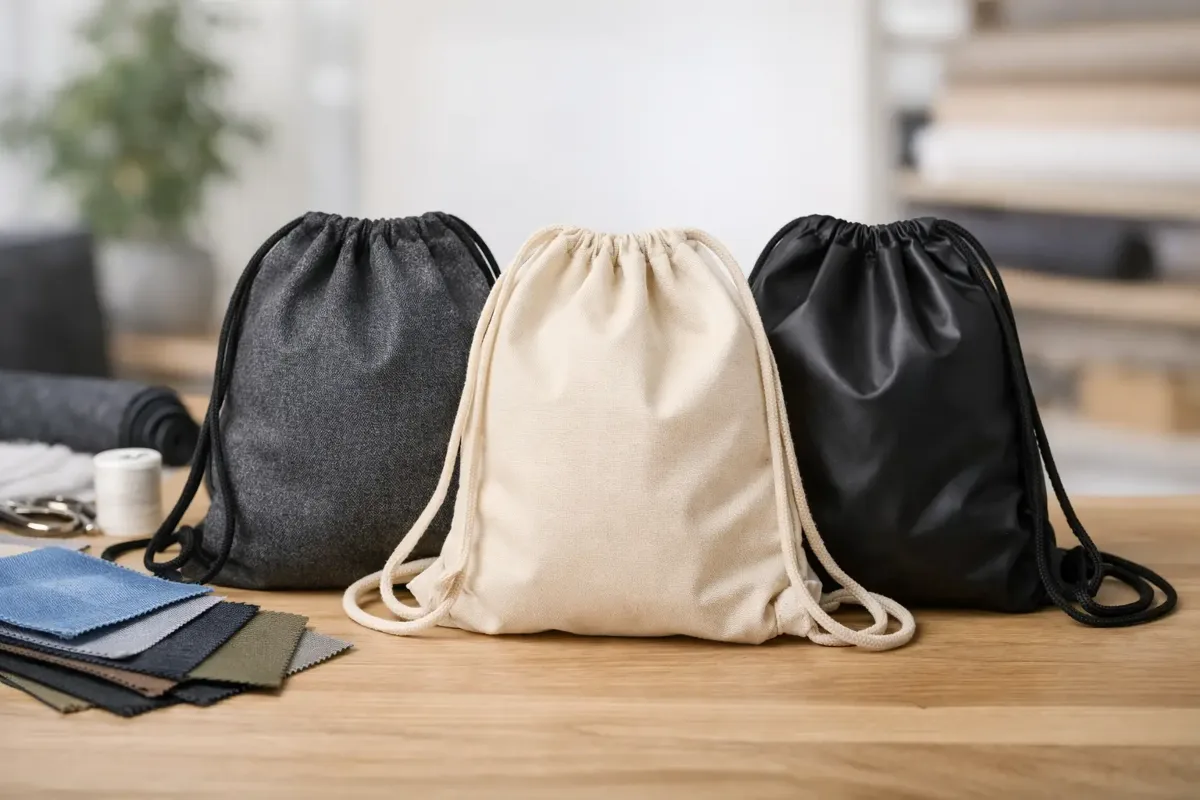
A drawstring bag is quick to sew, but the fabric is often what separates a future favourite from a disappointment. If you're wondering which fabric is right for a drawstring bag, don't just look at the print. What really matters is weight, handle, durability and what the bag will actually be used for.
A lightweight bag for a change of clothes needs something different from one for PE lessons that regularly ends up on the sports hall floor. On top of that, some fabrics are lovely to sew but soon look creased or baggy. Others are almost indestructible but can quickly feel stiff. It's exactly these differences that matter in everyday use when choosing your fabric.
Which fabric makes the most sense for a drawstring bag?
For most drawstring bags, cotton canvas is the safest choice. It's firm, holds its shape well and can take a fair bit of wear without feeling bulky to sew. Canvas is particularly pleasant for beginners to work with, because it doesn't slip and keeps its shape nicely.
Regular cotton fabrics can work too if the bag will only see light use – for slippers, a small towel or toys, for example. In that case, though, a lining or some reinforcement is often worthwhile so the bag doesn't feel too flimsy. An unlined bag made from very lightweight woven fabric may look pretty, but it wears through more quickly in everyday use.
If you want something sturdier, home décor fabrics, bag fabrics or heavier cotton woven fabrics are also good candidates. It's always worth checking the fabric weight. A drawstring bag doesn't need to be rock-hard, but it should have enough body for the drawstring, corners and seams to hold up over time.
The best fabric types compared
Canvas – the everyday classic
Canvas is the first choice for many bag and pouch projects, and for good reason. It's more densely woven than basic cotton, which makes it more hard-wearing and often a little more high-quality in appearance. For drawstring bags, that gives you a lovely balance: sturdy, yet still easy to sew.
Canvas is especially practical if the bag will be used regularly – at school, nursery or for sport. It creases less than thin cotton and doesn't feel floppy straight away. If you want a bag that still looks neat when it's empty, canvas is usually the right call.
Cotton woven fabric – good for lighter projects
Regular cotton fabrics are popular because they come in countless colours and prints. They're perfectly fine for a simple drawstring bag, especially if you're happy for it to drape softly. For children's bags, gift bags or light everyday bags, that's often all you need.
The key is to know their limits. Thin cotton wears more quickly at the bottom corners and can distort under heavy contents. A lining, interfacing or a double layer of fabric makes up for this nicely.
Home décor and bag fabrics – when you want something firmer
Home décor fabrics and dedicated bag fabrics are often woven a little more heavily. They're a good choice if you want your drawstring bag to have more structure, or if you'd like to sew one that looks more like an everyday bag. These fabrics add a bit more bulk, but they give the project stability.
For larger drawstring bags or bags for adults, this is often a good solution. Just make sure the fabric still gathers easily at the casing. Fabrics that are too stiff can make the drawstring unnecessarily awkward to pull.
Softshell or coated fabrics – practical, but not always necessary
For sport, days out or wet clothes, water-repellent fabrics can be an interesting option. Softshell or coated cotton offers better protection against moisture and is easy to care for. That's particularly handy if sports kit goes into the bag still a bit damp after training.
However, these materials are a little trickier to sew than classic cotton. Depending on the quality, they can be thicker and sometimes more slippery, and not every sewing machine copes equally well with several layers plus a drawstring casing. That's why canvas is often the more relaxed starting point for beginners.
What really matters when choosing your fabric
The question of which fabric suits a drawstring bag can never be answered by the name of the material alone. There are big differences even within a single fabric type. A thin canvas is something quite different from a heavy bag canvas.
First and foremost, think about how the bag will be used. For nursery, a medium-weight cotton or canvas is often enough. For school PE, dance kit or hobbies, something sturdier is usually better. If a water bottle, trainers and a change of clothes go in, the bottom corners in particular have a lot to put up with.
Then there's the look. If you want the bag to drape softly and loosely, lighter fabrics work better. If you'd like it to look a little more structured, go for firmer fabrics. Both can look lovely – it depends on what you like and how the bag will be used.
Don't underestimate care, either. A drawstring bag rarely gets treated gently. It gets thrown about, scrunched up and, ideally, washed regularly. Cotton fabrics are pleasantly straightforward here. Coated or heavily finished fabrics sometimes need a bit more attention.
Does a drawstring bag need a lining?
Not necessarily, but it's often worth it. A lining makes the bag sturdier, neater on the inside and gives it a slightly more high-quality feel. With thinner cotton especially, a lining almost always makes sense, as it makes the bag much more durable.
With firm canvas you can happily skip the lining if the sewing pattern is simple and the bag won't be put under too much strain. But if you like a really tidy finish or want to hide the seams inside, a second layer is welcome here too.
A good compromise is to reinforce only certain areas – such as the bottom corners or the drawstring casing. This saves fabric and adds stability exactly where it's needed most in everyday use.
Which fabric for children's drawstring bags?
For children's bags, everyday practicality is what counts most. The fabric shouldn't be too delicate, but not so heavy that the bag feels needlessly bulky either. Medium-weight canvas or a firm cotton is usually ideal.
Fabrics with cheerful prints are handy, but plain fabrics also combine beautifully with appliqués, labels or ribbons. If the bag goes to school or nursery regularly, a washable, hard-wearing fabric is more important than a particularly fine handle.
If small children will be opening and closing the bag themselves, also make sure the fabric doesn't get too thick at the casing. Otherwise the cord won't run smoothly – and that quickly becomes annoying day to day.
Which accessories complement the fabric
Even the best fabric won't help much if the cord, needle or reinforcement doesn't suit the project. For a drawstring bag made from canvas or home décor fabric, a slightly sturdier universal or denim needle is often the better choice. It gives you neater seams, especially at the corners and through several layers.
It's worth taking a close look at the cord as well. Thin cords look pretty but dig in more quickly with heavy contents. Slightly chunkier cotton cords feel more comfortable and suit classic bag fabrics nicely.
If you want to choose your fabric carefully, you'll benefit from a wide selection and personal advice – especially if you're torn between two fabrics or the project for a child needs to be particularly robust. That's where a specialist shop like Die Stoffkönigin is often worth its weight in gold, because the advice isn't just about colour but really about how the fabric will be used.
Common fabric mistakes with drawstring bags
Many people reach first for very thin cotton because it feels light and comes in lovely designs. That's fine for some projects, but often not enough for a heavily used drawstring bag. The bag soon looks limp and wears early at the stress points and corners.
The second typical mistake is the opposite: a fabric that's too stiff. If the fabric barely gives, the casing is harder to close and the bag is less comfortable to wear on your back. Firm is good; rock-hard, not so much.
Interfacing is sometimes misjudged too. Too much reinforcement can make a simple drawstring bag unnecessarily heavy and inflexible. Targeted reinforcement at the points under most strain is usually the better approach.
Our practical recommendation
If you want to sew a drawstring bag with little room for error, start with cotton canvas. It's durable, easy to work with and a reliable choice for children and adults alike. For lighter bags with a softer drape, a firm cotton woven fabric will do too, ideally with a lining or reinforcement in key places.
For wet sports kit or outdoor use, water-repellent fabrics can be worth considering, but they're not a must. Especially for your first few bags, a fabric that's easy to cut, pin and sew is more enjoyable. It saves frustration and usually gives you the nicer result, too.
In the end, the fabric doesn't just need to look pretty on the shelf – it has to keep up with your everyday life. If you're unsure, think less about the perfect name for the material and more about these questions: what does the bag need to withstand, how should it drape, and how straightforward should it be to sew? That's usually where the right decision lies.