Testing magnetic bag clasps for handbags and totes
Your bag is often fully sewn, the fabric sits beautifully and the lining is neatly finished – and yet it's the closure that decides whether it's a joy to use every day. When testing magnetic bag clasps, it's therefore about more than whether two magnetic discs find each other. What really matters is holding strength, fitting, fabric thickness and what your bag will need to carry later on.
Magnetic clasps are popular because they close quickly and can be opened with one hand. They suit make-up bags, small shoulder bags, shoppers, rucksacks with a flap or handmade handbags. For a bulging shopping bag or a rucksack with heavy contents, however, they're usually just an extra – not the only safeguard against things falling out.
What a good magnetic clasp needs to show when tested
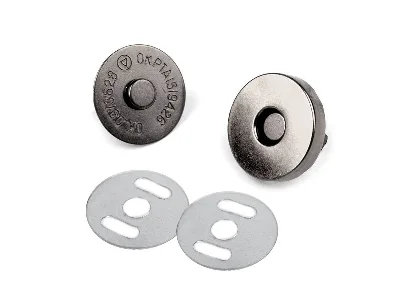
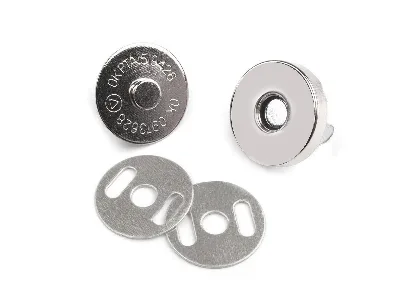
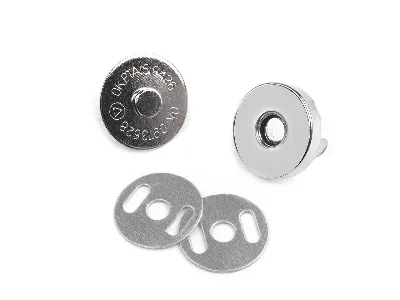
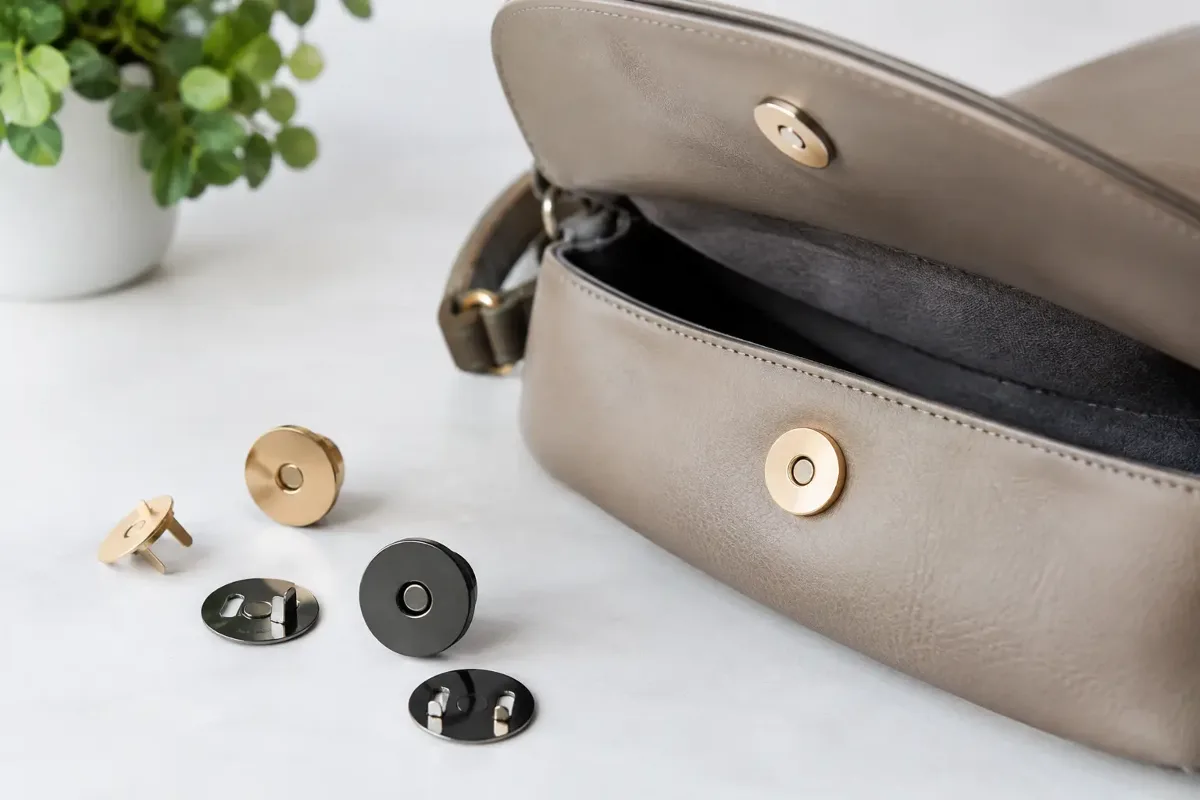
A magnetic bag clasp usually consists of two metal parts with a magnetic core, washers and prongs for fixing. There are also sew-on magnetic snaps, screw-in versions and flat magnets designed to be sewn in invisibly. Which type is right depends less on looks and more on the bag pattern and the material.
At first glance, an especially strong magnet seems like the best choice. That's only partly true. A very powerful clasp does hold reliably, but it can strain delicate fabrics when opened or be unnecessarily hard for small children's hands to open. For a lightweight fabric bag, a medium hold is often enough. A flap made of canvas, faux leather or several reinforced layers, on the other hand, needs more pulling strength so it doesn't pop open with every movement.
Our practical tip: don't test the clasp loose on the table – test it in a fabric scrap that's as close as possible to your bag material. Only with the outer fabric, lining and interfacing in place will you see how well the magnet really grips later.
Checking holding strength realistically
Once fitted, close the two parts and gently pull the bag apart at the top edge. The clasp should open when you want it to, but shouldn't give way as soon as the bag swings slightly. Then fill the bag with typical items as a trial: purse, keys, phone, tissues or, for a changing bag, the usual bits and bobs.
Pay attention to the direction of pull, too. Magnetic clasps hold best when both parts sit flat on top of each other. If the flap pulls upwards at an angle or the bag opening is pulled wide apart, even a strong magnet can open surprisingly easily. That's not a material fault but a question of pattern, position and load.
Looking at the finish and edges
Cheap clasps can have sharp visible edges or an uneven coating. Run your finger over the metal parts. Rough spots can wear through thin lining fabrics over time. Also check that the prongs are cleanly punched out and that the washers fit firmly.
With silver, gold or bronze-coloured clasps, it's worth taking a look at the surface. Small scratches are more noticeable on an everyday bag than on a rarely used evening bag. So choose the colour to match your zips, swivel clasps and D-rings. The result looks calmer, even if not every metal part is exactly the same shade.
Correct fitting determines how long it lasts
Many problems aren't caused by the magnetic clasp itself but by fitting it without reinforcement. The narrow prongs press against the fabric under strain. Without interfacing, they can loosen, leave unsightly pressure marks or, in the worst case, tear out.
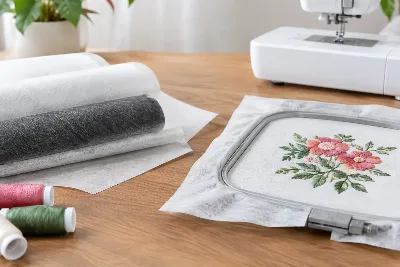
Before cutting, reinforce the area on the wrong side of the fabric with a firm iron-on interfacing. With soft fabrics such as cotton woven fabric or viscose, the reinforcement can be a little larger, for example covering the whole area around the clasp. With thick materials such as canvas, bag fabric or faux leather, a smaller, neatly cut piece is often enough. Otherwise, too many layers can push the clasp visibly outwards.
Mark both positions very precisely. On a flap bag, one part usually sits in the centre of the flap and its counterpart in the centre of the bag body. If possible, only sew the bag together for good once you've checked that the parts really line up when closed. A magnet that's a few millimetres off will often still close, but it looks crooked and holds less securely.
Only cut the slits as long as the prongs require. Too large a cut weakens the fabric. Then push the prongs through, place the washer on top and bend the prongs outwards with small pliers or your fingers. Put a piece of fabric or paper between the pliers and the metal so the surface doesn't get scratched.
Testing magnetic bag clasps by type of bag
For small make-up bags and pencil cases, a flat magnetic clasp is practical. It hardly adds bulk and doesn't get in the way when the bag disappears into a larger one. On a pouch that's often opened wide, the magnet shouldn't sit too close to the top edge. Otherwise the opening will distort when you close it.
A shoulder bag with a flap benefits from a classic magnetic clasp with prongs. Here, both the outer fabric and the flap can be reinforced, as the clasp area gets used a lot. On a heavy bag, a magnetic clasp is best seen as a quick closing aid. A zip, a drawstring or an additional strap protects the contents much better, especially on the bus, the train or when travelling.
With rucksacks and drawstring bags, a lot depends on the pattern. A magnet in a wide flap can work well if there's already a drawstring channel or a zip underneath. If the magnet alone has to close a large opening, it will quickly reach its limits when you move. Here, a press stud, side-release buckle or zip is often the better choice.
Take particular care with items for children. The clasp must be fitted firmly and must not come loose. Small magnets should never end up in children's hands, as swallowed magnets can cause serious internal injuries. So check regularly whether any prongs, covers or seams have loosened.
Magnetic clasp, press stud or zip?
A magnetic clasp wins on convenience. The bag almost closes by itself, and a beautiful flap remains the visual focus. A press stud is often cheaper and can be very durable, but needs a little more pressure to close. A zip offers the best protection for small loose items, but requires more precision and time when sewing.
So it all depends on your project. For an elegant handbag, a small crossbody bag or an everyday flap bag, a magnetic clasp is a lovely solution. For a sports bag, a school bag or a large shopper with heavy contents, you should combine it with a second closure.
Care plays a part, too. Metal parts don't like prolonged moisture. If you wash a bag, follow the care instructions for the fabric and let the bag dry quickly afterwards. With frequent use in the rain, coated metal parts can lose their shine over time. For rainwear fabric or water-repellent bag fabrics, a hidden magnet is therefore often nicer than a visible metal part.
A quick test run before final sewing
If you're unsure, sew a small test piece from scraps with the same layers as your bag. It only takes a few minutes and saves a lot of unpicking. Check four things: do the magnets line up centrally, does the bag open comfortably, does the clasp show through on the outside, and does the reinforcement withstand the pull?
If you have several clasp sizes to choose from, the smaller one isn't automatically too weak. On a narrow flap in particular, a large magnet can look clunky and change the shape. Conversely, a very small magnet can quickly get lost between the fabric layers in thick wadding. The test piece will show you more honestly than any product description which size suits your material.
Also store magnets away from cards with magnetic strips and at a distance from sensitive electronic devices. People with a pacemaker or other medical implants should follow the relevant medical advice on handling magnets.
A well-chosen magnetic clasp doesn't make a handmade bag a more complicated project – it makes it a more practical one. Take a little time over reinforcement and positioning, and your bag will close as nicely as it looks.
Matching categories
Matching products
Bag Clasp, Black
€10.35per piece
Sulky Sticky Fabri-Solvy 12 sheets 21.5 × 28 cm in White
€24.50per piece
Unit price €34.03 / m²
Bag Clasp, Nickel
€10.35per piece
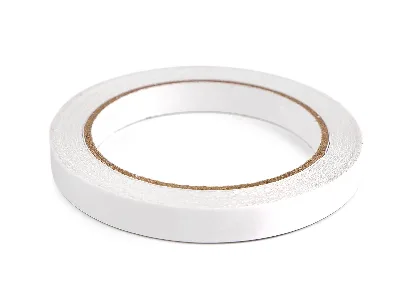
Double-Sided Fabric Tape, 5 mm, 18 m
€6.90per piece
Unit price €0.38 / m
Bag Clasp, Nickel
€9.00per piece
Double-Sided Fabric Tape, 12 mm, 18 m
€10.90per piece
Unit price €0.61 / m