How Much Fabric for a Snood? Getting the Calculation Right
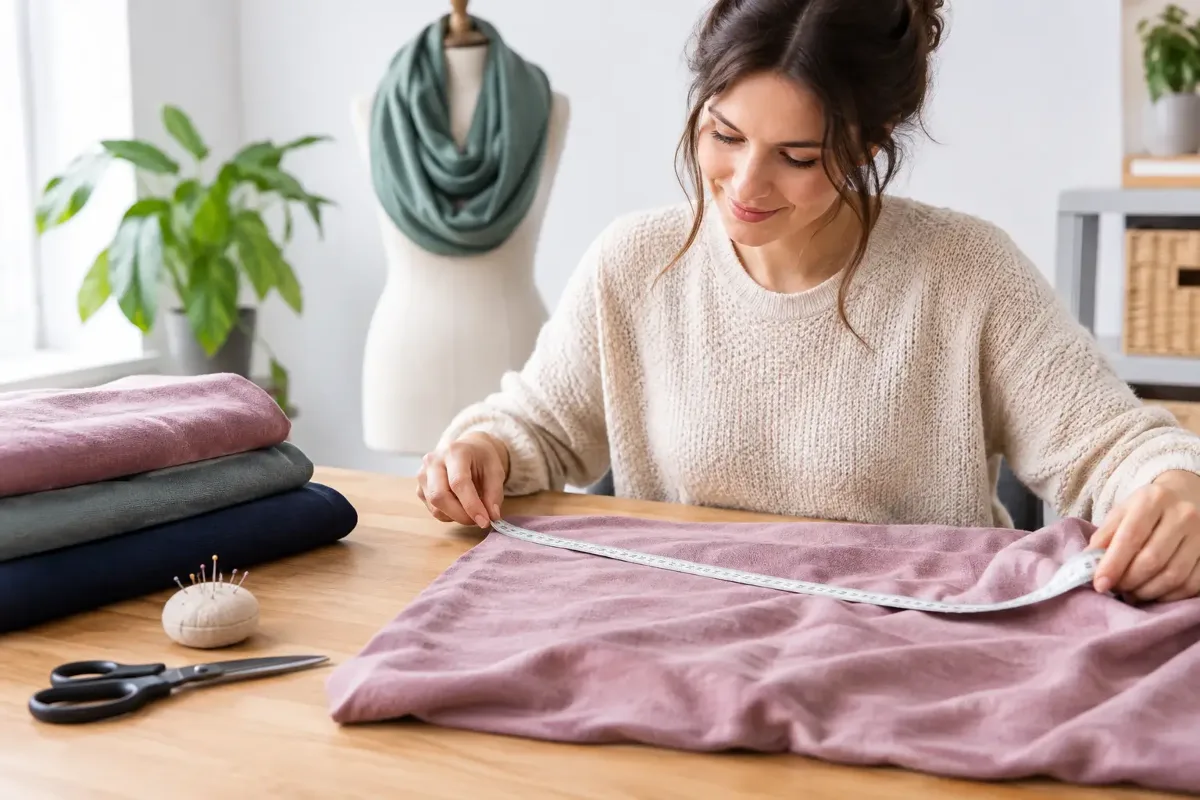
A snood is often the project that turns a lovely piece of fabric into a firm favourite in no time. But before you pick up the scissors, there's one key question to answer: how much fabric for a snood do you actually need? The short answer is usually: less than you'd think. The right amount, though, depends on whether you want to sew a cosy winter snood, a lightweight one for spring and autumn or a little snood for a child.
A snood, or infinity scarf, is basically a tube of fabric joined into a ring. That makes it wonderfully beginner-friendly. To make sure it sits comfortably, isn't too tight and slips easily over your head, the length, width and stretch of the fabric matter more than a one-size-fits-all metre figure.
How much fabric for a snood?
For a classic women's or men's snood in jersey or sweatshirt fabric, 40 to 50 cm of fabric at full width is enough in many cases. Fabric sold by the metre is usually 140 to 150 cm wide. So from a 40 cm length cut across the full width, you can often sew two narrower snoods – or one especially generous scarf with plenty of volume.
If you'd like to wear the snood looped loosely around your neck just once, a finished circumference of about 130 to 140 cm feels comfortable. For a version you can wrap twice around your neck, aim for something more like 150 to 170 cm. The width of the fabric is often used as the length of the finished snood. With a fabric width of 150 cm, you therefore get a nice long scarf without having to buy 150 cm of fabric.
The height of the finished snood is down to your personal taste. For a light, slim snood, 20 to 25 cm is a good guide. A classic snood is usually 30 to 35 cm high. If you want it to keep your head and ears warm on windy days or to look really snuggly, 40 to 50 cm is ideal.
Always remember to add seam allowance. Add about 1 cm to each open edge. With stretch fabrics, it's better to be a little more generous, as they can shift out of shape while you cut or sew.
The right amount of fabric for each type of snood
For a simple jersey snood, you'll often need just 40 cm of jersey. If you fold the fabric lengthways, you get a double-layer scarf that looks the same inside and out. With printed jersey this looks especially lovely when you want the pattern to show on both sides.
A double-layer winter snood needs more fabric, because two layers come together. For example, you could allow 40 to 50 cm of sweatshirt fabric or French terry for the outside and the same amount of jersey, fleece or cosy sweatshirt fabric for the inside. If you sew the two sides from different fabrics, you get a reversible snood that goes with several jackets or hats.
For a very voluminous snood in alpine fleece, teddy fleece or chunky knit fabric, less height is sometimes more comfortable. These materials are much bulkier than jersey. Here, a cutting height of 30 to 35 cm can be perfectly sufficient. Otherwise, a snood that's too high can quickly become stiff and bunch up around your neck.
A light summer snood in viscose jersey, muslin or thin cotton, on the other hand, can be longer and wider. These fabrics drape softly and look beautiful when gathered. With muslin, though, plan a little more generously, as it can shrink slightly when prewashed. It's best to wash the fabric the same way you plan to wash the finished scarf later on.
Guideline measurements for adults
A slim snood worn in a single loop usually works well from a piece about 140 to 150 cm long and 25 to 30 cm high. For a standard double-layer snood, cut two rectangles of roughly 140 to 150 cm in length and 30 to 40 cm in height. For a warming XXL snood, you could go for 160 cm in length and 45 to 50 cm in height.
If you're buying fabric by the metre at 140 to 150 cm wide, in practice that means 40 to 50 cm of fabric is enough for many standard designs. For a wide XXL snood or a snood with two different outer fabrics, 60 cm is a comfortable amount. That also leaves you a little leeway in case you need to straighten the edges or want to sew a headband from the leftovers.
How much fabric for children's snoods
Children's snoods should fit well, but never be so tight that putting them on and taking them off becomes difficult. Especially for little ones, a stretchy fabric such as jersey, ribbing or lightweight sweatshirt fabric is a good choice. A finished circumference of about 100 to 120 cm fits many nursery-age children, while older children can have 120 to 130 cm.
At full fabric width, 30 to 40 cm of fabric is often enough for a child's snood. Depending on the height you want, you can often even cut two children's snoods from 40 cm of jersey. That's handy for siblings, little gifts or a set made up of a snood and a matching hat.
With children's fabrics, pay attention to the direction of the print. You don't want vehicles, animals or characters ending up upside down. So before cutting, lay your pattern piece on the fabric as a test and check which way the motif runs.
Fabric type and stretch change the measurements
A jersey snood is forgiving of small differences in length, because the fabric has a comfortable stretch. With woven fabrics such as cotton poplin, muslin or canvas, that doesn't work. A non-stretch snood needs to be cut wider so that it slips over your head without any trouble. To do this, measure your head circumference and add at least 8 to 15 cm of ease.
A loose, flowing design is particularly well suited to woven fabric. With muslin, the snood can be generous, as the fabric drapes softly. Cotton woven fabric can feel a little firmer. It's lovely for a light neck scarf, but less suitable for a close-fitting winter snood wrapped several times around the neck.
With fleece and alpine fleece, you should also pay attention to the direction of the nap. Run your hand over the fabric: it usually feels smoother in one direction. If all the pieces are cut facing the same way, the finished snood looks more even and is more comfortable to wear.
How to measure correctly without a sewing pattern
You don't need a ready-made sewing pattern for a simple snood. A tape measure, some fabric and a little imagination are all it takes. Drape the tape measure loosely around your neck at the height you want and hold it the way the scarf should hang later. For a snood wrapped twice, double this measurement or simply go straight for 150 to 170 cm.
Next, decide on the height. Hold a folded piece of fabric or paper up to your neck. That way, you'll quickly see whether 25 cm is enough or whether you'd prefer a high, warming collar. Then add the seam allowances. For a double-layer snood, cut two rectangles of the same size.
A small test piece can be a good idea, especially with fabrics that have little stretch. Tack the short sides together with a few long stitches and pull the ring over your head. If it sits comfortably, you can make the final cut. That saves frustration if a gorgeous fabric turns out to be too short in the end.
Common worked examples from practice
Want to sew a classic jersey snood for yourself? Then 40 cm of jersey at a fabric width of 150 cm is a great starting point. Cut two rectangles of about 150 x 35 cm, sew them right sides together along the long edges and close the ring after turning it right side out.
For a reversible winter snood, allow 50 cm of sweatshirt fabric and 50 cm of cotton jersey. Cut both fabrics into rectangles of about 150 x 40 cm. The sweatshirt fabric keeps you warm on the outside, while the jersey feels soft on the inside. If you'd like to sew a matching hat too, 60 cm of each fabric is often the more practical choice.
For a child's snood in jersey, 30 cm of fabric at full width is usually enough. Cut two rectangles of roughly 120 x 25 cm. For younger children, it's better to choose a slightly wider ring rather than one that's too tight. The scarf shouldn't get in the way during playtime and should go over the head without any help.
Planning ahead for small leftovers
With snoods in particular, you'll often have some lovely leftovers from the fabric width. You can turn them into matching hairbands, scrunchies, dolls' scarves or appliqués. With ribbing, the leftover piece can become a colourful band for a hat. That's why it pays not to calculate your fabric down to the very last centimetre.
Die Stoffkönigin sells fabric by the metre from just 20 cm. That's useful if you're still missing a piece of fabric for a pop of colour, a lining or a small coordinating item. For your main fabric, though, it's worth getting a little extra: a spare remnant often turns a lovely snood into a little set.
Take a few minutes before cutting to measure, wash and line up your fabric. Then a modest amount of fabric becomes a snood you'll genuinely love slipping on every morning.