 Sewing Techniques
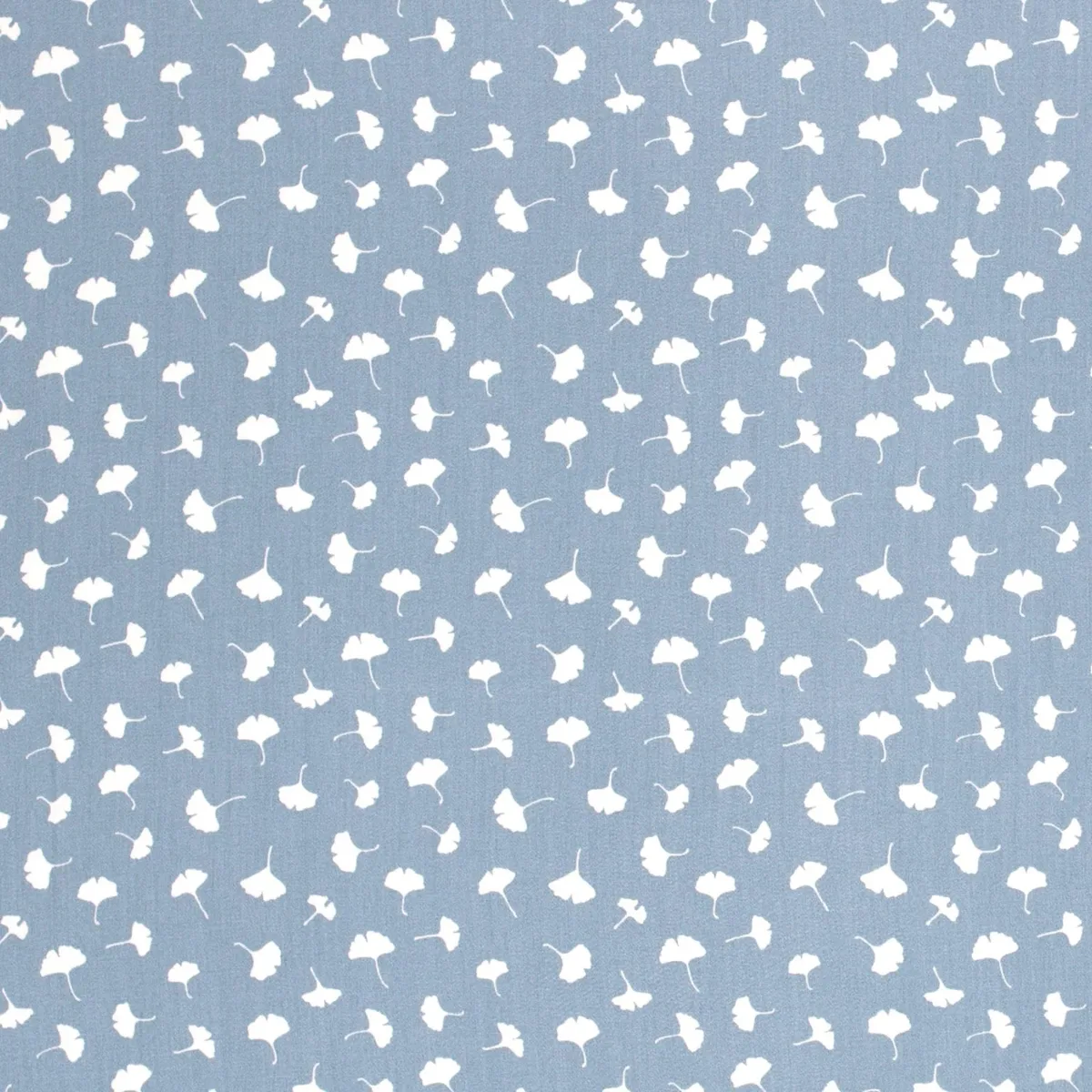
Cotton Woven in Indigo Blue
Item no. 23443
€6.95per 0.5 m
Unit price €13.90 / m · incl. VAT, plus shipping
Cotton Woven in Indigo Blue: 140 cm wide, 130 g/m², made from 100 % Bambus. Sold by the metre. Wash once before cutting. Suitable for clothing and home textiles.
in stock
Delivery time approx. 3–5 working days
Free shipping within Germany from €50
- Fabric type
- Woven
- Material
- 100 % Bambus
- Width
- approx. 140 cm
- Weight
- approx. 130 g/m²
- Colour
- Indigoblau
- Care
 Wash at 30°C
 Do not iron
 Wash without fabric softener or bleach
 Do not tumble dry
- Muster
- Ginkoblätter
- Gewicht
- 130 g/m²
- Breite
- 140 cm
Description
Poplin is a smoothly woven cotton with a fine surface. It presses well, holds its shape and carries any print cleanly. The web measures 140 cm across; its weight comes to 130 g/m². Its composition reads 100 % Bambus.
Indigo Blue stands cool and clear and needs no second colour to work. It also suits patchwork and quilting: it cuts precisely and does not distort. A sample answers more questions about handle and drape than any description.
What Bambus Popeline Ginkoblätter auf Indigoblau is suitable for
- patchwork and quilting
- bags and pouches
- curtains and drapes
Care instructions:
Frequently asked questions
What do I do with offcuts?
Keep them, especially patterned ones. In patchwork the small cut is the rule, and narrow strips still serve for pocket bags, appliqué or binding. Narrow strips make bias binding, wider offcuts become pocket bags.
Why does the fabric fray at the edge?
Because a woven is made of crossed threads that loosen at a cut edge. That is normal. Finish with zigzag, an overlocker or an enclosed seam — otherwise the edge unravels further with every wash.
What do I watch for when cutting?
The grain. Pattern pieces are aligned parallel to the selvedge, otherwise the finished piece distorts. On patterned goods the motif direction comes on top. The grain line appears on the pattern piece as an arrow; it runs parallel to the selvedge.
How do I press it?
At the usual cotton temperature and slightly damp. Before cutting it pays off especially: a smoothly pressed fabric cuts precisely, a creased one does not.