Embroidery stabiliser for jersey: which one is right?
Embroidering jersey can look absolutely beautiful, or it can test your patience from the very first design. If you're wondering which embroidery stabiliser really works for jersey, the sticking point is almost always the stretch of the fabric. Jersey gives, distorts more easily and reacts more sensitively to pulling than firm cotton woven fabric. That's exactly why the right stabiliser often decides whether your embroidery turns out crisp or ends up unattractively puckered.
Why jersey is trickier to embroider
Jersey is soft, stretchy and comfortable to wear. These are exactly the qualities that make it so popular for clothing, but they also make machine embroidery a little more demanding. While you stitch, the movement of the needle, the thread tension and the pull of the hoop all act on the fabric. A stretchy fabric gives way to these forces far more readily than a firm one.
Almost every hobby embroiderer knows the result: the fabric draws in, ripples form around the design or the embroidery looks distorted. You'll notice this most with lettering, satin stitches and dense designs. The right stabiliser supports the jersey just enough to keep it under control while you stitch, without completely losing its soft drape.
Which stabiliser for jersey? The short answer
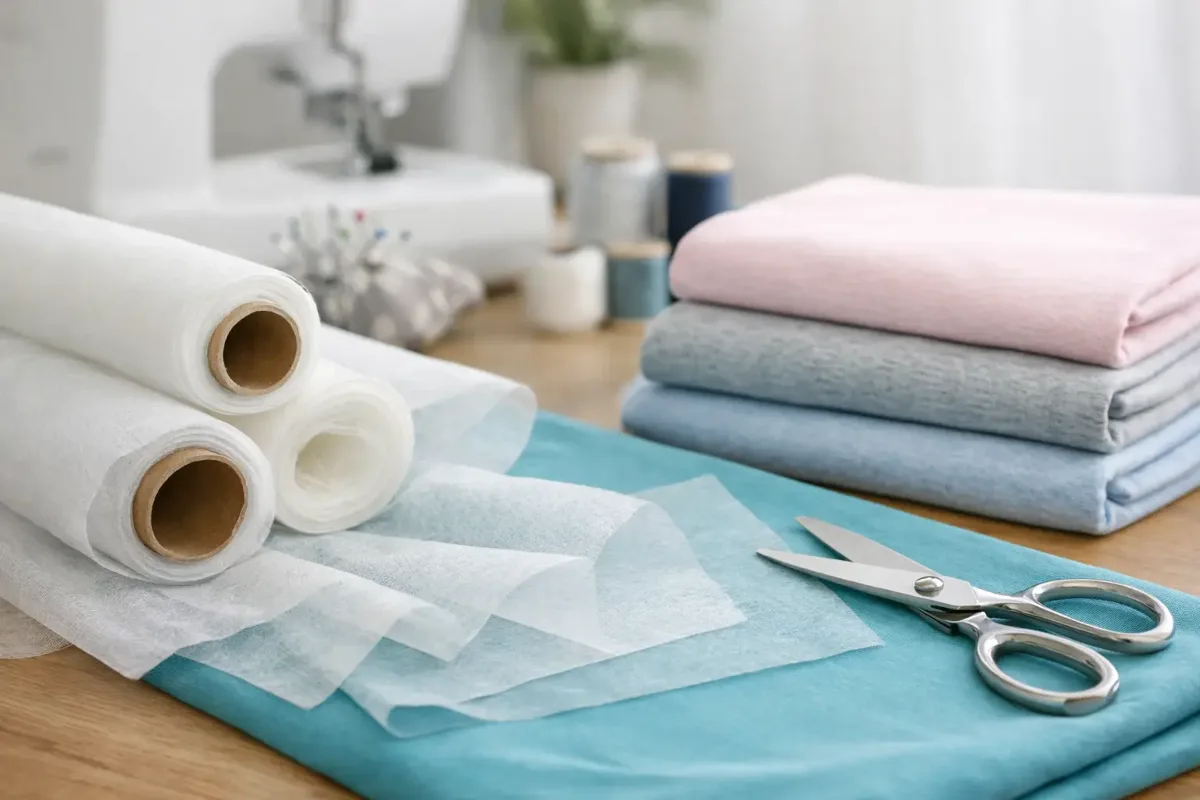
In most cases, a soft cut-away stabiliser is the best choice for jersey. It stays under the design after stitching and supports the stretchy fabric permanently. That's often important for jersey T-shirts, baby bodysuits, dresses or hats, because the fabric keeps moving as it's worn and washed.
Tear-away stabiliser only works to a limited extent on jersey. It can do the job for very light, open or small designs, but it's usually not the safest option. Tearing it away quickly puts strain on the fabric again, which is exactly the problem you were trying to avoid in the first place.
Water-soluble stabiliser is rarely enough on its own for jersey, but it's very useful as an extra layer on top of the fabric. Especially on fluffy, textured or very soft jerseys, it stops stitches sinking in and keeps the surface looking smooth.
Which jersey stabiliser suits which project?
Cut-away stabiliser for clothing and items that get lots of wear
If you're embroidering jersey for clothing, cut-away stabiliser is usually the most reliable choice. It provides lasting stability and reduces the risk of the design distorting after washing. This really pays off with children's clothes, tops or pyjamas, because they're worn, stretched and washed so often.
Getting the weight right matters too. A very heavy stabiliser can feel too stiff on fine jersey, while one that's too thin barely calms the fabric down. For many projects, a soft, medium-weight cut-away stabiliser is a good starting point. For very thin viscose jersey you can go a little lighter; for denser cotton jersey or French terry, a little sturdier.
Use tear-away stabiliser with caution
Tear-away stabiliser is popular because it seems quick and tidy. On jersey, though, it has its limits. As long as the design is small, lightly digitised and the fabric isn't too soft, it can work. For simple designs on firmer interlock or more stable jersey, it's sometimes enough.
As soon as the design gets denser or the fabric is very stretchy, tear-away stabiliser reaches its limits. The problem isn't just during stitching but afterwards too. When you tear the stabiliser away, the jersey often gets pulled along with it. This can distort the embroidery or encourage small holes along the edges of the stitching.
Water-soluble stabiliser as a topper
With jersey, water-soluble stabiliser often goes on top of the fabric. It makes sure the stitches sit neatly on the surface instead of sinking into the knit structure. This is particularly handy for thin jersey, slub jersey or fabrics with a soft, slightly uneven surface.
On its own as a backing, water-soluble stabiliser usually isn't enough for standard jersey. It lacks the lasting support that stretch fabrics need. Combined with cut-away stabiliser, however, it's often an excellent solution.
The right combination often makes all the difference
With jersey, it's not just a question of which stabiliser to use, but also whether combining them makes sense. Many neat results come from one layer of cut-away stabiliser under the fabric and a water-soluble layer on top. The bottom layer stabilises, the top layer keeps the surface smooth.
Especially for lettering, appliqué or designs with fine outlines, this often looks much nicer than a single layer of stabiliser. If a jersey is very soft, temporary spray adhesive or hooping just the stabiliser rather than the fabric can also help. You then lay the jersey on the hooped stabiliser and secure it, without overstretching it in the hoop.
Hoop it or float it?
This is where lots of problems start before the first stitch. Pulling jersey taut directly in the hoop is rarely ideal. The fabric may look smooth, but once you unhoop it, it relaxes again and the embroidery puckers.
It's often better to hoop only the stabiliser firmly and secure the jersey on top. That way the fabric keeps more of its natural stretch. If you do hoop the fabric as well, make it only as tight as necessary, not as tight as possible.
Which design needs which stabiliser?
The design itself plays a big part too. Small, light designs with a low stitch density are less fussy than large, fully filled designs. A delicate name on baby jersey needs less stability than a dense animal design on a T-shirt.
For large or heavily filled designs on jersey, you should almost always reach for cut-away stabiliser. For delicate designs, a lighter stabiliser may be enough, as long as the fabric isn't too soft. Lettering is especially tricky, because even the slightest distortion shows straight away. It's worth taking extra care with the stabiliser, needle and hooping here.
The most common problems with jersey
If the design ripples, it's usually down to too little stabilisation or too much tension in the hoop. If stitches sink into the fabric, a water-soluble topper is often missing. If the design draws in after washing, the stabiliser often wasn't permanent enough.
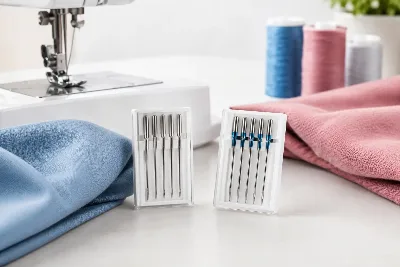
Sometimes the stabiliser isn't the only culprit. A blunt jersey or embroidery needle, the wrong thread tension or a poorly digitised design can cause similar problems. Even so, with stretch fabrics the stabiliser remains the most important foundation.
Stabiliser for jersey baby and children's clothing
With clothing worn right next to the skin, you want the back of the embroidery to stay as comfortable as possible. Cut-away stabiliser is often the right choice functionally, but depending on the project it can feel a little noticeable. That's when a soft quality and neat trimming really count.
For sensitive skin, it can also be worth covering the back so the embroidery sits more smoothly on the inside. This is particularly relevant for baby bodysuits, tops and sleepwear. If you sew a lot for children, you'll soon realise that a pretty design isn't enough: it also has to be comfortable for everyday wear.
Not sure? Here's how to make the right choice
If you're embroidering jersey for the first time, this rule of thumb will usually serve you well: stretch fabric plus a garment that will be worn equals cut-away stabiliser. Add a water-soluble topper if needed, especially for fine lettering or soft surfaces. Save tear-away stabiliser for exceptions and test pieces rather than using it as your standard solution.
It's always best to test a design on a scrap of exactly the jersey you plan to use. Not every jersey behaves the same way. Cotton jersey, viscose jersey, interlock and summer sweat all react differently, and the embroidery file has a big influence too.
If you enjoy all sorts of sewing and embroidery projects, it pays to keep a small basic selection at home: a soft cut-away stabiliser, a tear-away stabiliser for firmer fabrics and a water-soluble stabiliser as a topper. That way you're well equipped for most situations without having to work your way through countless specialist products.
At Die Stoffkönigin, we especially love helping with questions like these, because the right combination of materials often achieves more than the next elaborate trick. And when embroidering jersey, that's usually the nicest approach: better well prepared than painstakingly rescued later.
By the way, if your first test piece doesn't look perfect yet, that's completely normal. Jersey is less forgiving than woven fabric when it comes to embroidery, but with the right stabiliser, uncertainty quickly turns into routine, and a tricky fabric becomes a truly lovely favourite project.