Sewing French Terry: Tips for Neat Seams
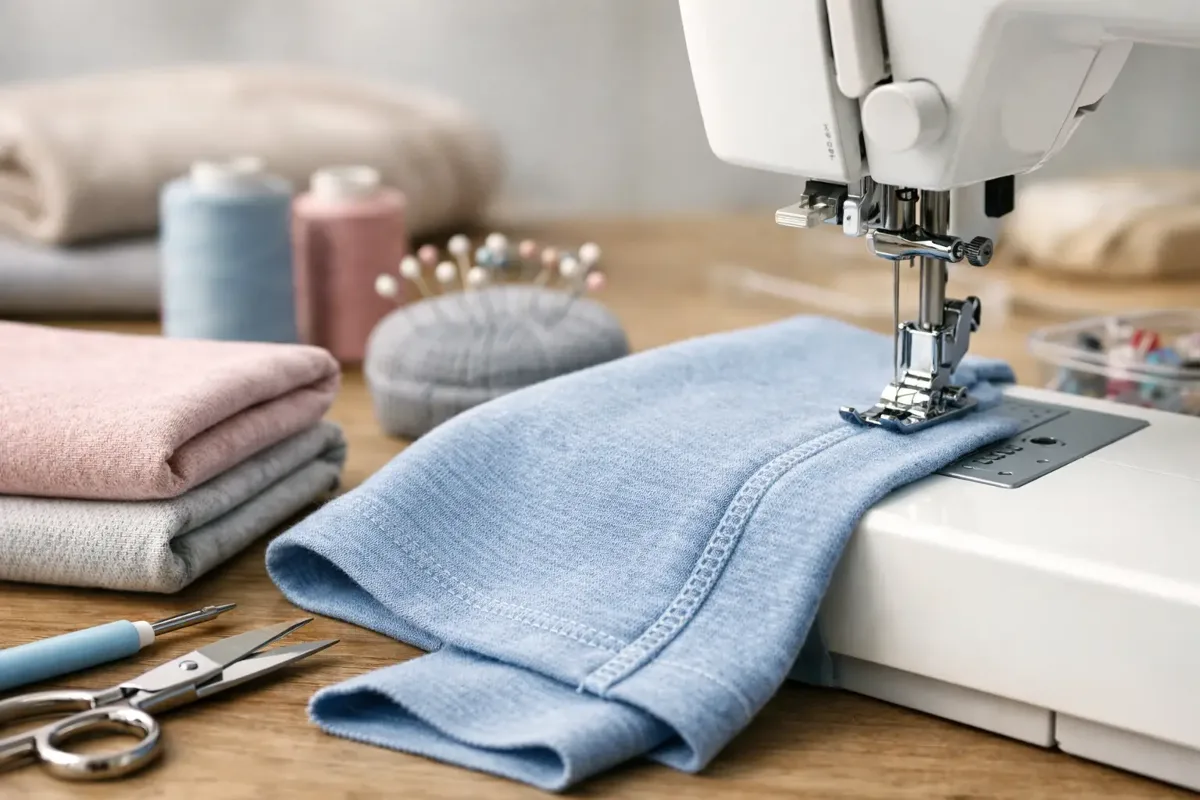
French terry is one of those fabrics that quickly becomes a favourite after your first successful project: smooth on the outside, with soft loops on the inside, and just right for comfy hoodies, joggers, dresses or children's clothes. With the right tips for sewing French terry, the fun carries on at the sewing machine too. Although the fabric feels pleasantly easy-going, its stretch does bring a few quirks with it.
Getting to know French terry
French terry is often referred to as summer sweat. It is usually lighter than classic sweatshirt fabric and has the typical small loops on the wrong side. The right side is smooth and shows off the print or colour particularly well. Depending on its composition, French terry contains cotton, polyester, viscose and often a small amount of elastane. It is this elastane content that helps determine how much the fabric stretches and how well it springs back into shape.
A stretchy French terry is wonderful for tops, lightweight jumpers and dresses. For joggers, it can be a little firmer. With sewing patterns designed for woven fabrics, however, you should check carefully whether there is enough ease. A non-stretch pattern can work in French terry, but it often fits more loosely than intended. Conversely, a close-fitting jersey sewing pattern can quickly end up too tight in a French terry with little stretch.
Before cutting, wash the fabric the way you plan to wash the finished garment later on. Fabrics containing cotton may still shrink a little in the first wash. Afterwards, press the fabric smooth, but don't flatten it. With printed French terry in particular, it's best to iron on the wrong side at a medium temperature.
Sewing French terry: tips for preparation and cutting
Lay the fabric out smoothly on a large enough surface and pay attention to the grainline. With French terry, the greatest stretch usually runs across the fabric, perpendicular to the selvedge. The direction of stretch is crucial for ribbing, hems and close-fitting garments. Also mark which side should face outwards. With plain fabrics, both sides can sometimes look similar, but with classic French terry the looped side belongs on the inside.
Sharp fabric scissors or a rotary cutter give you clean edges. If pins distort the fabric, weigh the pattern down with pattern weights instead. If you do pin, place the pins within the seam allowance and, where possible, at right angles to the seam line. Clips are a handy alternative for thicker layers, such as on hoods or pockets.
When cutting striped or patterned fabrics, a quick check is well worth it: do the stripes line up at the side and sleeve seams? Is the motif facing the same direction on the front and back pieces? Those two minutes will save you a lot of frustration later. On children's clothes especially, deliberately placed motifs look far nicer than characters that have been randomly chopped off.
The right needle, the right thread and a test piece
A new jersey or stretch needle is a good choice for most French terry projects. Its tip pushes the knit loops aside instead of damaging the fibres. With particularly stretchy fabrics, a stretch needle is often the better option, as it prevents skipped stitches more reliably. A size 75 or 80 usually works well. If the fabric is very heavy or you're sewing through several thick layers, a size 90 needle may be a good idea.
Sew with a good-quality all-purpose polyester thread. It has a little stretch and is strong enough for clothes that are worn and washed frequently. Cotton thread is more likely to snap on seams that take a lot of strain. If your machine suddenly starts skipping stitches, don't rush to change the settings: often a fresh needle is all it takes.
With French terry, a test piece isn't an over-cautious extra step but the quickest shortcut to lovely seams. Cut two scraps on the same grain as your project and test the stitch, stitch length, thread tension and hem. Then check the seam by gently pulling it apart. It should stretch with the fabric without the thread snapping or the seam becoming noticeably wavy.
Sewing with a domestic sewing machine or an overlocker
An overlocker makes working with French terry a real pleasure. It sews, neatens and trims the edge all in one go. For standard seams, a four-thread overlock stitch is a tried-and-tested choice. If your seams are wavy, it helps to turn the differential feed up slightly. The fabric is then gently eased together as you sew instead of being stretched.
A domestic sewing machine can handle French terry without any trouble too. Use a narrow zigzag stitch or a stretch stitch such as the triple straight stitch or lightning stitch, if your machine offers one. The triple straight stitch is very durable, but it uses a lot of thread and can become bulky. For long garment seams, a narrow zigzag is therefore often more comfortable.
A regular straight stitch isn't wrong as such. It works well in areas with little stretch, for example on a patch pocket or a seam stabilised with interfacing. On the side seams of a close-fitting jumper or the crotch seam of leggings, however, it can snap when you pull the garment on. What matters is always how much that area needs to stretch in everyday wear.
Guide the fabric evenly without pulling it in front of or behind the presser foot. The feed dogs do that job for you. If the fabric still sticks or shifts, a walking foot can help. It's especially useful for multiple layers and long hems.
Ripple-free hems, ribbing and necklines
Hems are where French terry likes to reveal whether your settings are really right. For a stretchy hem, you can first neaten the edge with the overlocker, press it to the inside and topstitch from the right side with a twin needle. The two parallel lines of stitching look neat, while on the back a zigzag thread joins the layers of fabric with plenty of stretch.
For the twin needle, use two reels of thread, or one reel with a second thread path, and sew slowly. If a small ridge forms between the rows of stitching, don't immediately turn the thread tension right down. First try a slightly longer stitch length and reduce the presser foot pressure if your machine has that setting. If the hem snaps when stretched, the tension was usually too high or the hem was stretched while sewing.
A coverstitch machine produces professional-looking hems, but it isn't a must. A three-step zigzag or a narrow zigzag can also look neat, especially on children's clothes and sporty projects. The important thing is not to pull the fabric while topstitching.
For ribbing and necklines, the fabric band is usually cut slightly shorter than the edge it will be sewn to. How much shorter depends on the stretch of the ribbing fabric. For very stretchy ribbing, around 70 to 80 per cent of the neckline circumference is a good starting point; firmer fabrics need more length. Sew a test piece or tack the band on first. A band that's too short will pull the neckline in, while one that's too long will stand away from the body.
Divide both the band and the neckline into quarters and pin these marks together. As you sew, stretch only the ribbing between the marks, not the French terry of the top. That way the neckline stays smooth and keeps its shape.
Common problems when sewing French terry
Wavy seams are usually caused by too much pulling, too much presser foot pressure or an unsuitable differential feed setting. Sew more slowly, simply guide the fabric rather than pulling it, and try a lower tension. On an overlocker, a higher differential setting is often the most effective fix.
If stitches are being skipped, the needle is often blunt, bent or not suited to the fabric. Swap it for a new stretch or jersey needle and rethread the machine completely. Very bulky seam intersections can also cause skipped stitches. In those spots, it helps to sew slowly over the area and keep the presser foot level with a small height compensation tool.
If a cut edge curls up, that's normal with stretchy fabrics. Neaten it promptly or gently press the edge back into shape with steam. For necklines and armholes, shoulders or pocket openings, stay tape can add extra stability. It takes away a little stretch but stops the edge from sagging over time.
If your seams are bulky, take a look at the seam allowances. Carefully trim them back where there are lots of layers, such as where the hood joins the neckline, or press them open if that suits the sewing pattern. A firm press with the iron often makes the finished garment noticeably more comfortable to wear.
French terry is very forgiving when the fabric, sewing pattern and type of seam all work together. Take a few minutes for your test piece before you start for real – and your fabric by the metre will become a favourite piece that feels just as good as it looks. If you're unsure about fabric weight, ribbing colour or the right needle, Die Stoffkönigin will be happy to help you choose what's right for your particular project.