Which interfacing is right for a bag base?
The base of a bag is often the part where you only find out once the project is finished whether you chose the right materials. If it collapses straight away, the bag looks limp. If it's too stiff, everything becomes needlessly hard to sew. That's exactly why the question of which interfacing is right for a bag base crops up at some point in almost every bag project - and the honest answer is: it depends on the fabric, the shape and how the bag will be used.
Which interfacing makes sense for a bag base
A bag base has to do more work than most other parts of a bag. It carries weight, holds the shape and takes the most pressure whenever you put the bag down. So the right interfacing doesn't just help the bag stand up - it also makes sure it looks good and is pleasant to use day to day.
It's not simply a matter of going as firm or as thick as possible. A small make-up bag needs something different from a shopping tote, and a soft corduroy behaves quite differently from a sturdy canvas. If you choose your interfacing by name alone, you'll soon be frustrated by dents, hard edges or a base that still doesn't stay firm.
The most important question first: soft, structured or really firm?
Before you pick a particular product, it helps to think briefly about the result you want. If the bag should drape softly and just have a little more support at the bottom, a medium-weight interfacing is usually enough. If it should stand up on its own and keep a crisp shape, you'll need a lot more stability. For bag bases that take a lot of strain, firmer interfacings or a combination of interfacing and a base insert are often the way to go.
For many home sewists, this is the crux of it: you're not just sewing a bag base, you're effectively building the foundation of the whole bag. If that foundation doesn't suit the outer fabric, even the loveliest pattern can only do so much.
Medium-weight interfacing for light to medium bags
If you're sewing a small handbag, project bag, make-up bag or a light everyday pouch, a medium-weight iron-on interfacing is often a good place to start. It gives support without making the bag rigid as a board. With cotton, poplin, lighter canvas or home décor fabric in particular, it strikes a nice balance between shape and ease of sewing.
This option is a comfortable choice if you haven't made many bags yet. The fabric still feeds easily through the machine, corners are easier to sew neatly and the bag still looks much tidier than it would with no reinforcement at all. For heavy contents or large bags, however, it often isn't enough.
Firm interfacing for more structure
As soon as the bag really needs to hold its shape, firmer materials come into play. Many people immediately think of Decovil or similar interfacings. That often makes sense, especially for handbags, crossbody bags or structured designs with a clean silhouette.
The advantage is obvious: the base stays more stable, the bag sags less and the overall look is more professional. The drawback is just as important: very firm interfacings are less forgiving. Turning the bag right side out becomes harder work, bulky seam intersections are more challenging and on small curves the material can feel stubborn.
Foam interfacing for body and stability
Foam interfacing is a good choice if you want structure but not a hard, cardboard-like effect. It adds body, has a slight springiness and gives bags a pleasant feel. For changing bags, larger bags or sewn organisers in particular, it's often a very practical solution.
On its own, foam interfacing can be enough for the bag base if the outer fabric has some substance itself. With very soft fabrics, though, you may find the base is padded but not truly firm. In that case, either an extra layer or a removable base insert will help.
Which bag base interfacing for which fabric?
The same interfacing can work beautifully or miss the mark completely depending on the fabric. That's why it's always worth considering both together.
With thin cotton or poplin, the base usually needs more support because the fabric has hardly any body of its own. A firm interfacing or foam interfacing is often a better match here than a very light iron-on interfacing. With canvas, twill or home décor fabric, on the other hand, medium to firm reinforcement is often enough, because the fabric itself is already doing some of the work.
Take care with softshell, faux leather or coated fabrics. Not every interfacing can be ironed on successfully, and heat isn't always a good idea. In these cases, the shape is often achieved through the construction of the bag, sew-in foam interfacing or separate base inserts.
Corduroy and quilted fabrics also need a bit of finesse. They quickly look bulky but don't automatically stand up well. So for the base, it's fine to go firmer than for the rest of the bag.
When the bag really has to take some strain
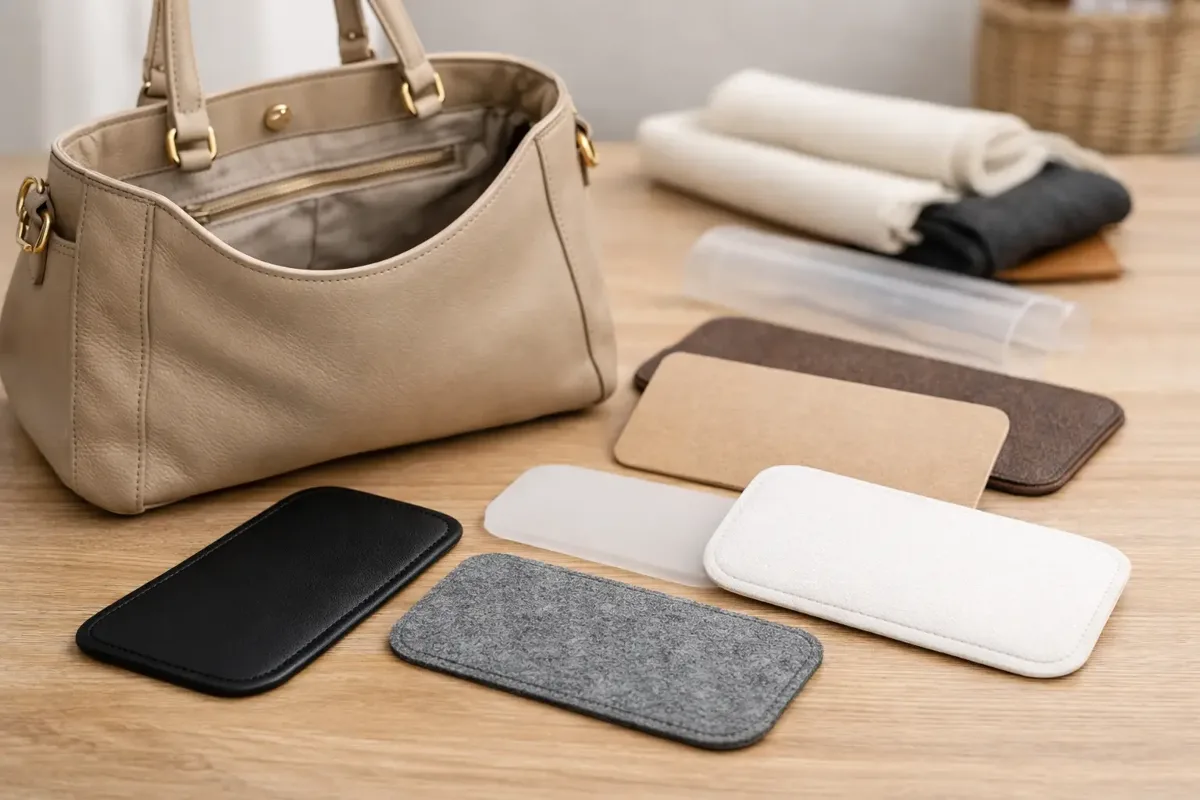
For totes, book bags, handlebar bags or everyday bags that carry a lot, interfacing alone isn't always enough. A separate base insert is then often the better solution. By this we mean a reinforced stiffening panel that's placed in the bottom of the bag or slid into a separate base pocket.
This has one big advantage: the bottom of the bag stays flat and stable without all the seams becoming extremely thick. Especially with larger bags, this is often the neatest solution. What's more, an insert like this can be replaced if needed when the bag gets a lot of use.
So if you're wondering which interfacing is best for the base of heavier-duty projects, the answer is often a combination. For example, you can reinforce the fabric with fleece or foam while a firm base insert provides the load-bearing strength. That's not overkill - for some bags it's exactly right.
Iron-on or sew-in?
Iron-on interfacings are the most convenient option for many projects. They don't shift, they're easy to cut and they give you more control over the fabric before you even start sewing. For classic cotton fabrics or canvas, this often works very well.
Sew-in versions have the edge when the fabric is heat-sensitive or when you want more flexibility in how you construct the bag. With bulky foam interfacing, sewing it in is usually the better choice too. So it's worth looking not only at how firm an interfacing is, but also at how it's applied.
If you're unsure, test the combination on a scrap. It saves time, fabric and frustration. With a bag base in particular, a test piece quickly shows whether you're getting the stability you want or whether the result is too soft or too bulky.
Common mistakes when choosing interfacing for a bag base
A common mistake is using the same interfacing for the entire bag, even though the base has to withstand more than the side panels or lining. It sounds practical, but it often leads to compromises. A bag can be soft at the sides and still be stable at the bottom.
Equally widespread is the assumption that thicker is automatically better. Interfacing that's too thick makes sewing a chore and creates unsightly transitions. On small bags especially, an overly hard base quickly looks clunky.
The nature of the fabric is often underestimated too. If the outer fabric is already very firm, you may need less extra reinforcement than you think. If, on the other hand, the fabric is loosely woven, even a heavy interfacing can't make up for every problem.
A simple rule of thumb for real-life sewing
If you're sewing a light cotton bag, start with a medium-weight interfacing. For canvas, bag fabrics and structured handbags, you can go firmer. If the bag should be soft but still hold its shape, foam interfacing is often a very good middle ground. And if it will carry weight or the base really needs to stay flat, consider a separate base insert as well.
This sliding scale is exactly what helps many of our customers in their everyday sewing: don't jump straight to the firmest material, but look at how fabric, size and purpose work together. At Die Stoffkönigin, this is often the deciding point when we give advice - because a good bag isn't just about beautiful fabric, it's about the right construction.
Which interfacing for a bag base on beginner projects?
If you haven't sewn many bags yet, a medium to firm interfacing is usually the safest bet. You'll get a visibly more stable result without wrestling with extremely thick layers. For small zip pouches, fabric baskets or simple handbags, that's often just right.
Very firm specialist interfacings are more worthwhile once you know how your pattern behaves when turning, topstitching and assembling. Otherwise, the frustration is sometimes less to do with the sewing machine and more to do with a combination of materials that was simply too much for the project.
And if you're torn between two options, go for the one that's still easy to work with. A bag that's neatly sewn and turns out slightly less stiff will usually bring you more joy in everyday use than one with perfect structure that puts up a fight under the presser foot at every corner.
In the end, your bag base doesn't need to be perfect in theory - it needs to suit your project. If the bag looks good, is pleasant to use and doesn't give way at the bottom straight away, you've made the right choice.
Matching categories
Matching products
Wadding
€7.25per 0.5 m
Unit price €14.50 / m
Sulky Sticky Fabri-Solvy 12 sheets 21.5 × 28 cm in White
€24.50per piece
Unit price €34.03 / m²
Double-Sided Fabric Tape, 5 mm, 18 m
€6.90per piece
Unit price €0.38 / m
Double-Sided Fabric Tape, 12 mm, 18 m
€10.90per piece
Unit price €0.61 / m
Vlieseline hemming tape T15 15mm in Black
€0.68per 0.5 m
Unit price €1.35 / m
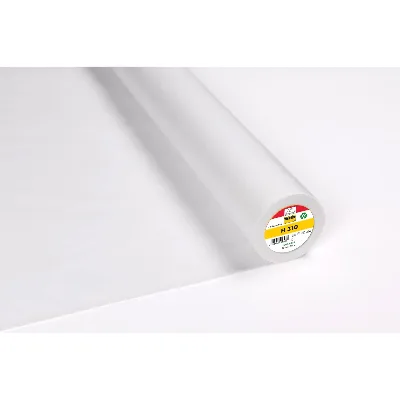
Vlieseline fusible interfacing H310 in White
€4.75per 0.5 m
Unit price €9.50 / m