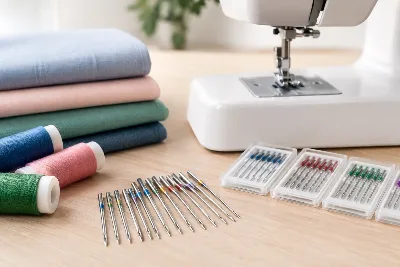
Sewing machine needle or jersey needle: which one is right?
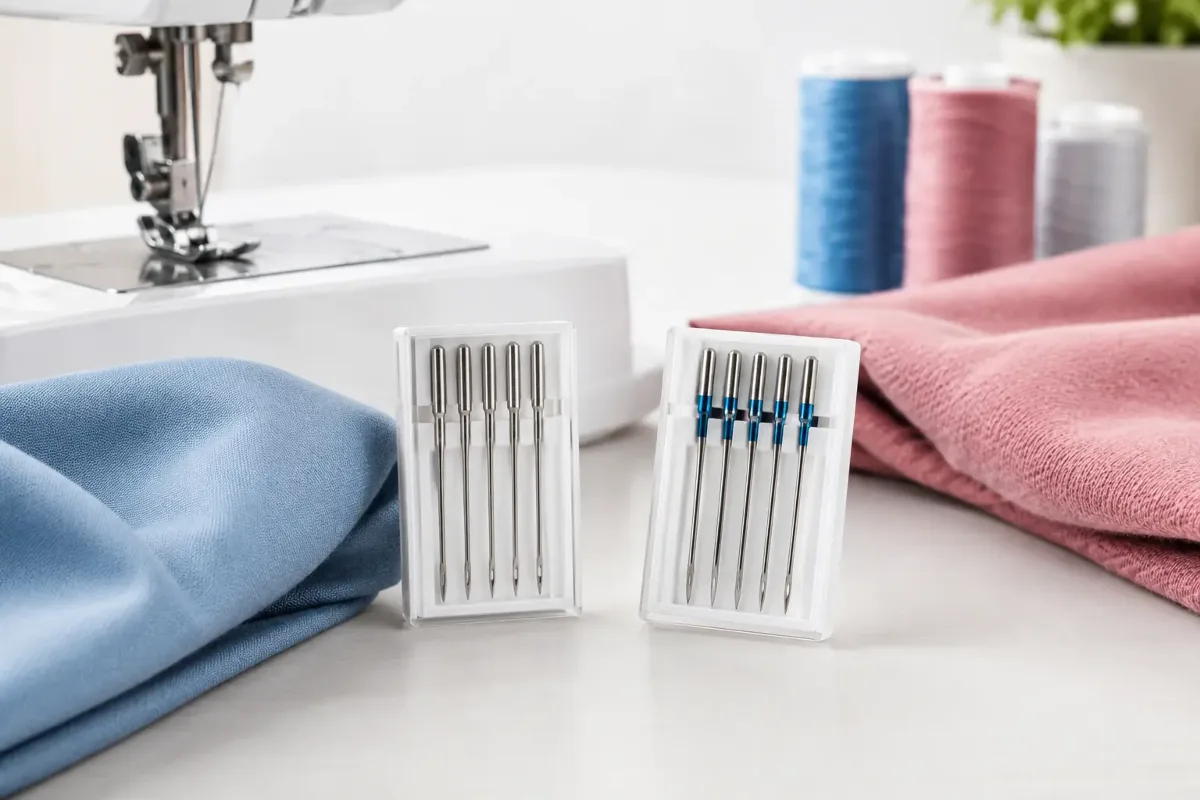
Your new jersey top is almost finished, but small holes are appearing along the side seam, or your machine suddenly starts skipping stitches. Often it isn't the fabric or the sewing machine at fault, but one small yet crucial detail: the needle. When it comes to choosing between a sewing machine needle or a jersey needle, what matters is the type of fabric in front of you, how much elastane it contains and which seam you want to sew.
The good news: you don't need to try out a whole range of needles for every project. Once you know the differences between universal, jersey and stretch needles, you'll quickly make a good choice and be kind to your fabric.
How a standard sewing machine needle differs from a jersey needle
In everyday use, “sewing machine needle” usually means the universal needle. It's the all-rounder in your sewing basket and works very well for many woven fabrics: cotton poplin, canvas, lightweight denim, and woven fabric for bags or home décor. Its point is slightly sharpened. It reliably pierces the threads of a woven fabric, but on knits it can catch individual fibres and damage them.
A jersey needle, on the other hand, has a rounded ball point. Instead of piercing the loops of a knitted fabric, it gently pushes them aside. That's exactly what prevents the typical little holes and ladders that sometimes only become obvious in jersey after washing.
The difference may seem small, but you'll notice it when sewing. Jersey, French terry, sweatshirt fabric and ribbing are all made of knitted loops. This structure is flexible and stretchy. The right needle preserves that elasticity better and gives you a neat stitch.
Sewing machine needle or jersey needle: what fabric are you working with?
Not every soft fabric automatically needs a jersey needle. What counts is its structure, not just its name in the shop or how it feels. You can recognise woven fabric by the threads crossing each other at right angles. Knit fabric has small loops and usually stretches noticeably, especially across the grain.
For classic, non-stretch cotton fabrics, a universal needle is generally the right choice. The same applies to many bag fabrics, coated cotton and canvas. For fine fabric, choose a slimmer needle; for sturdier material, go for something a little stronger.
For cotton jersey with little or no elastane, a jersey needle works particularly well. It's a reliable choice for T-shirts, beanies, harem trousers, lightweight dresses and pyjamas. With sweatshirt fabric, French terry and many knitted fabrics, its rounded point also protects the knit structure.
With very stretchy fabrics, a third needle comes into play: the stretch needle. It's designed for materials with a higher elastane content, such as sports jersey, swimwear fabric, leggings fabric, very stretchy ribbing or elastic Lycra. Its special shape helps the machine pick up the thread securely with each stitch. This is especially helpful if your machine keeps skipping stitches on jersey despite a new jersey needle.
As a practical guide:
- Universal needle for woven fabrics such as poplin, canvas and many non-stretch cotton fabrics.
- Jersey needle for jersey, sweatshirt fabric, French terry and knits with moderate stretch.
- Stretch needle for very stretchy fabrics with lots of elastane, sportswear and swimwear, and very stretchy ribbing.
- Denim needle for dense, firm woven fabrics such as denim or heavy twill – not as a substitute for a jersey needle.
The right needle size for jersey and sweatshirt fabric
As well as the type of needle, the size plays a big role. It's usually given as a number such as 70, 75, 80 or 90. The finer the needle, the smaller the hole it leaves in the fabric. At the same time, it needs to be sturdy enough to handle the fabric and thread reliably.
For lightweight cotton jersey, a size 70 or 75 jersey needle is usually a good fit. It's ideal for baby bodysuits, tops or thin beanies. For regular jersey and most sweatshirt fabrics, size 80 is a good middle ground. For thick brushed sweatshirt fabric or several layers, a size 90 needle can make sense. But it's not just about fabric thickness: ribbing, bindings and intersecting seams can also put extra strain on the needle.
If you're sewing a lightweight viscose jersey with fine thread, a needle that's too thick can quickly spoil the look. The needle holes may remain visible, or the fabric may pucker slightly around the seam. With thick sweatshirt fabric, on the other hand, a very fine needle can bend or break. So it's worth keeping a scrap of fabric aside before cutting out. You can use it to test your needle, thread, stitch and tension at your leisure.
Why the right needle prevents skipped stitches
Skipped stitches are particularly frustrating when sewing stretchy fabrics. They often happen because the needle drags the fabric down as it pierces it, or because the elastane makes the material close quickly around the needle. The hook then can't reliably catch the upper thread.
A stretch needle can often solve this problem. But don't just swap the needle – check that it's genuinely new and straight. Even a slightly blunt or bent point can cause skipped stitches, snags and untidy seams. After several projects, or after about eight to ten hours of sewing at the latest, a needle has earned its retirement. And if a needle breaks, you should replace it straight away anyway.
Thread also affects the result. For jersey, a good all-purpose thread is usually an uncomplicated choice. Very old, fluffy or uneven thread can make problems worse. If you're sewing on a domestic machine, also choose a stretch stitch, a narrow zigzag or your machine's overlock stitch. A straight seam on stretchy garments can snap as soon as the garment is pulled on.
When jersey goes wavy or gets holes
A jersey needle is an important start, but it can't solve every sewing problem on its own. If your seams go wavy, the fabric has often been stretched while sewing. Lay it relaxed under the presser foot and guide it only lightly. There's no need to pull or push – the feed dogs do that job for you.
A walking foot can help, especially with long seams, thin jersey or several layers. On some machines you can also reduce the presser foot pressure. This takes pressure off the fabric and stops it bunching up in front of the foot. For very fine or slippery fabrics, a tear-away stabiliser under the seam can add extra stability.
Holes right next to the seam often point to the wrong needle, a damaged one or one that's too thick. Also check that the needle is pushed all the way up and screwed in firmly. If it sits too low or too loose, that can also cause skipped stitches. If the holes are noticeably large, first test a new jersey needle in a smaller size on a sample piece.
A test piece saves fabric and nerves
Especially when you're using a favourite fabric for a children's top, leggings or a dress, a quick test is well worth it. Cut two small scraps in the same direction as the seam will run later. Sew them together with the thread and stitch you plan to use, then gently stretch the seam and check the result.
The seam should stretch with the fabric without the thread snapping. No loops should be visible on the top or underside. If stitches are skipped, try a new stretch needle first. If the fabric looks perforated, use a finer jersey needle. That way you'll find the right settings before you have to make corrections on your cut-out pieces.
At Die Stoffkönigin you'll find jersey, ribbing, sweatshirt fabric and matching sewing supplies for lots of dressmaking projects. If you're unsure about the type of fabric or which needle to choose, a short description of your project often helps – for example, whether you want to sew a soft baby top, a sturdy hoodie or very stretchy leggings.
In the end, the best needle is the one that suits your fabric, your thread and your machine. Give yourself a few minutes for a test piece: it's the most pleasant preparation for neat seams and a garment that will be worn and loved.