Checking PDF sewing pattern printing service reviews
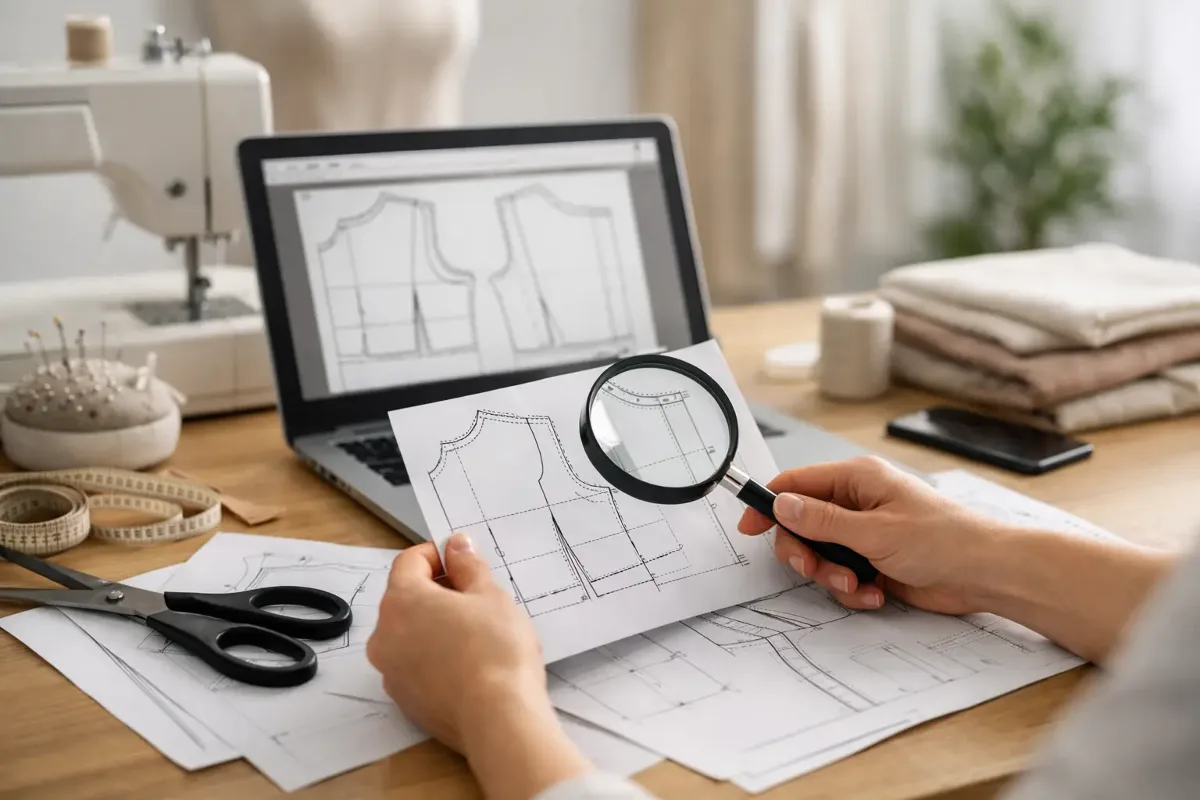
A lovely PDF sewing pattern is bought in no time – but printing, taping and cutting it out afterwards often takes longer than you'd expect. That's exactly why so many sewing enthusiasts look for PDF pattern printing service reviews. A printing service can make everyday sewing much easier, as long as the size, scale and paper quality are right. To stop your project stalling before the first stitch, it's worth taking a close look at the key points.
What a PDF pattern printing service actually does
PDF sewing patterns are usually supplied as A4 pages. For a dress, a hoodie or a jacket, that can quickly add up to 25, 40 or even more pages. You have to print them at home, line them up at the markings, tape them together and then cut them out. It works, but it takes space, patience and a well-stocked printer.
A PDF pattern printing service, on the other hand, prints the pattern file as a large-format sheet. You receive the pattern pieces at full size on a single sheet and can cut them out straight away or trace them onto pattern paper. This saves a noticeable amount of time, especially with large patterns, multiple sizes or projects you sew again and again.
The service doesn't replace careful preparation, though. You still need to decide which size you need, whether to hide layers in the pattern and which file should actually be printed. A clean print is a great help – but the fit still comes from measuring correctly, choosing suitable fabric and sewing accurately.
PDF pattern printing service reviews: what matters
Reviews are especially helpful when they include specific details. A general „worked well“ is nice, but it says little about whether a pattern sheet will really suit your project. Look more closely: was it printed at the correct scale? Were all the pattern pieces complete? Did the sheet arrive neatly packaged and without heavy creases?
Scale determines the fit
The most important point is printing at 100 per cent scale. Even a slight reduction can make a clear difference to a fitted top, children's trousers or a well-tailored blazer. Reputable sewing patterns usually include a test square, often 5 x 5 or 10 x 10 cm. Measure it with a ruler as soon as your print arrives, before you cut any fabric.
It sounds like a small extra step, but it saves you wasting fabric. Especially with high-quality fabrics, pattern repeats or when you've only ordered a small amount, you don't want to discover that the sleeves have come out too short or the front piece too narrow.
Choosing the right paper size for your pattern
Many pattern files come in A0 format. This is a common large format for pattern sheets and works with most providers. Some files, however, are set up for A1, A2 or custom sizes. So before you order, check which format your file is in and whether the service can handle it.
An A0 sheet is practical because the pieces are laid out clearly side by side. Very extensive patterns may still need several sheets. That isn't a sign of poor quality. What matters is that the sheets are clearly labelled and the intended joining points remain easy to identify.
Paper weight is also a matter of how you like to work. Thinner paper folds easily and can be filed away without taking up much space. Slightly heavier paper is sturdier if you use it repeatedly, but can be less pleasant to pin onto fabric. If you sew patterns often, you'll probably trace the pieces onto sturdy pattern paper or plastic film anyway. In that case, a clearly legible sheet on standard plotter paper is perfectly sufficient.
Layers keep things clear and save your nerves
Modern PDF sewing patterns often offer layers for individual sizes. This is particularly helpful when a pattern runs from size 34 to 56 and you only need one or two sizes. Hide all the sizes you don't need before saving. The printout will be much clearer, and you won't accidentally follow the wrong line when cutting out.
Not every file has layers. With older patterns or simple files, all the sizes are visible at once. You can still make good use of the sheet, but you should mark your size in colour before cutting. With multi-size patterns, it's also worth checking the size chart of the particular label. Ready-to-wear sizes and body measurements don't always match.
Complete files are your responsibility
A printing service prints the file you send. If pages are missing, the file only contains a preview, or a layer was hidden during export, the service can't always spot it. So open the PDF once more before uploading and check the page count, the pattern overview and the key.
Also check whether seam allowances are already included. This has nothing to do with the printing itself, but it determines how you cut out afterwards. Some sewing patterns are drafted with seam allowance included; with others, you need to add it yourself. This information is usually on the cover page or in the instructions.
Which experiences matter most for beginners
If you're just starting out with PDF patterns, the service doesn't need to seem as technical as possible. Clear processes and easy-to-understand information are far more valuable: which file formats are accepted? How large can the file be? Is it printed at the original scale? How are multiple sheets packaged?
A straightforward ordering process helps too. You should be able to tell whether you're selecting one A0 sheet, several sheets or a multi-page pattern. Unclear options can easily lead to a pattern being printed in the wrong format or important pages going missing.
For beginners, the time saved is often greater than expected. Instead of sorting A4 pages, trimming margins and lining up long taped edges, you can get straight on with the actual project: pre-washing your fabric, choosing matching ribbing, getting your thread ready and reading the instructions. With a simple children's jumper, taping may still be manageable. With a coat or a pattern with lots of variations, it's a different story.
When large-format printing is especially worthwhile
A PDF printing service isn't necessarily the best solution for every pattern. If you're sewing a small accessory with four A4 pages and printing at home anyway, taping is usually done in no time. And if you're only testing a pattern once, an A4 printout can make sense too.
With larger or frequently used projects, the balance shifts. Large-format printing often pays off for jackets, trousers, dresses with several skirt panels, jumpsuits, bags with lots of pattern pieces and patterns for several family members. The same applies if your home printer leaves streaks, doesn't produce clean lines or uses expensive ink.
If you sew several sizes for children, you'll also benefit from a clear sheet. You can neatly trace the right size while keeping all the other lines intact. That way, you can use the same pattern again later when the next size is due.
Preparing your order: how to avoid mistakes
Before you send a file to the printing service, save it with a clear name. A file name like „Hoodie_Mia_Size38_noSeamAllowance“ is more helpful than „pattern_new_final2“. If you can use layers, first show only the sizes you want, then check that all the pattern pieces are still visible.
Also check that you're uploading the file in the intended format. Some designers supply several PDFs: an A4 file for taping, an A0 file for plotting and occasionally a projector file. For large-format printing, you'll usually need the A0 or plotter file. The A4 file can be printed on large sheets, but it often won't result in a properly assembled pattern layout.
At Die Stoffkönigin, you can add PDF pattern printing as a handy extra when buying your fabric. This is particularly convenient when you're preparing fabric, ribbing, zip and pattern sheet for a project all at once. Still, take your measurements before ordering, read the fabric recommendations in the sewing pattern and allow a little extra fabric for directional prints or checks.
Delivery, packaging and the first check
A pattern sheet should reach you as flat and well protected as possible. Rolled sheets are common and fine for most pattern pieces. After unpacking, you can weigh them down with a few books or leave them to lie flat for a little while. Heavy creases right across cutting lines are less practical, as they can make tracing and cutting out more difficult.
When it arrives, first check the number of sheets, then the test square and then the labelling. Look for the size lines, grainline arrows, notches and fold markings. If anything is missing or a piece looks cut off, don't get your fabric out just yet. A photo of the problem and your order details will help resolve any query quickly.
Take two minutes for this quick check. Then you can lay the sheet on the table with confidence, line up your fabric and focus on the best part: piece by piece, an idea turns into something that truly suits you or someone you love.
Matching categories
Matching products
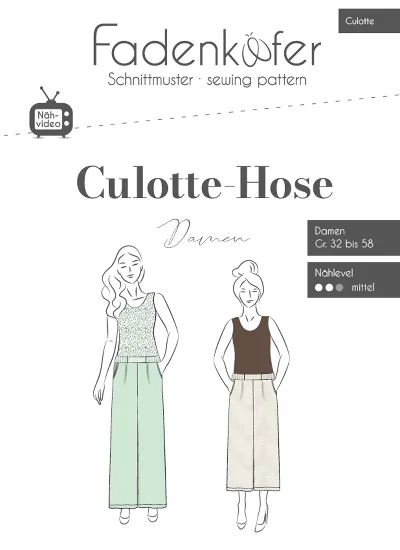
Fadenkaefer Paper Sewing Pattern Culotte Trousers
€12.90per piece
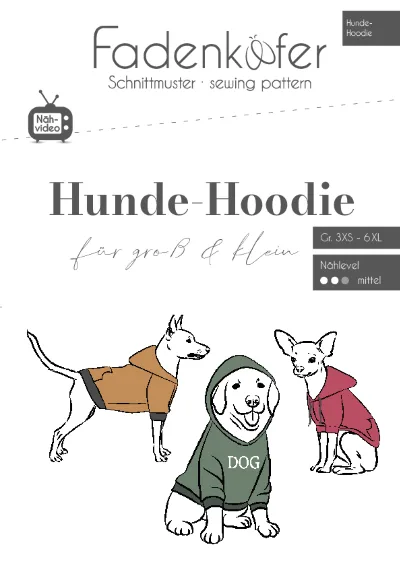
Paper Sewing Pattern Hunde Hoodie
€12.90per piece
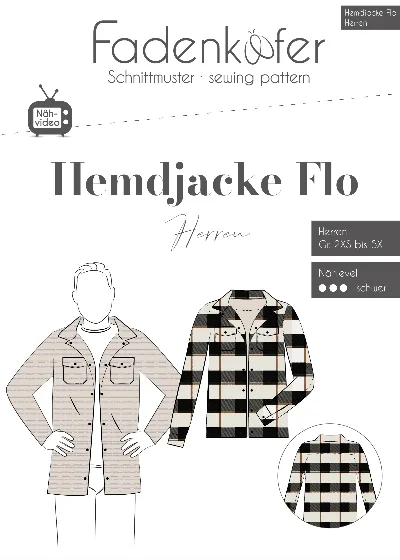
Paper Sewing Pattern Hemdjacke Flo Herren
€12.90per piece
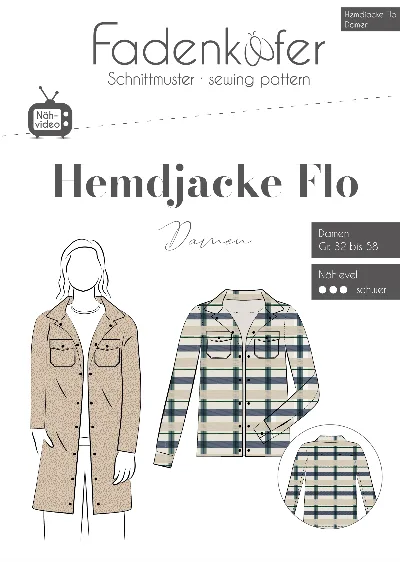
Paper Sewing Pattern Hemdjacke Flo Damen
€12.90per piece
Paper Sewing Pattern Hemdjacke Flo Kinder
€12.90per piece
Paper Sewing Pattern Ruby Damen
€12.90per piece