Getting PDF Sewing Patterns Plotted Made Easy

If you've ever printed, sorted and taped together 40 or 80 pages of a sewing pattern, you'll know the moment when your enthusiasm for sewing starts to fade before you've even cut out a single piece. That's exactly why having PDF sewing patterns plotted isn't a gimmick for many sewing fans but a genuine relief. Instead of spending hours piecing together A4 sheets, you hold the pattern in its original size straight away: clear, clean and ready to use.
Why having PDF patterns plotted is often worth it
First and foremost, a plotted pattern saves time. That's the most obvious benefit, but not the only one. Especially with more involved projects that have lots of pattern pieces, multiple sizes or long lines, you can see far more quickly on a large-format sheet what belongs together.
Then there's the practical side when cutting out. Taped edges, misaligned joins and slightly skewed pages are a thing of the past. If you've ever tried to trace a sleeve seam accurately across several A4 sheets, you'll know how much more relaxed it is to work with a pattern on plotter paper.
It's often the more pleasant option for beginners, too. If you don't have much sewing experience yet, your energy is better spent on choosing fabric, fit and construction than on assembling a stack of paper. At the same time, more experienced sewists benefit when several projects are on the go at once and keeping track matters.
What exactly does having a PDF pattern plotted mean?
It means printing a digital sewing pattern on large-format paper. Rather than printing the PDF yourself on A4, it's output on a plotter at its original size. This usually gives you a single sheet or several large sheets with the pattern pieces already correctly laid out.
It's important to note that not every PDF is automatically designed for large-format printing. Some files only contain a tiled A4 layout for printing at home. Others also include a plotter file, often called an A0 file. This version is usually the right one to use if you want to have a PDF pattern plotted.
A quick look at the file or at the pattern designer's information helps. It will usually say whether an A0, copy shop or large-format file is included. If only the A4 version is available, things get trickier. Whether a clean large-format print is still possible then depends on how the PDF is set up.
What to check before plotting
The most important point is scaling. A sewing pattern must always be printed at 100 per cent. Even small deviations can later mean a garment is too tight, too loose or doesn't fit properly in crucial places. So it's worth checking whether the file includes a test square before you send it off.
The layer structure matters just as much. Many modern patterns offer individual sizes as layers you can show or hide. This is particularly helpful because it makes the print much clearer. If only the size you actually need is visible on the plot, you have fewer lines to tell apart and can work more calmly.
Page margins play a role, too. Some patterns are set up for home printing with overlaps, others for large-format printing close to the edge. This is where you can tell how carefully the file has been prepared. Good plotting services often spot typical problems in advance or let you know if something doesn't line up.
Which projects are particularly suited to plotting
The larger and more detailed a project, the more the service pays off. Plotting is especially handy for dresses, jackets, trousers or coats, because they involve large pattern pieces and long lines. The same goes for children's clothing in several sizes, if you sew the same pattern again and again or want to compare two sizes.
Bags, rucksacks and home décor projects benefit as well. Bags often combine lots of individual pieces, markings and reinforcement elements. On a large sheet, this information is usually easier to make out than on lots of separate pages.
Plotting matters less, on the other hand, for very small or simple projects. A headband, a neckerchief or a minimalist drawstring bag can often be printed at home without any trouble. So it really comes down to how much effort you want to save and how often you plan to use the pattern.
Plotting your PDF pattern or printing it yourself?
Both have their place. If you want to get started on a whim and have a well-set-up printer at home, an A4 printout is of course available quickly. That can be handy if you want to start a small project the same afternoon.
The downside is the effort afterwards. Cutting, sorting, taping and checking take time and space. On top of that, there's the paper and ink you use up. If you add it all up honestly, the price difference compared with plotting is often smaller than you might think.
Large-format printing is usually the more convenient option, especially for extensive patterns. You do need the right file, though, and should allow a little lead time. If you like to dive straight in, you'll probably still print at home sometimes. If you value tidy working and a clear overview, you'll often opt for plotting.
How to spot a good plotting service
A good service doesn't simply print any old file. It pays attention to the right format, correct scaling and a print quality that keeps lines, labels and markings legible. With layered patterns or fine lines in particular, that's no minor detail.
It also helps when the service clearly states which file formats are accepted and how files should be set up. That saves back-and-forth questions and prevents incorrect orders. It's just as nice when a service thinks along with its sewing customers, in other words when it knows what matters with sewing patterns.
If you like to plan fabric, notions and pattern all together, you'll especially benefit from a supplier that understands the sewing project as a whole. At Die Stoffkönigin, this idea fits our range perfectly: materials, advice and practical extra services work hand in hand so that an idea really does become a finished make.
Common questions about plotting sewing patterns
Many customers first wonder whether colour or black and white is better. That depends on the file. If sizes, line types or layers are distinguished by colour, colour printing can make sense. In many cases, though, a clean black-and-white print is perfectly sufficient, as long as the lines remain clearly visible.
Another question concerns the paper. Thinner plotter paper is easy to fold and store but is a little more delicate. Heavier paper feels higher quality and is more durable, but takes up more space. Which is better depends on whether you'll use the pattern only once or over a longer period.
People have different preferences when it comes to cutting out, too. Some cut out the size they need directly. Others trace the pattern onto tissue paper or pattern film so that all sizes are preserved. For pricier or frequently used patterns especially, tracing is usually a better idea than cutting straight into them.
Common mistakes you can avoid
The classic mistake is sending the wrong file. If the A4 version is sent by accident instead of the A0 or plotter file, the print may be impractical or, in the worst case, unusable. So it's worth taking one last look before uploading.
Automatic adjustments such as fit to page or scaling are also problematic. With a sewing pattern, that's exactly what mustn't happen. Original size is a must. A test square gives you peace of mind, especially when you're using the file for the first time.
And then there's the everyday organisation slip: you send a file, receive the plot and later can't remember which version it was. If you sew regularly, clear naming makes sense. The pattern name, size and, where relevant, language help you find the right pattern again quickly.
When the service really pays off
If you're short on time, short on space for taping or simply want to work more neatly, plotting is often the most pleasant solution. It takes a tedious bit of prep off your hands and makes getting started on the project itself easier. For gift ideas, seasonal projects or spontaneous sewing sprees in particular, that's worth a lot.
It's also worth it when you're sewing with high-quality fabrics. Once you've cut into a beautiful viscose, softshell or a special jersey, the last thing you want is to discover while sewing that the pattern was distorted in one spot. A carefully planned start protects your fabric, your time and your nerves.
You don't have to have every PDF pattern plotted. But for many projects, it's exactly the kind of support that makes the difference between putting something off and actually making it. And sometimes that's the crucial step that turns anticipation not into paper chaos but into a sewing project that feels good right from the start.
Matching categories
Matching products
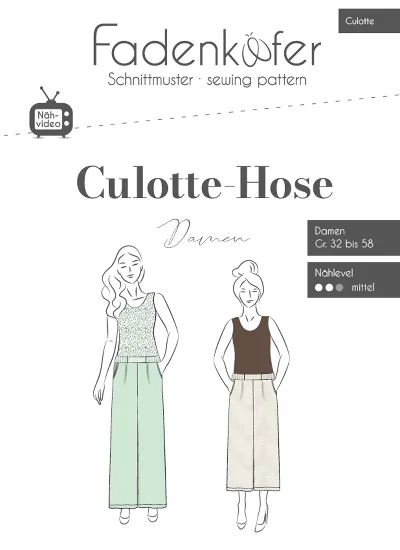
Fadenkaefer Paper Sewing Pattern Culotte Trousers
€12.90per piece
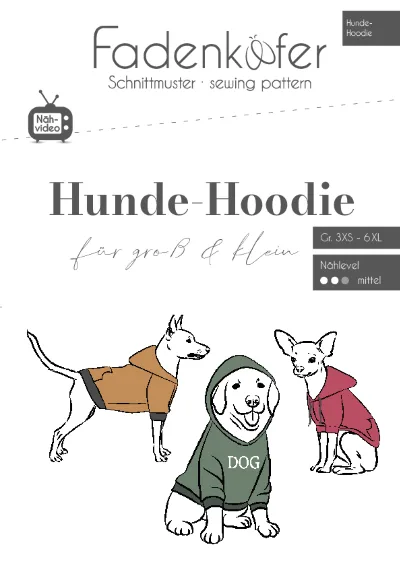
Paper Sewing Pattern Hunde Hoodie
€12.90per piece
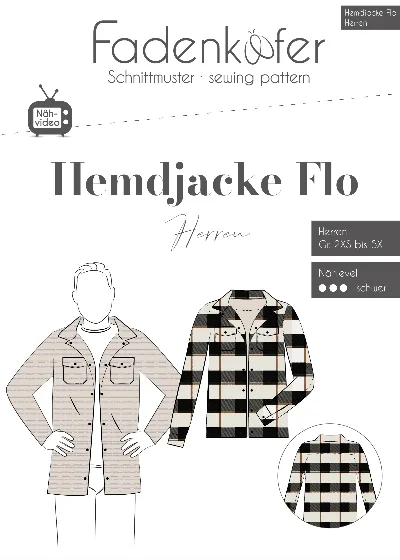
Paper Sewing Pattern Hemdjacke Flo Herren
€12.90per piece
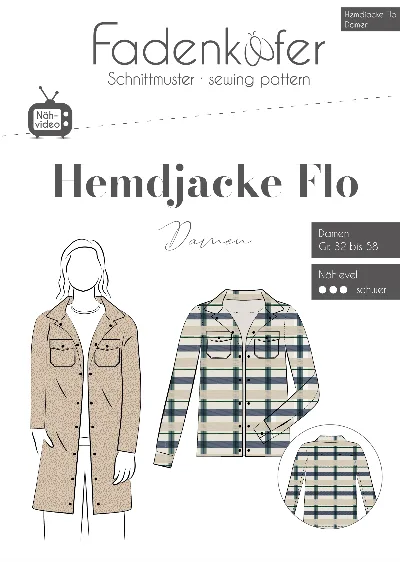
Paper Sewing Pattern Hemdjacke Flo Damen
€12.90per piece
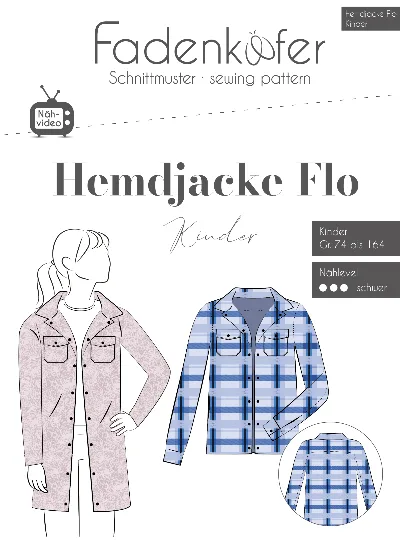
Paper Sewing Pattern Hemdjacke Flo Kinder
€12.90per piece
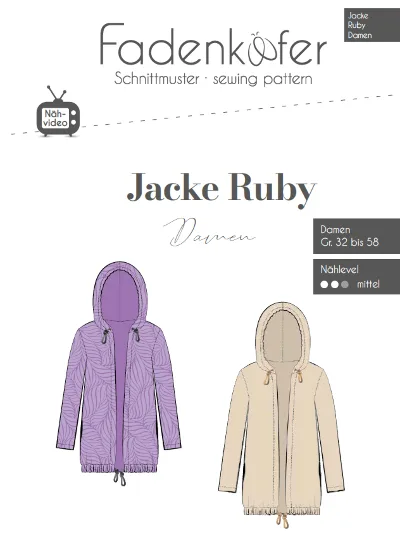
Paper Sewing Pattern Ruby Damen
€12.90per piece