Printing Sewing Patterns Without the Chaos
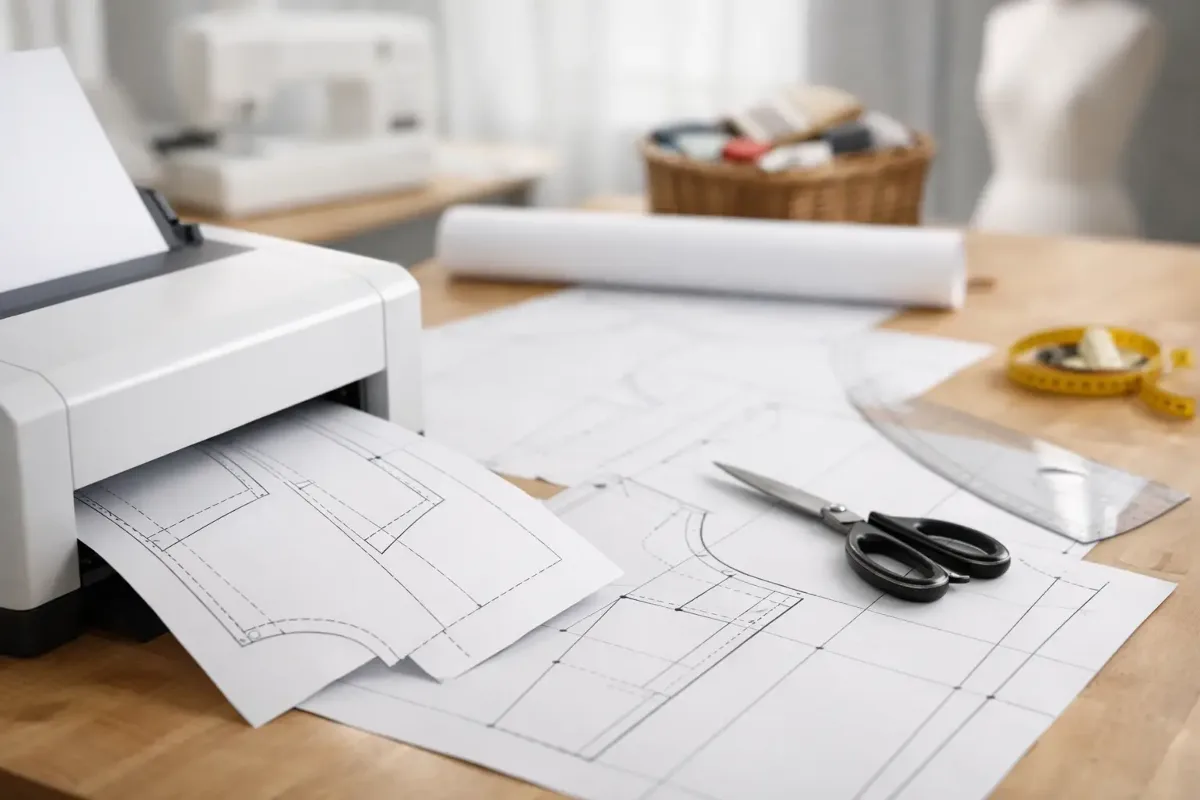
If you've ever printed 40 sheets of A4, taped them all together and only noticed when cutting out that the test square was wrong, you'll know that printing sewing patterns sounds easier than it often is in practice. Especially when sewing time is short, nobody wants to wrestle with printer settings, sort pages or end up recutting a piece because the scale was off.
Printing sewing patterns – what really matters
Printing a sewing pattern isn't just about getting a PDF onto paper. What counts is that the pattern prints at exactly the intended size. Even a few millimetres out can mean a sleeve no longer sits neatly in the armhole or a pair of trousers comes out too tight at the waistband.
The most common stumbling block is the printer settings. Many programs automatically choose fit to page, shrink or margin adjustment. That's handy for ordinary documents, but not for sewing patterns. Here, the file must always be printed at actual size, i.e. at 100 per cent. So before you print the whole thing, it's worth taking a quick look at the test square. Only once it measures exactly right should you print all the pages.
The file itself matters too. Many e-books include different formats, for example A4 for your home printer, A0 for a copy shop and sometimes a projector file as well. Which option makes sense depends less on the pattern than on the way you like to work. If you enjoy preparing things at home and only sew occasionally, A4 often works perfectly well. If you work with larger patterns or simply can't face all the taping, A0 is usually the more relaxed choice.
A4 or A0 for printing sewing patterns?
A4 is the obvious solution because almost every printer can handle it. For small projects such as hats, baby trousers or simple tops, it's often all you need. You print the pages, trim the margins as the instructions say and tape the sheets together at the markings. It takes time, but it works reliably as long as you're careful.
As soon as a pattern gets bigger, A4 shows its limits. Jackets, dresses, jumpsuits or several nested sizes quickly produce a whole stack of paper. Then it's not just the taping that becomes tedious, but storing and cutting out too. This is where A0 is far more pleasant, because the pattern comes out at full size on just a few large sheets. You save time and it's easier to keep track.
The main drawback of A0 is that you can't just run it off on your home printer. You need a suitable printing service. That's exactly why many sewing enthusiasts find it so useful to have PDF sewing patterns printed at full size without having to deal with plotters, paper formats and technical details themselves.
When A4 is worth it
A4 is a good fit if you want to get started straight away, only need a small pattern or want to make individual adjustments directly on the printout. For beginners, too, it can help to get to know the pattern sheet by sheet. You often understand more quickly how the pieces are put together and where folds, markings and notches are.
When A0 is the better choice
A0 is worth it if you sew regularly, use larger patterns or simply want to work efficiently. It saves a lot of stress, especially for garments with lots of pattern pieces. If you already know that taping is your least favourite part of sewing prep, feel free to let someone else take care of it.
The most common mistakes when printing sewing patterns
Many problems don't start at the cutting table but well before the first cut. The good news: most of them are easy to avoid.
Top of the list is the wrong scale. If 100 per cent or actual size isn't selected in the print dialogue, the entire pattern will be wrong. A second classic is skipping the test square. It's easily treated as a formality, but it's your most important safeguard.
Mix-ups with layers are just as common. Many modern patterns let you show and hide individual sizes. That's practical because it makes the printout clearer. But if you accidentally print all the sizes, you'll soon be faced with a tangle of lines. With children's sizes or closely graded women's patterns in particular, this makes tracing unnecessarily hard work.
Typical mistakes also happen when taping. If pages aren't lined up exactly at the markings or sheets shift slightly, small inaccuracies add up. Often you only notice at the edge, when a line no longer runs on smoothly. What helps is setting up calmly on a large surface and being willing to fix a crooked page straight away.
How to make printing at home easier
If you print sewing patterns at home regularly, a little routine pays off. First print only the page with the test square. Measure it. Then make sure you've really opened the right file, for instance A4 rather than A0. Only then start the full print.
It also helps to check the instructions. Some designers state whether the page margins need trimming or whether the sheets are taped edge to edge. Both are common, but they're not interchangeable. If you just go by feel here, you'll end up annoyed by misaligned lines.
As for paper: ordinary printer paper is fine in most cases. Heavier paper may seem sturdier at first, but it's harder to fold, tape and store. If you're going to transfer the pattern onto pattern paper after printing anyway, standard paper is perfectly adequate.
If you work with PDF patterns often, you can also set up a dedicated spot for this prep. Having scissors, a glue stick or tape, a ruler and a tape measure within reach saves a surprising amount of time. It sounds trivial, but in everyday life it makes the difference between a relaxed start and half an hour of searching.
Have your sewing patterns printed instead of taping them yourself?
It's not a question of right or wrong, but of habit, time and project size. If you like to sew spontaneously and use a home printer anyway, A4 is absolutely fine. But if you want to cut out a dress after work and would first have to print, sort and tape 56 pages, the mood can quickly turn.
A printing service makes the most sense when you value clarity, full-size printing and a quick start. For more complex projects or several patterns at once, it saves a noticeable amount of time. On top of that, large sheets are usually easier to handle when cutting out than lots of A4 pages stuck together.
For customers who'd like to plan fabrics, notions and sewing patterns from a single source, a service like this is especially handy. At Die Stoffkönigin it fits neatly into everyday sewing, because it's not just materials and notions that are taken care of – printing PDF sewing patterns at full size is part of the offer too, as a real time-saver.
What to check before you cut out
Even if the pattern has printed cleanly, a final quick check is worthwhile. Do the notches match? Are all the pages there? Have you really selected the right size? Especially when a pattern has several layers or versions, it's easy to overlook a detail.
You should also check whether seam allowances are already included. That's not directly related to printing, but it has a big impact on the next step. Many misunderstandings arise because a pattern is printed correctly but then cut out wrongly.
If you trace pieces, it's best to mark any changes straight away. Otherwise length adjustments, different hems or altered sleeves are easily forgotten the next time you sew. A carefully prepared pattern saves far more time later than it costs at the start.
Printing sewing patterns can be easy
Sewing isn't just about choosing fabric, lovely colours and the joy of a finished piece. It often begins with preparation – and that's allowed to go smoothly. When the scale is right, you've chosen the right format and you know when home printing is worth it and when a printing service is, your project gets off to a much more relaxed start.
Sometimes the best solution isn't the one that looks quickest at first glance, but the one that spares you frustration and leaves you looking forward to the actual sewing. In the end, that's exactly what printing sewing patterns should be about.
Matching categories
Matching products
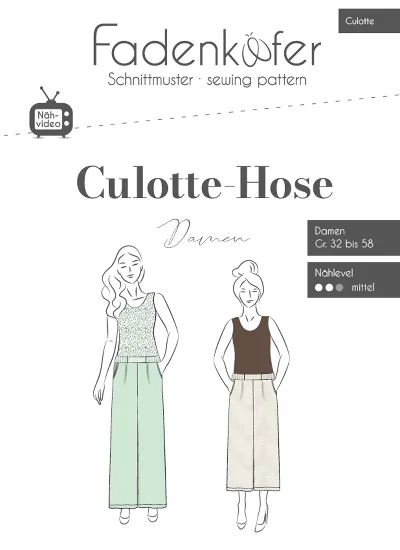
Fadenkaefer Paper Sewing Pattern Culotte Trousers
€12.90per piece
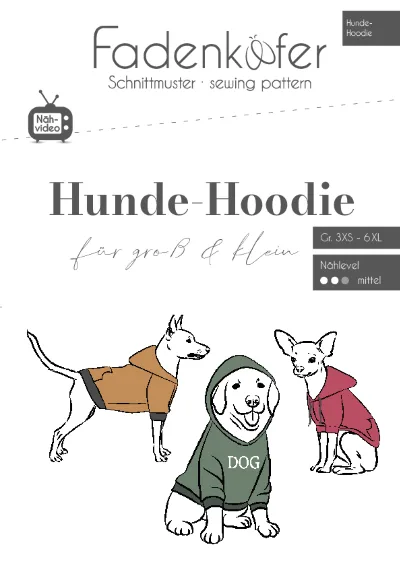
Paper Sewing Pattern Hunde Hoodie
€12.90per piece
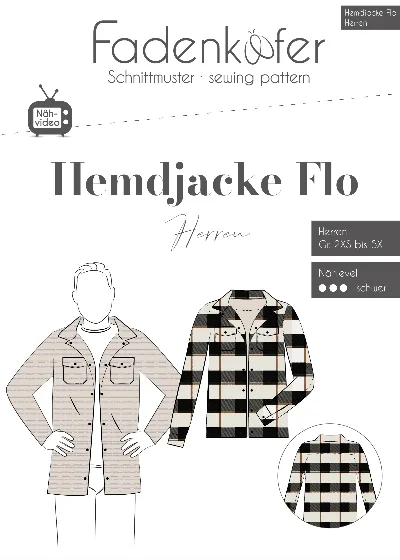
Paper Sewing Pattern Hemdjacke Flo Herren
€12.90per piece
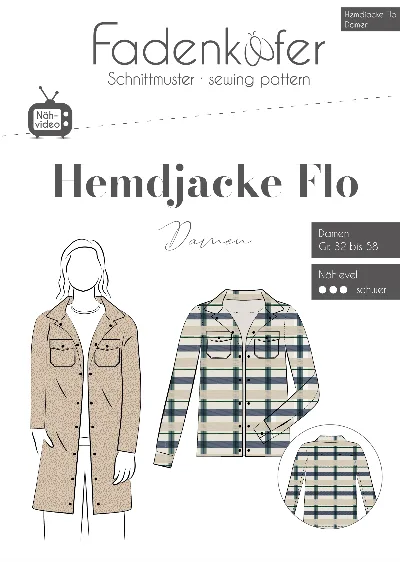
Paper Sewing Pattern Hemdjacke Flo Damen
€12.90per piece
Paper Sewing Pattern Hemdjacke Flo Kinder
€12.90per piece
Paper Sewing Pattern Ruby Damen
€12.90per piece