Softshell or boiled wool: which is the better choice?
When you're about to cut out a jacket, an all-in-one or a pair of puddle trousers, choosing between softshell and boiled wool is no small matter. Both fabrics are popular, and both look practical at first glance. Yet they sew up quite differently and don't behave the same way in everyday wear. That's why it pays to take a closer look before that lovely fabric lands in your basket or on your cutting table.
Softshell or boiled wool: the key difference
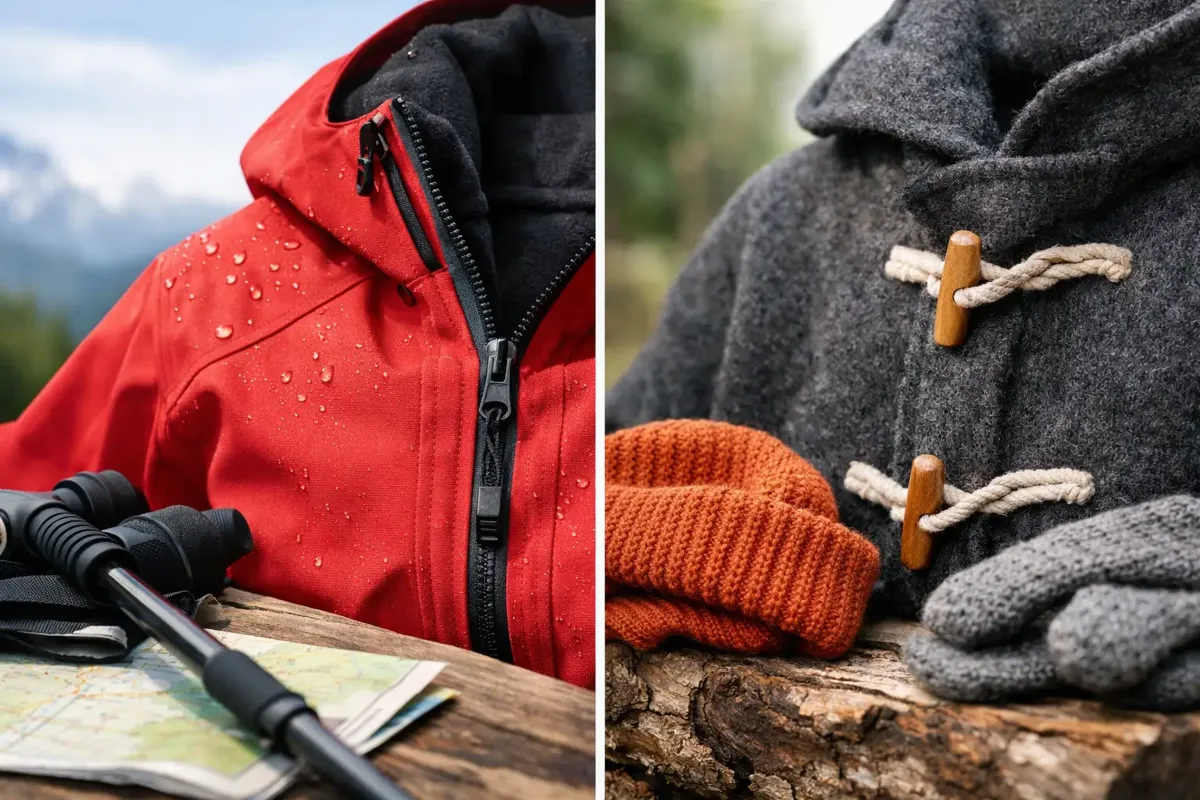
Softshell is a technical fabric. It usually has several layers: smooth and hard-wearing on the outside, often with a soft fleece or brushed side on the inside. This makes it a good windbreaker and water-repellent, and it can take plenty of wear. For children's clothing, outdoor jackets, gilets or weatherproof trousers, that's a big advantage.
Boiled wool works differently. It's made from fulled wool and gets its properties from the fibre itself. Boiled wool is warm, regulates temperature and has a pleasantly natural handle. It isn't waterproof, but it copes well with light drizzle. That's why it's so popular for transitional clothing, wool jackets, baby all-in-ones and cosy little coats.
In short: softshell is the more practical choice for wind, wet weather and lots of outdoor activity. Boiled wool scores with warmth, natural fibres and a particularly lovely feel to wear.
Which projects is softshell suited to?
Softshell comes into its own when clothing needs to be practical and weatherproof. Especially with children, who don't stop to wonder whether the grass is still wet, this makes a real difference. The fabric is easy-care, tough and forgiving. Dirt can often simply be wiped off, and softshell clothing doesn't look worn out after a few trips to the playground.
Softshell works really well for jackets, outdoor trousers, puddle suits, gilets, footmuffs and even bags. If a pattern is designed with function in mind, softshell is often the right call. The only thing to watch is that the project isn't too delicate or too close-fitting. Softshell has body and drapes differently from soft dressmaking fabrics, so a floaty, flowing little dress isn't really on the cards.
When sewing, bear in mind that softshell can show small needle holes. Pins aren't always ideal, so clips are often the better choice. You'll also need the right needle so the fabric feeds through cleanly. If you've sewn coated or thicker fabrics before, you'll usually get on fine. Softshell is doable for beginners too, as long as the pattern isn't too complicated.
When boiled wool is the lovelier choice
Boiled wool isn't a classic outdoor fabric, but it's incredibly charming for lots of sewing projects. It looks high-quality, drapes more naturally and adds warmth without being heavy or stiff. For children's clothing in spring and autumn or on dry winter days, boiled wool is often an excellent choice.
A boiled wool all-in-one for a baby, a hooded jacket, a simple coat or a warm gilet: pieces like these don't just look beautiful in boiled wool, they're comfortable to wear too. Because wool regulates temperature, children often don't overheat as quickly as they do in purely technical fabrics. That's especially nice when it's chilly outside but not freezing.
That said, boiled wool has its limits. In heavy rain, prolonged wet weather or the muddy daily walk to school, it's more delicate than softshell. Wear can also show more quickly on hard-working areas such as knees and seats. So for a garment that will be worn every day in all weathers, you need to weigh things up honestly.
Softshell or boiled wool for children
Here it really depends on how the garment will be used. For forest school, the trip to nursery, the playground in autumn and anything that's allowed to get wet, windy or dirty, softshell is usually the worry-free option. The clothing stands up to more, dries faster and is straightforward to care for.
Boiled wool, on the other hand, is wonderful for baby all-in-ones, jackets for dry weather or garments that are meant to be warm and cosy. Many parents love boiled wool because it feels more natural and looks less sporty. For younger children who don't yet spend hours splashing through puddles, that can be just right.
If you're unsure, one simple question helps: should the garment mainly keep the weather out, or mainly keep you warm? For weather, softshell wins. For warmth with a natural feel, it's often boiled wool.
Which is warmer: softshell or boiled wool?
There's no one-size-fits-all answer, because warmth also depends on the pattern, the layers underneath and the lining. Boiled wool is often perceived as warmer, because wool insulates very well while also regulating temperature nicely. Boiled wool really shows its strengths in dry cold.
Softshell blocks wind better, and that's exactly what makes it so effective day to day. A fabric doesn't have to be as thick as possible to feel warm outdoors. If the cold wind stays out, a thinner garment often feels more comfortable than a thick but airy fabric. That's why a well-fitting softshell jacket can be more practical than a boiled wool jacket on a blustery autumn day.
If you want to sew particularly warm winter clothing, neither standard boiled wool nor classic softshell is always enough on its own. In that case, it's worth looking at lining fabrics, extra layers or a pattern that leaves enough room for warm clothes underneath.
Care and everyday practicality
In family life, this is often what tips the balance in the end. Softshell is uncomplicated. It can't be treated at just any high temperature, but overall it's easy-care and quickly ready to wear again. That makes it very appealing for clothes that get worn a lot.
Boiled wool needs a little more attention. Wool doesn't like rough treatment, and frequent washing usually isn't necessary at all, but when you do wash it, do so gently and appropriately. In return, boiled wool has another advantage: it doesn't pick up odours as quickly and often just needs airing. If you love natural materials, you'll know this as a real plus.
For hard-wearing everyday clothing, softshell usually has the edge. For favourite pieces that are worn with care and well looked after, boiled wool is often especially lovely.
How does the sewing pattern affect your choice?
Not every pattern works equally well with both fabrics. Softshell brings stability, which helps with sporty jackets, crisp hood shapes or functional trousers. Boiled wool is softer, and depending on the quality it can also be stretchier or drapier. It often looks best in simple, slightly roomier styles.
So don't just look at how the sample garment looks; consider what the pattern actually needs. Does it call for a fabric with body that keeps the wind out and doesn't give too easily? Then there's a strong case for softshell. Should the garment be cosy, warm and drape naturally? Then boiled wool is often the better fit.
Especially with beginner projects, it's worth not swapping the recommended fabric just because a colour is so pretty. A good fabric-and-pattern match saves nerves, time and often money in the end.
Softshell or boiled wool: what about sewing them?
There are differences at the machine, too. Because of its layers, softshell can be a bit bulky, especially at seams, hoods or facings. On the other hand, it usually doesn't fray much, which makes it easier to work with. Many projects turn out well on a standard sewing machine.
Boiled wool also usually frays very little, which is handy. It's often lovely to sew, but it does call for a good feel for the material and the pattern. Depending on its thickness, it can also be challenging at bulky points. What's more, with boiled wool it's easier to see whether a seam lies neatly or whether something is pulling. Technically the material is less forgiving, but it looks really high-end when it's well sewn.
If you're sewing weatherproof children's clothing for the first time, you'll often find softshell a more relaxed place to start. If you already have a bit of experience and fancy natural materials with real character, you'll have lots of fun with boiled wool.
The honest answer: it depends on your everyday life
There's no right or wrong answer to the softshell-or-boiled-wool question. If clothing will be worn a lot outdoors in wet and windy weather, softshell is usually the more sensible choice. If you want to sew a warm, beautiful, natural garment for drier days or the in-between seasons, boiled wool is often just the thing.
Sometimes the best solution isn't either/or. A boiled wool jacket for dry days and softshell trousers for the playground can make far more sense together in the wardrobe than a single piece that's meant to do everything at once. At Die Stoffkönigin we often find that the best fabric choice doesn't come from a rule, but from your project, your pattern and the everyday life the finished piece needs to stand up to.
So if you're torn between the two fabrics, don't look at trends first; look at what the garment really needs to do. Then the decision is usually surprisingly easy.