Embroidery Trends 2026 for Creative Sewing Projects
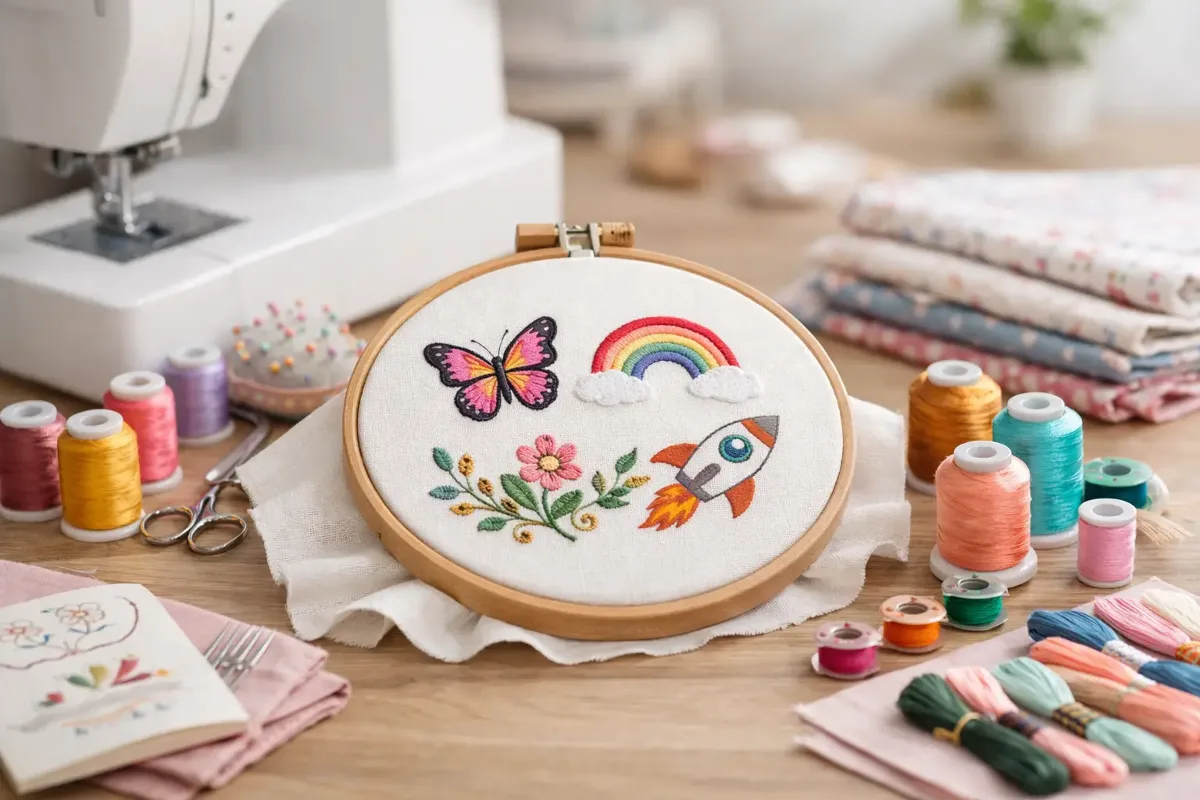
A small embroidered detail can turn a plain sweatshirt into a favourite piece, give a denim jacket real personality or make a handmade bag one of a kind. The embroidery trends for 2026 start right there: they feel personal, are allowed to look handmade and adapt to the project rather than overwhelming it. Motifs that tell a story and still look lovely on smaller areas are especially popular.
That's good news for anyone who loves sewing. The current ideas don't necessarily call for a large embroidery machine or complicated software. Many trends work as delicate hand embroidery, with simple machine embroidery files or as a combination of fabric appliqué and embroidery thread. What matters most isn't the size of the motif but the right combination of fabric, colour and placement.
Embroidery trends 2026: personal rather than generic
In 2026, individuality moves even further into the spotlight. Instead of large motifs that dominate an entire garment, small, deliberately placed embroideries are becoming more important. A name on the sleeve, a symbol on the breast pocket or a tiny motif at the hem often looks more refined than an all-over design.
Your embroidery can happily show a recognisable personal touch, too. Not every line has to be perfectly even. Slightly irregular stitches, visible thread texture and deliberately simple shapes add warmth and make a project truly your own. For children's clothes, gifts and accessories in particular, this is a lovely counterpoint to slick mass-produced goods.
Memories are also increasingly becoming motifs: a beloved dog as a simple outline, a flower from your grandmother's garden, the coordinates of a holiday spot or a child's first drawing. Ideas like these don't need an elaborate template. Often a clear line drawing that transfers neatly onto fabric is all it takes.
Nature motifs are here to stay – but more graphic
Leaves, flowers and animals have long been among the most popular embroidery motifs. In 2026 they're less whimsical and more often pared back. Single sprigs, stylised wildflowers, mushrooms, poppy seed heads or little beetles work well on clothing, bags and home textiles. Instead of a large floral wreath, a single bloom at the neckline or on a cushion cover may be all you need.
Nature motifs look particularly beautiful when their colour palette stays a little calmer. Sage green, moss, rust red, midnight blue, berry shades and warm cream combine well. If you prefer something fresher, add deliberate accents in apricot, lilac or clear turquoise. The thread colour doesn't have to match the fabric exactly – a visible contrast often shows off fine stitches better.
With patterned fabrics, restraint is wise. A densely printed jersey usually doesn't need an extra large motif. On plain jersey, French terry, muslin, canvas or denim, however, a small embroidery can really work its charm. It's always about how everything works together.
Small motifs in unexpected places
In 2026, placement becomes almost as important as the motif itself. Embroidery is moving onto cuffs and collars, next to pockets or along the bottom hem. On bags, flaps, handle attachments and outer pockets are ideal spots. On cushions, small motifs in one corner can look far more modern than a picture in the centre.
For garments: before the first stitch, try the piece on briefly or lay the pattern piece out on a table. A motif that looks well positioned on flat fabric can end up too high, too low or right on a fold once the garment is worn. With stretch fabrics in particular, leave enough distance from seams that take a lot of strain.
Nostalgia with clean lines
Alongside natural motifs, a gentle nostalgia is making a comeback. This doesn't mean busy retro pictures, but subtle nods: bows, strawberries, cherries, clouds, houses, teacups or stylised stars. Handwritten-style lettering and short, friendly words also fit this trend.
To keep the look from feeling old-fashioned, a pared-back colour palette helps. Two to four thread colours are plenty for many motifs. A dark red cherry stalk on natural linen or a cream bow on deep blue sweatshirt fabric looks crisper than a motif with lots of shading.
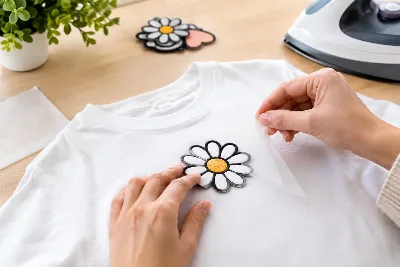
For children's projects, the colours can of course be more cheerful. Little vehicles, woodland animals, rainbows or favourite foods remain popular, but loose outlines and small details make them feel less twee. An embroidered patch on a hoodie or rucksack is also practical: it can be swapped when tastes change.
Texture and material become part of the motif
In 2026 it's not just about what you embroider but also how the embroidery feels. Textured stitches, thicker threads and deliberately visible filled areas create depth. Satin stitch, long and short stitch, French knots and small chain stitches give a lively result without too much effort.
On sturdy fabrics such as canvas, denim, twill or linen, these textures look especially good. They hold the stitches firmly and hardly distort, which makes them a great choice for bags, storage baskets, cushions, jackets or wall hangings. With sweatshirt fabric, jersey and other stretchy fabrics, a suitable embroidery stabiliser is essential. It stops the motif from puckering or distorting when worn.
On fluffy fabrics such as fleece or teddy, a very delicate motif often isn't the best choice, as fine lines can visually disappear. Larger shapes, clear outlines and thread in a clearly contrasting colour work better here. If you want to embroider on softshell, make a test piece first – depending on its coating, the material can react badly to needle holes.
Appliqué complements embroidery
Fabric appliqué with an embroidered edge is a lovely option for larger motifs. A fabric scrap becomes a leaf, an animal's body, a star or a letter, and the stitched border gives it a neat, durable edge. On large areas this saves embroidery time while bringing pattern or texture into the project.
This technique is especially worthwhile for children's clothes and bags. A patterned cotton fabric can become a sailing boat, a cosy scrap of sweatshirt fabric a bear's ear. It's important to check beforehand that the fabrics have similar care requirements. A stretchy appliqué on a firm woven fabric can behave differently from the base fabric in the wash.
Visible mending becomes prettier and more commonplace
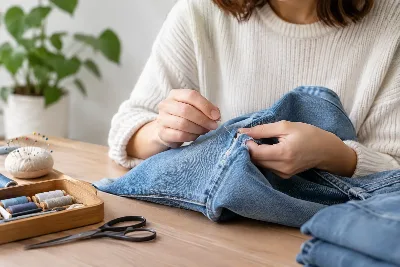
Repairing remains an important topic, but in 2026 the repair is allowed to show. Small holes in jeans, jackets or bags are no longer just hidden but decorated with stars, flowers, geometric lines or contrasting thread. Visible mending combines sustainability with creativity and extends the life of your favourite pieces.
The result doesn't have to look polished. A few deliberately placed stitches, a matching fabric patch on the reverse and a motif that incorporates the damaged area are often enough. In high-wear areas such as knees, elbows or pocket corners, however, the patch should be large enough and sewn on securely. Purely decorative embroidery is no substitute for a durable repair.
Scraps are especially valuable for projects like these. Small pieces of cotton, canvas or denim are easy to stock up on. If you choose fabrics from 20 cm, you can put together exactly the colours and qualities you need for appliqués, patches and repairs. Die Stoffkönigin offers a wide range of fabrics and haberdashery that combine beautifully.
Turning a trend into a wearable project
Trends are at their best when they suit your own style and the intended use. A delicate flower on a blouse needs different thread and stabilising than a large patch on a child's rucksack. So start with the fabric and what the piece will be used for, not with the most elaborate motif.
To begin with, simple shapes in just a few colours are ideal. Test your thread, needle and tension on a scrap of the same material. With machine embroidery, a test piece quickly shows whether stabiliser, hoop and motif size work together. With hand embroidery, it helps to lightly trace the outlines first and to hoop the fabric tautly.
A trend doesn't have to disappear next season. Choose a motif that you – or the person you're making it for – truly love, and give it a place where it brings joy every day. That's exactly when thread, fabric and a few stitches become a piece that's made to last.