Buying embroidery supplies - what you really need
If you set out to buy embroidery supplies, you'll often notice within minutes that the choice is huge, the differences aren't always obvious at first glance and not every product suits every project. That's exactly why it pays to take a moment before you shop to work out what you actually want to embroider - and which materials will get you to a lovely result without the stress.
In embroidery, the result isn't decided by the design alone but above all by how your fabric, thread, needle, embroidery hoop and stabiliser work together. A floral motif on fine cotton needs something different from a name on terry towelling or an appliqué on children's clothing. When the basics match, your embroidery will be neater, more enjoyable and far less frustrating.
Buying embroidery supplies - project first, materials second
The most common shopping mistake isn't the wrong colour but starting too vaguely. Many people simply pick up a pretty thread set and any old hoop. That may be fine for small pieces of hand embroidery, but with clothing, bags or home textiles you'll quickly see that the choice of materials makes a real difference.
Ideally, start by asking yourself which fabric you'll be working on. Woven fabrics such as cotton or linen behave differently from jersey, muslin or terry towelling. Stretchy or soft fabrics often need extra stabilising so nothing gets distorted. Firm fabrics are usually more straightforward, but the needle should still pass cleanly through the weave without damaging the threads.
The type of design matters too. Fine lines, lettering and small details call for precise thread and the right needle size. Larger filled areas or decorative effects can be bolder. If you think about this before you buy, you'll save yourself rework later on.
Which embroidery supplies are truly essential
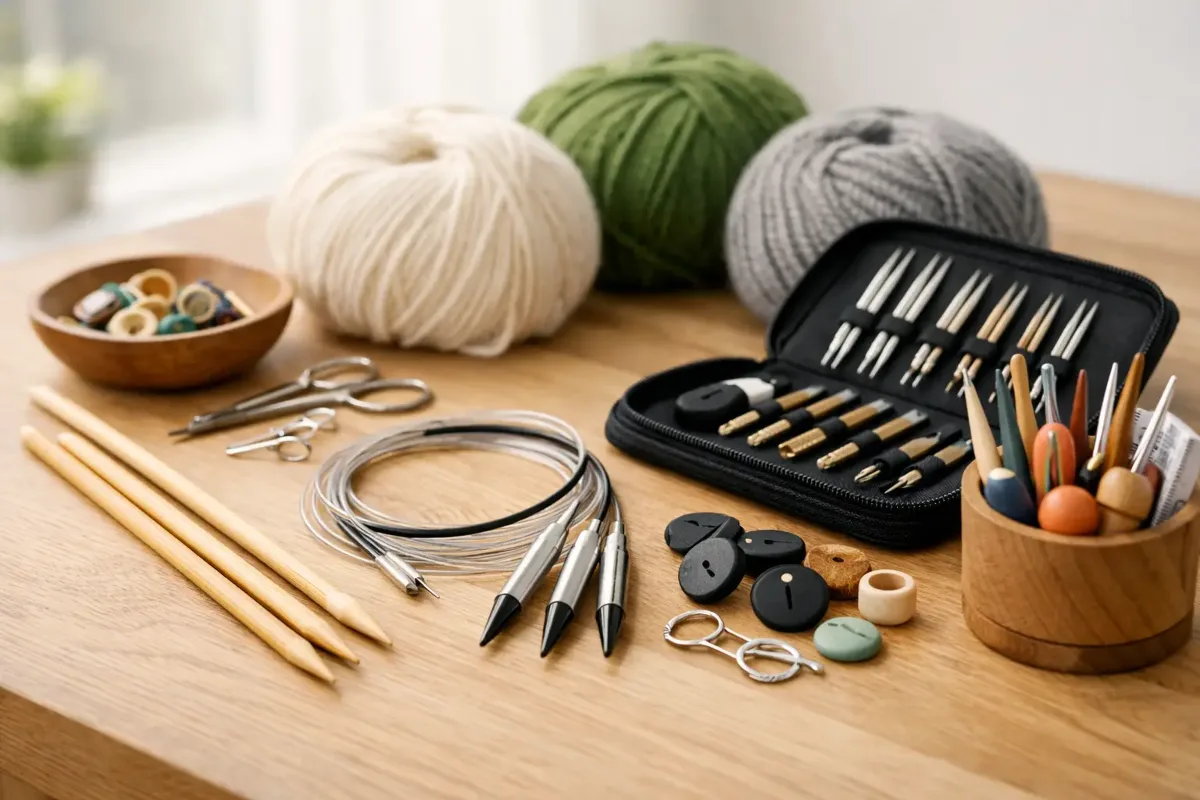
You don't need every accessory right from the start. A good basic kit is often perfectly sufficient, as long as it's sensibly put together. The most important items are high-quality embroidery threads, suitable embroidery needles, a sturdy embroidery hoop and, depending on the fabric, a suitable embroidery stabiliser or another form of reinforcement.
It's worth taking a closer look at thread. Vibrant colour is lovely, but it isn't everything. The thread should be evenly made, shed little lint and glide smoothly through the fabric. Especially for textiles that get a lot of use, such as children's clothing or cushions, it makes sense to go for hard-wearing quality. Cheap thread can snap, twist or look untidy - and then the problem isn't your technique.
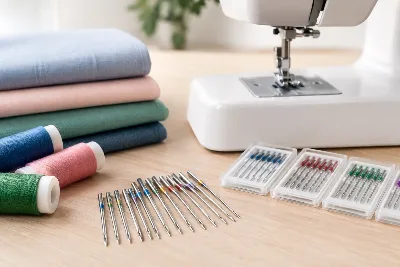
Needles are often underestimated, yet even the right point makes a big difference. Classic embroidery on woven fabric calls for different needles than stretchy fabrics or coarser materials. If the needle is too thick, you'll get visible holes. If it's too fine, it can bend or fail to guide the thread properly. A small assortment of different needle sizes is therefore often more practical than a one-size-fits-all solution.
With an embroidery hoop, what matters most is grip. The fabric should be held taut without being squashed. A hoop that's too loose quickly leads to uneven stitches, and a poor fastening will test your patience. For small designs, a compact hoop is usually enough. Larger projects benefit from a bit more working area, although the hoop can then become harder to handle. So it all depends on what you're planning.
Stabiliser and reinforcement - often the decisive difference
If you embroider regularly, you'll soon realise that without the right stabiliser some projects become needlessly difficult. Embroidery stabiliser isn't something you only need for professional work. Particularly with soft, stretchy or fluffy fabrics, it's often the reason a design sits neatly instead of puckering.
For jersey or sweatshirt fabric, reinforcement is almost always a good idea because the fabric gives as you stitch. On terry towelling, an extra layer of water-soluble stabiliser on top helps stop your stitches sinking into the pile. With firm cotton fabric, it depends on the design. Small, loose embroidery can sometimes manage without, but dense or larger designs still benefit from extra stability.
The rule here is clear: it depends. Too much reinforcement can make a textile project stiff, while too little leads to distortion. If you're embroidering clothing, the result shouldn't just look good but also be comfortable to wear. For home décor items or bags, the material can often be a little firmer.
What to look out for when buying embroidery supplies online
Online, the choice is vast - and that's both a blessing and a curse. It helps when a shop organises its range so that you don't just see individual products but immediately understand what they're suitable for. A practical description is more useful than bare technical data.
Check whether materials are clearly explained by use. Beginners in particular benefit from details such as suitable for hand embroidery, machine embroidery, stretchy fabrics or fine lettering. Colours should also be shown as realistically as possible, although screens can of course always vary a little. If you want to match colours or materials to an existing project, advice is especially valuable.
It's also handy when a range doesn't just show single products but thinks about the whole project. If you're buying thread, you'll often need the right needle too. If you want to embroider a fabric, you may well be looking for matching stabiliser, an embroidery hoop or other haberdashery to go with it. It's exactly this overview that makes shopping easier and more realistic.
For beginners: targeted rather than too much
Especially at the start, it's tempting to buy a big set and sort through it later. That sounds convenient, but it isn't always sensible. Many complete sets include colours, needles or accessories you won't need at all for your first project. In the end you pay more and still work with materials that only half suit you.
A small, carefully chosen starter kit is better. One or two embroidery needles in a suitable size, a reliable hoop, a few thread colours you genuinely want to use and sensible reinforcement for your fabric are often enough to begin with. That way you'll learn more quickly what matters to you personally. Some people want especially fine results, while others prefer to work in a bold, decorative style.
If you already sew, getting started is usually easier. You'll already know from experience how fabrics behave, how material weights differ and the difference between furnishing and dressmaking fabrics. That's exactly why a retailer that thinks about fabrics and embroidery supplies together is worth it. At Die Stoffkönigin this is particularly helpful, because many projects don't start with the thread but with the fabric.
Spotting quality without having everything in your hands
In a shop you can touch the materials, which of course isn't possible online. Even so, there are signs of good quality. Well-written product descriptions, clear information about material and use and a logical range structure all suggest that this isn't a shop just selling any old thing.
The breadth of the range is also a good indicator. Shops that only stock embroidery supplies on the side often have little choice of needle sizes, thread types or stabilisers. That's impractical for customers, because they then have to improvise. A well-stocked range offers different solutions for different fabrics and projects - not just one standard product for everything.
Price is a factor too, but not the only one. Good supplies naturally need to remain affordable. At the same time, it rarely pays to cut corners on the basics. A solid thread, a hoop that closes properly and the right reinforcement may cost a little more than the most basic option, but they often save you from bad buys and frustration.
When advice is particularly worthwhile
For some projects you'll quickly make the right choice yourself. A small monogram on cotton is usually straightforward. It gets trickier with stretchy fabrics, heavily textured materials or gifts that are meant to look especially high-quality.
If you want to embroider baby clothes, for example, comfort and skin-friendliness should be taken into account. For bags or cushions, holding their shape matters more. And with personalised projects that will later be given as gifts, you understandably don't want to leave anything to chance. That's when expert advice is often worth more than ten generic product descriptions.
Advice is especially welcome when it doesn't sound complicated. You don't need lofty jargon, just clear answers to practical questions: which needle suits my fabric? Do I need stabiliser? Which thread looks lovely without being too bulky? It's exactly this kind of help that turns a shopping trip into good project preparation.
Buying embroidery supplies with the whole project in mind
Shopping works best when you don't just tick off individual products but keep the finished result in mind. How should the embroidery look - delicate, playful, eye-catching or rather understated? Will the piece be washed often, take a lot of wear or simply be decorative? The right supplies almost follow on by themselves.
If you choose this way, you'll usually buy less but better-suited items. That saves money, time and nerves. And it's far more fun when thread, fabric and supplies work together from the start rather than against each other.
If you're unsure, by all means start small - but not without a plan. A well-chosen basic kit will take you further than the biggest box of random finds - and that's often exactly the difference between an embroidery project that's merely started and one that actually gets finished.