
Which Fabric Is Really Right for Bed Linen?
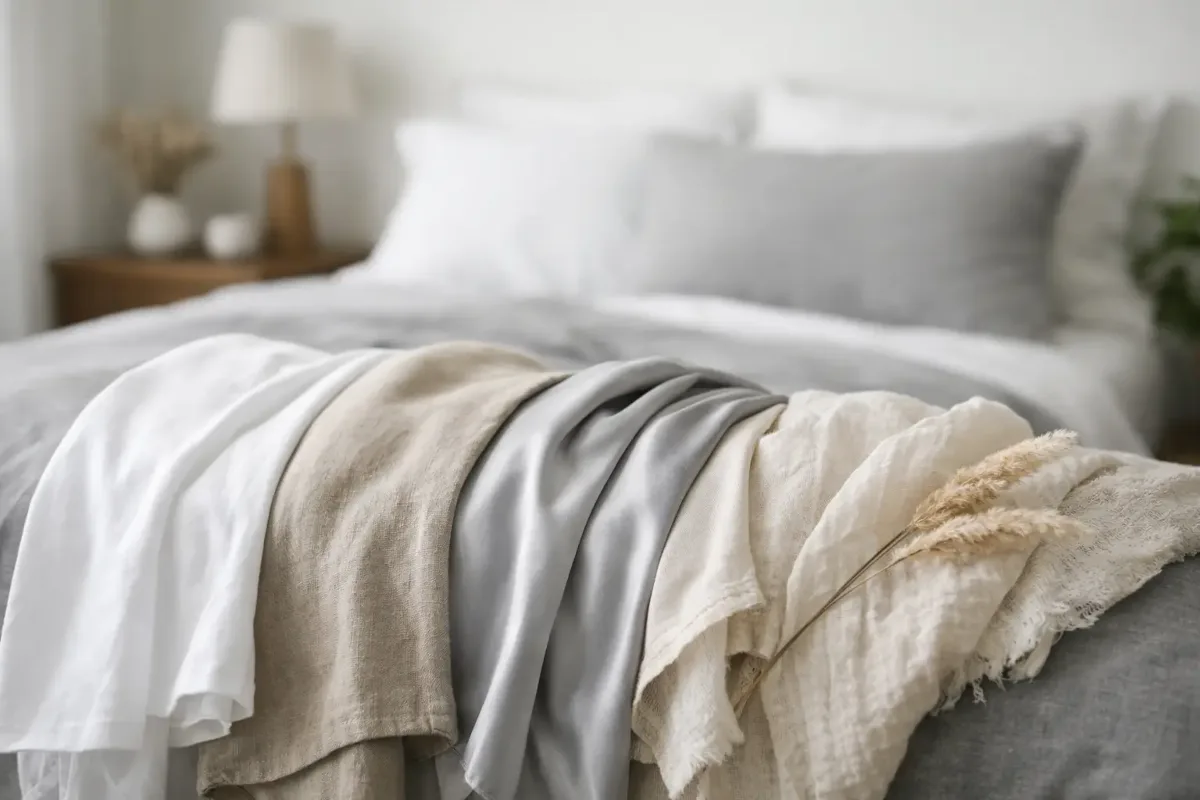
If you're wondering which fabric for bed linen really suits you, a blanket “cotton always works” won't get you very far. What matters is how you sleep: warm or cool, whether you prefer smooth or cosy, as easy-care as possible or with a particularly luxurious feel. This is exactly where good looks part ways with genuine comfort.
Bed linen is with us every single night. That's why it pays to look beyond pattern and colour and focus on the material. The fabric affects how warm or fresh the bed feels, how well moisture is absorbed and how much effort it takes to care for day to day. Especially if you sew your own or are looking for fabric by the metre, choosing the fabric is the most important first step.
Which fabric is best for bed linen?
The honest answer is: it depends. There's no single best fabric, because sleeping habits vary enormously. If you tend to sweat at night, your needs will be different from someone who likes to snuggle up warmly even in summer. Children's bedding, summer bed linen and elegant bedding for the guest room also come with different requirements.
For many people, cotton is the most reliable starting point. It's kind to the skin, breathable, easy to wash and available in a range of weaves. But not all cotton is the same. Whether it's renforcé, percale, sateen, brushed cotton or seersucker, each weave feels different and behaves differently in everyday use.
So if you're planning or sewing bed linen, look not only at the fibre but also at how the fabric is made. The fibre tells you about the base material; the weave tells you about the handle, appearance, breathability and how it behaves when washed and cared for.
Cotton as the classic – and why the weave makes such a difference
Cotton is a tried-and-tested fabric for bed linen because it absorbs moisture well and feels pleasant against the skin. On top of that, it's usually easy to care for and stands up well to frequent washing. For families, children's rooms and everyday use, that's a strong argument.
Even so, it's worth taking a closer look. Renforcé is a smooth, fairly straightforward cotton weave. It feels pleasantly light and works well as an all-rounder throughout the year. If you'd like simple, practical bed linen, renforcé is often a very good choice.
Percale is more tightly woven, which makes it feel a little finer and cooler on the skin. Many people love it in spring and summer because it feels fresh without being unpleasantly cold. Especially if you tend to sleep warm, percale is often more comfortable than fluffier options.
Cotton sateen has a smooth, soft handle and a subtly luxurious surface. It looks high-quality, drapes softly against the skin and is a popular choice for elegant bed linen. The small catch: sateen isn't automatically ideal for everyone. If you prefer a drier, crisper fabric, you may find it a little too slippery.
Brushed cotton and flannel are napped cotton fabrics, making them the warm side of bed linen. They retain heat well and feel soft and cosy. They're very popular for cold bedrooms or for winter. In the height of summer, though, most people will quickly find them too warm.
Seersucker, on the other hand, is the practical solution for anyone who'd rather not do much ironing. Thanks to its characteristic puckered surface, the fabric doesn't lie flat against the skin, so it feels airy. That's especially pleasant on warm nights.
Linen, viscose and blends – a good idea or more of a compromise?
Linen has become much more popular in recent years, and with good reason. It's breathable, helps regulate temperature and feels particularly lovely in summer. It has a natural, slightly textured surface and brings a relaxed look with it. If you like things very smooth and classic, it may take some getting used to. If you love natural materials, however, you'll often appreciate linen precisely because of its lively handle.
Another point to consider with linen is care. Linen is allowed to crease – and for many people that's exactly part of its charm. If you want a very neat, wrinkle-free bed, linen might not be the best fit. If you care more about sleeping comfort than a picture-perfect bedroom, linen can be an excellent choice.
Viscose is used less often for bed linen than cotton, but its soft, fluid handle can make it an interesting option. It often feels cool and has a smooth surface. At the same time, it usually needs a bit more care. For hard-wearing everyday bed linen, pure cotton is often the more straightforward choice.
Blended fabrics can make sense when you want to combine certain properties, such as easy care and shape retention. But here too, the higher the proportion of synthetic fibres, the more the feel of sleeping in them tends to change. Some people find these fabrics less breathable. If you're sensitive to heat in particular, you'll usually sleep more comfortably in pure natural fibres.
Which fabric for bed linen in summer and winter?
In summer, light, breathable fabrics are usually the better choice. Percale, renforcé, seersucker and linen are among the favourites here. They help you feel dry and fresh in bed and prevent heat from building up. In attic flats or if you tend to sleep warm, this makes a noticeable difference.
In winter, by contrast, bed linen can be warmer and softer. Brushed cotton and flannel quickly create a cosy feel, because they hold warmth well and don't feel cool against the skin. If you dislike climbing into a cold bed at night, you'll notice the difference straight away.
If you don't want to switch for every season, renforcé or a medium-weight cotton sateen is often the most sensible middle ground. Both work well for many months of the year without being too cool or too warm. That's exactly why these fabrics are so popular for home-sewn bed linen.
For children, allergy sufferers and sensitive skin
With children's bedding, what matters most is that the fabric is soft, kind to the skin and easy to wash. Cotton is usually the safest choice here. Renforcé and soft cotton qualities work very well day to day because they're hard-wearing yet still feel lovely against the skin.
For babies and toddlers, bed linen shouldn't just look pretty – it also needs to cope well with frequent washing. This is where a sturdy, tightly woven cotton really pays off. It stays practical and still feels good even after many washes.
People with sensitive skin or a tendency to allergies also often prefer pure natural fibres. Breathable, low-pollutant cotton is usually a good decision here. What matters is less a fashionable name than a fabric that feels pleasant, can be washed at a suitable temperature and doesn't bring any unnecessary irritants with it.
What to look out for when sewing bed linen
If you'd like to sew your own bed linen, it's not just the material that matters but also how easy it is to work with. Beginners often get on particularly well with smooth cotton such as renforcé. It cuts cleanly, doesn't shift around too much and is pleasantly predictable to sew.
Sateen may look luxurious, but its smooth surface can make it a little more slippery. Linen can be more unruly when cutting and creases more. That's not a problem once you know about it – but for a first project, an uncomplicated cotton fabric is often more relaxing.
Also pay attention to the fabric width and how much shrinkage you need to allow for. Bed linen gets washed, often at higher temperatures than clothing. That's why pre-washing makes sense, especially with natural fibres. It stops your finished covers from suddenly being too snug after the first wash.
Don't forget the weight of the fabric, either. Very thin fabrics feel airy but, depending on quality, may be less durable. Very heavy fabrics feel high-quality but can get too warm in summer. For many bed linen sewing projects, the best solution lies somewhere in between.
The best choice is the one that suits the way you sleep
If you're torn between several fabrics, don't think about trends first – think about your nights. If you feel the cold easily, a warmer fabric is worth it. If you tend to sleep hot, smooth and airy qualities are usually the better choice. If you like easy care, seersucker is practical. If you want it to feel luxurious and soft, cotton sateen comes into play. And if you love natural materials with character, linen is very appealing.
At Die Stoffkönigin, we often find that customers aren't looking for the most expensive or most luxurious fabric, but for the one that genuinely fits their everyday life. That's exactly the right yardstick for bed linen, too. It shouldn't just look beautiful – it should feel lovely night after night.
So go ahead and trust your instincts, combined with a little knowledge of materials. Because the best bed linen isn't the one that sounds most impressive on the label, but the one you love waking up in each morning.