


A trim sets its accent exactly where cloth alone offers none: along an edge, beside a seam, across a bag. This one is Ribbon, 12 mm wide, made from 100 % polyester.
Stitch it along both long edges, each pass running one way — sewing only one side, then driving back, pulls everything askew. Clip or tape it beforehand, because trims like shifting beneath a presser foot.
Pass its cut end over a flame briefly, or sever it using a hot knife, so nothing frays. On cotton trims, take a narrow zigzag instead.
What Bügelband mit Schnürchen für Nähte is suitable for
- Edges across clothing, bags plus cushions wanting a clear line.
- Decoration over children's clothing, because trims stitch on quickly.
- Bows, tags plus wrapping, where one short piece suffices.
Frequently asked questions
How do I stop this trim fraying?
Pass its cut end briefly over a flame, or sever it using a hot knife — those threads then fuse. On cotton trims, a narrow zigzag works instead, as does folding that end over, stitching it down.
What is the best way to attach it?
Along both long edges, stitching each pass in one direction. Sewing only one side, then coming back, pulls everything askew. Clip or tape it first, since trims like to shift beneath a presser foot.
May it be washed?
Together within its garment, yes, ideally on a gentle cycle. Before stitching it onto finished cloth, test one piece: strongly coloured trims sometimes bleed through a first wash, which pale grounds pick up.
How much length do I need?
Along a straight edge, its length plus a little spare. Around curves, or into corners, allow more — trims never stretch, so every bend wants material laid rather than pulled.
Care instructions:

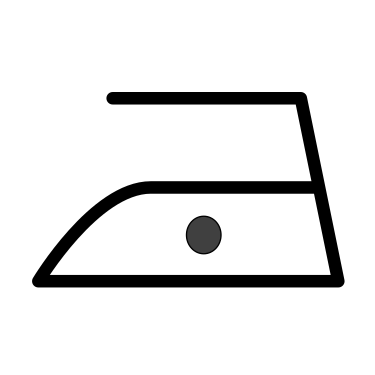
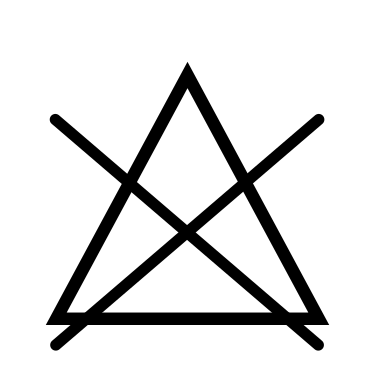
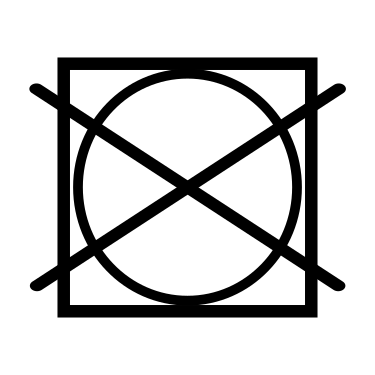
Daten und Pflege
- Width
- 12 mm
- Material
- 100 % Polyester
- Artikelnummer
- 599010406
- EAN
- 0732046350435