 Sewing Techniques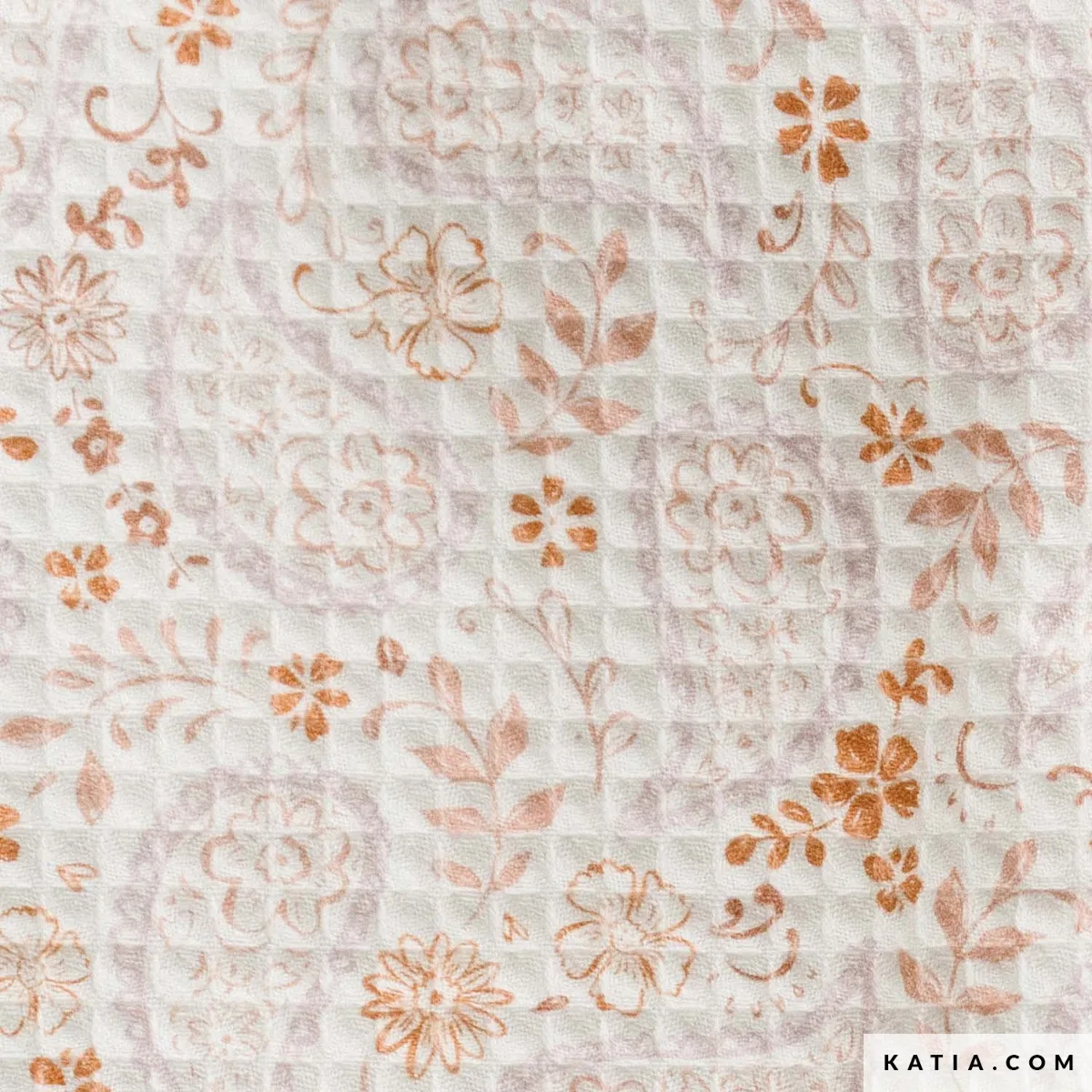
Woven Piqué Paisley in Cream/Terracotta
€9.95per 0.5 m
Unit price €19.90 / m · incl. VAT, plus shipping
This woven piqué in Cream/Terracotta measures 140 cm across and weighs 175 g/m²; its composition reads 100 % cotton. Available by the metre. Wash once before cutting.
in stock
Delivery time approx. 3–5 working days
Free shipping within Germany from €50
- Fabric type
- Woven
- Material
- 100 % Baumwolle
- Width
- approx. 140 cm
- Weight
- approx. 175 g/m²
- Colour
- Creme/Terracotta
- Pattern
- Paisley
- Care
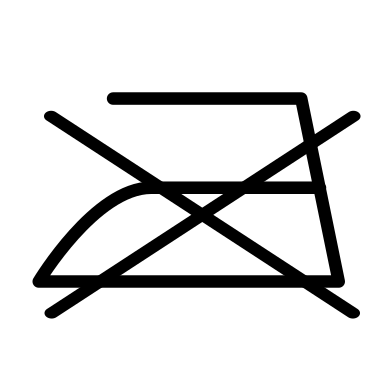
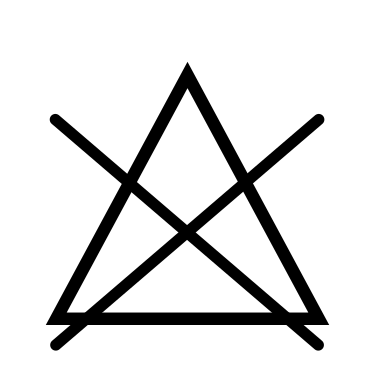
- Wash at 30°C, Do not iron, Wash without fabric softener or bleach, Do not tumble dry
- Muster
- Paisley
- Gewicht
- 175 g/m²
- Breite
- 140 cm
Description
Woven piqué shows a fine waffle structure and so has more grip than a smooth woven. 175 g/m² at 140 cm wide: calculate your yardage from the width, not from the pattern alone. Material: 100 % cotton.
A fabric in Cream/Terracotta is less delicate than a white one and still pale — which makes it fit for everyday. The paisley pattern brings a classic form that reads differently every season. For blouses, shirts, skirts and dresses woven cotton is the classic choice — it holds the shape the pattern sets.
What Baumwoll-Waffelstoff mit Paisley-Muster is suitable for
- skirts and dresses
- patchwork and quilting
- children's clothing
Care instructions:


Frequently asked questions
Which needle do I need?
A universal needle in a medium size covers most cottons. On dense or coated qualities go one size up, on fine batiste one size down.
The fabric does not stretch — is that a problem?
No, but the pattern has to allow for it. With wovens, freedom of movement comes from width, pleats and darts rather than stretch. A jersey pattern cannot simply be sewn in a woven.
What is bias binding?
A strip cut at forty-five degrees to the grain. In that direction even a woven stretches, which is exactly why it binds a curve cleanly.
Does the colour bleed in the wash?
Strongly dyed cotton can give off a little colour in its first wash. That is why you pre-wash, and separately. After that the fabric is normally colour-stable.