 Projects and Ideas
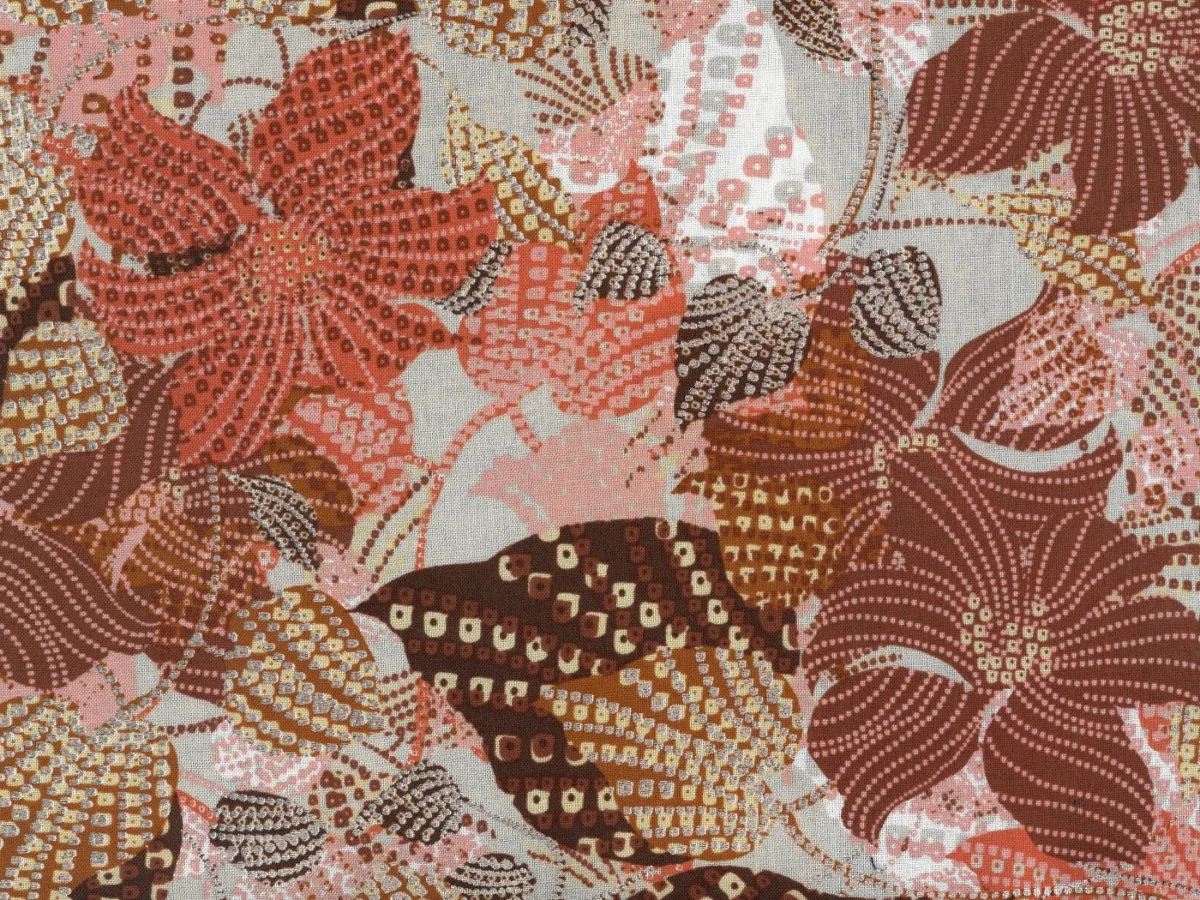
Viscose Woven Flowers in Terracotta/Earth Tones
Item no. 21616
€6.95per 0.5 m
Unit price €13.90 / m · incl. VAT, plus shipping
Viscose woven in Terracotta/Earth Tones, 140 cm wide and 115 g/m², made from 100 % viscose. Sold by the metre. Wash once before cutting. Suitable for clothing and home textiles.
in stock
Delivery time approx. 3–5 working days
Free shipping within Germany from €50
- Fabric type
- Woven
- Material
- 100 % Viskose
- Width
- approx. 140 cm
- Weight
- approx. 115 g/m²
- Colour
- Terracotta/Erdtöne
- Pattern
- Blüten
- Care
 Wash at 30°C
 Do not iron
 Wash without fabric softener or bleach
 Do not tumble dry
- Muster
- Blüten
- Gewicht
- 115 g/m²
- Breite
- 140 cm
Description
Viscose is a cellulose fibre: of plant origin, with the drape and sheen otherwise known from silk. Weight per square metre comes to 115 g/m², width to 140 cm. It is woven from 100 % viscose.
In Terracotta/Earth Tones a piece gains temperament. The tone shows, but stays friendly rather than loud. Flowers are the motif that stays in fashion longest; this print brings them at a scale that works on small pieces too. The fabric slips while cutting. With clips instead of pins and a rotary cutter the layer stays where it belongs.
What Viscose Woven Flowers in Terracotta/Earth Tones is suitable for
- blouses and tunics
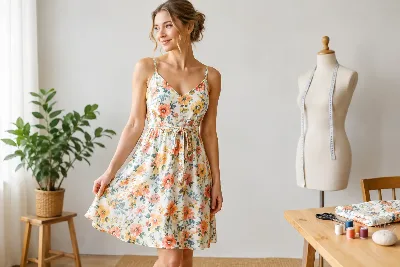
- summer dresses
- kimonos
Care instructions:
Frequently asked questions
Which needle do I take?
A fine universal or microtex needle. The thinner the fabric, the finer the needle: too strong a needle leaves visible holes that never close again.
Scissors or rotary cutter?
On slippery goods the rotary cutter, because it does not lift the fabric. Scissors drag the layer along and the edge is no longer true.
Why does the seam pucker?
Because needle and stitch length do not suit the fabric. A fine needle, a shorter stitch and less presser foot pressure solve most of it. On very thin goods tissue paper under the seam helps, torn away afterwards.
What ironing temperature?
Moderate, and from the reverse. Viscose and polyester do not take the heat used for cotton; too hot and the surface turns shiny or melts.