Finding the Best Fabric Scissors for Beginners
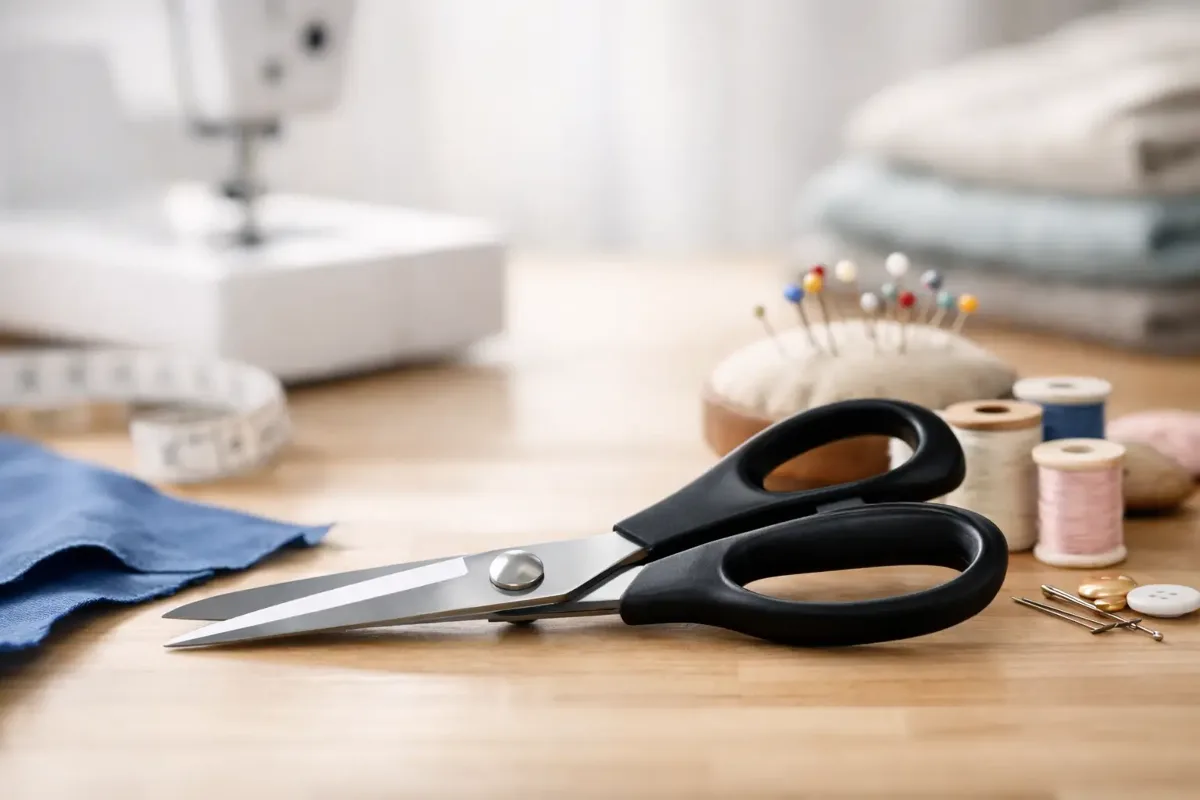
The first time you cut fabric, you quickly realise that an ordinary pair of household scissors often leaves you with wonky, frayed edges, or simply makes the job far harder than it needs to be. That's exactly why it's worth thinking about the best fabric scissors for beginners before you start your first sewing project. A good pair of fabric scissors makes getting started easier, is kinder to your hands and helps you cut out pattern pieces cleanly and precisely.
What really makes the best fabric scissors for beginners
Beginners don't automatically need the most expensive pair on the shelf. What matters far more is that the scissors cut reliably, sit comfortably in your hand and suit the kind of sewing you do day to day. If you mainly work with cotton, jersey or muslin, your needs will be different from someone who wants to dive straight into softshell, canvas or several layers of fleece.
That's why the best fabric scissors for beginners are usually a well-balanced, all-round model. They should be sharp without feeling overly delicate, and sturdy enough that the cut doesn't fray or slip. At the same time, they shouldn't be so heavy that your hand tires after just a few minutes. This makes a noticeable difference, especially with larger pattern pieces for dresses, harem trousers, cushion covers or bags.
The right length – not too small, not too bulky
Out of habit, many beginners reach for a fairly small pair of scissors at first. They're handy for snipping threads or getting into small corners, but cutting out fabric with them is often a chore. Short blades mean lots of little cuts, and that's exactly how uneven edges creep in.
For most beginners, a mid-sized pair of fabric scissors is ideal. Models of around 20 to 23 cm usually offer a good compromise between control and cutting length. They let you follow straight lines neatly without feeling unwieldy. Very large tailor's shears can glide impressively through heavier fabrics, but beginners sometimes find them too heavy and hard to manage.
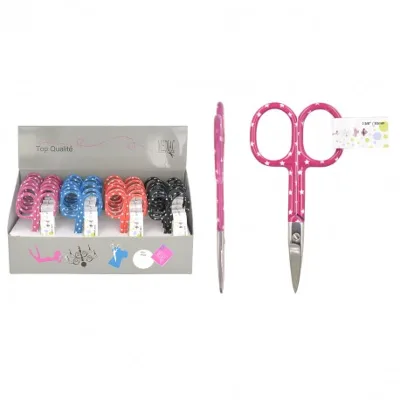
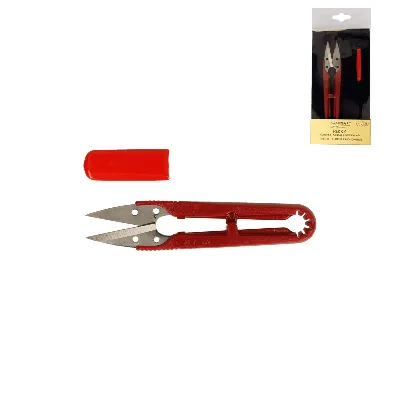
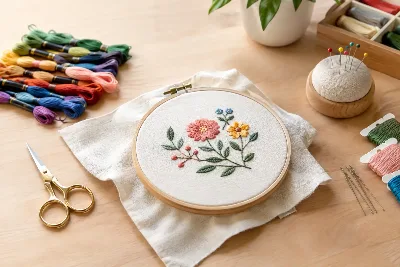
If you mainly want to sew children's clothes, jersey tops, simple skirts or home décor projects, a medium length is usually your best bet. For very fine work, a small pair of embroidery or thread snips is also useful – but as an extra, not as your main cutting tool.
Blades, edge and material
Above all, fabric scissors need to do one thing: cut fabric cleanly without pulling it. That sounds obvious, but it isn't a given. Poor-quality blades tend to squash the fabric rather than slice cleanly through it. You'll notice this quickly with viscose, jersey or fine cotton in particular.
Look for well-made steel blades with an even edge. As a beginner, you don't need a specialist model built for a professional atelier. But the scissors should cut precisely from the very first snip and shouldn't lose their sharpness after just a few projects.
Very cheap models often have a typical problem: they cut nicely at first but soon start to struggle. The fabric then gets crushed at the edge or isn't cut all the way through in places. Once you've felt how smoothly a really sharp pair of fabric scissors glides through woven fabric, you won't want to go back.
Grip and ergonomics are no minor detail
When cutting out, people often underestimate how much work their hand has to do. An uncomfortable grip might not be noticeable with two small pattern pieces. But when there's a dress, a hoodie or several pieces for a children's project on the table, you'll soon find out whether the scissors really suit you.
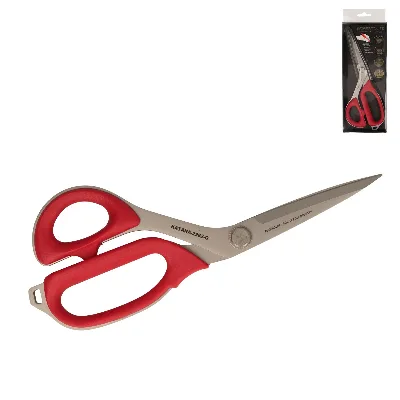
An ergonomic grip takes the strain off your fingers and the heel of your hand. This is especially helpful when you're still building up practice and tend to grip the scissors a little more tightly. Large finger loops are often more comfortable, particularly if several fingers fit into the lower opening. Soft-grip areas can also be useful, provided the scissors are solidly made overall.
There's no single grip design that's perfect for everyone. Smaller hands sometimes get on better with more compact shapes, while larger hands need more room. If you get the chance to hold a pair before buying, that's ideal. Just a few test snips will often tell you whether they feel natural or rather awkward.
Which fabrics will you be cutting?
This is often where the right model is decided. If you mainly cut cotton fabrics, poplin or muslin, you'll need a different cutting force from someone who regularly works with coated fabrics, denim or softshell.
For classic beginner projects such as cushions, simple garments, fabric baskets or children's clothes, a good all-round pair of fabric scissors is usually enough. They should cut both woven fabrics and stretchy materials neatly. With jersey, a sharp blade is especially helpful, as otherwise the fabric can easily shift or distort as you cut.
If you want to start straight away with heavier fabrics, a slightly sturdier model is worth considering. However, this often means more weight too. And that's the point: not every robust pair of scissors is automatically the best choice for beginners. Sometimes a lighter, more versatile model is the better everyday option, even if it reaches its limits with very heavy materials.
Price – what makes sense and what doesn't
A good pair of fabric scissors for getting started doesn't have to be a luxury item. Very cheap scissors, however, are often a false economy, because they blunt more quickly or never cut cleanly in the first place. Many people then end up buying a second pair shortly afterwards and spending more than they needed to.
The mid-price range often offers the best balance of quality, durability and comfort. This is particularly worthwhile for beginners, because reliable scissors save a lot of frustration. When cutting out goes smoothly, the sewing itself is much more enjoyable too.
Very expensive professional models are mainly worth it if you regularly cut large amounts of fabric or already know exactly which features matter to you. To begin with, a solid, sharp and well-balanced pair of fabric scissors is usually the more sensible choice.
Common buying mistakes
A common mistake is using your fabric scissors for paper, sewing patterns, fusible interfacing or packaging as well. Paper blunts blades faster than many people think. That's why your fabric scissors should really be kept for fabric only. For paper sewing patterns, a separate pair of paper scissors is a much better solution.
Buying purely on looks is just as unwise. A pretty colour won't cut any fabric. What matters more is the build quality, how smoothly the blades move and a clean, controlled cut right to the tip.
Weight is often misjudged too. Very light scissors feel pleasant at first but can seem unstable on slightly firmer fabrics. Very heavy models, on the other hand, quickly tire your hand. For many beginners, the best choice lies somewhere in between.
Fabric scissors or rotary cutter – which is better?
This question comes up a lot, especially for patchwork, jersey or long straight edges. A rotary cutter can be very precise and is a real help for certain projects. Even so, it doesn't completely replace fabric scissors.
For curves, small cut-outs, corners and quick adjustments, fabric scissors remain the more important basic tool. If you're just starting out, you're usually better off with a good pair of fabric scissors than with a whole cutting system of mat, ruler and replacement blades. That can come later, once you notice your projects would benefit from it.
In everyday sewing, your fabric scissors are often the tool you pick up most. That's why it's worth prioritising quality here first.
How to keep your fabric scissors in good shape
Even the best fabric scissors for beginners will only stay sharp for a long time if you look after them properly. Store them somewhere dry and use them exclusively for fabric. If adhesive residue or dust sticks to the blades, remove it carefully so the cut stays clean.
Don't leave your scissors loose in a box with other metal tools. This can put unnecessary strain on the blades and tip. If you sew regularly, also keep an eye on whether your scissors still cut evenly or have started to push the fabric rather than cut it. At that point, having them sharpened may be a good idea.
At Die Stoffkönigin, we notice time and again when advising customers that beginners benefit most from tools that simply work without fuss. A good pair of fabric scissors is definitely one of them.
How to tell you've made a good choice
If you're holding a pair of fabric scissors and they cut cotton, jersey or canvas without pulling, fraying or a battle of strength, you're usually already close to the right choice. The scissors should be easy to guide with control and shouldn't falter either at the tip or towards the back of the blades.
Scissors don't become perfect by having as many special features as possible. For beginners, they're perfect when they work reliably day in, day out. They should make cutting out easier for you, not raise extra questions.
When you're just starting to sew, you don't need complicated equipment – you need good basic tools that make you excited for your next project. The right pair of fabric scissors is often exactly the small difference between a frustrating start and real sewing joy. And once your first pieces lie neatly cut on the table, you'll carry on sewing with so much more enthusiasm.
Matching categories
Matching products
Embroidery Scissors with Stars, Assorted
€5.90per piece
Thread Snips KATANA REKKA 1423
€4.90per piece
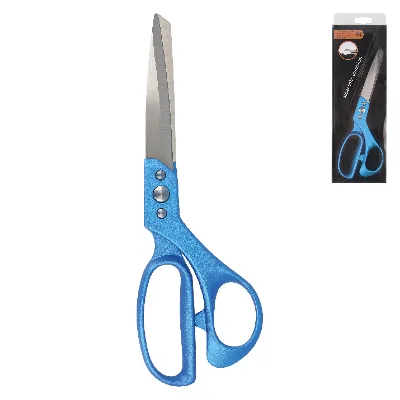
Dressmaking Shears 23 cm in Blue
€42.90per piece
Dressmaking Shears 20 cm, left handed
€44.90per piece
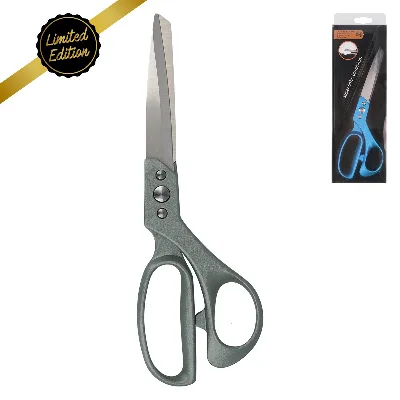
Dressmaking Shears 23 cm in Dark Grey
€42.90per piece
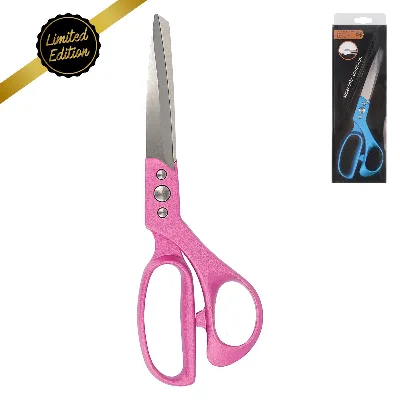
Dressmaking Shears 23 cm in Pink
€42.90per piece