How to Choose and Sew Jersey Fabrics
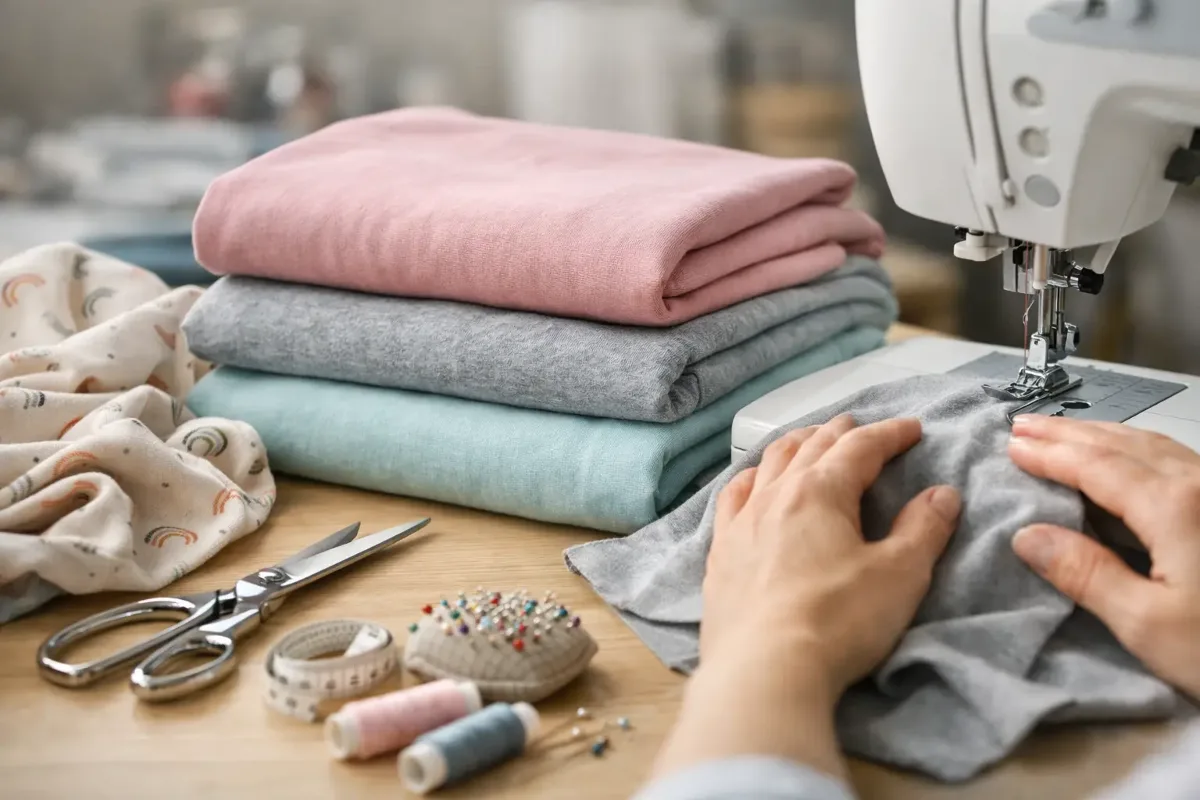
Few fabrics end up on the cutting table as often as jersey. The reason is simple: it's comfortable to wear, moves with you and suits all sorts of sewing projects – from baby bodysuits to women's tops. At the same time, it can feel a little daunting at first, because it behaves differently from woven fabric. With a few clear basics, though, jersey quickly goes from tricky customer to favourite fabric.
What makes jersey fabrics so popular
Jersey isn't a single material but a knitted fabric. Unlike woven fabrics, jersey is made from knitted loops. That makes it stretchy, gives it a soft drape and usually makes it very comfortable against the skin. That's exactly why it's so popular for clothing.
In everyday sewing, this advantage soon becomes clear. A jersey top often fits more comfortably than one made from a firm cotton woven. Children's clothes can keep up with more, leggings stay flexible, and pyjamas, hats and light dresses all benefit from the stretch too. If you want to sew something practical and easy to wear, jersey is usually a safe bet.
Even so, not all jersey is the same. Weight, fibre content, handle and recovery can vary considerably. This is where it pays to take a closer look, so that your fabric and sewing pattern really work together.
Types of jersey fabric
The one you'll come across most often is cotton jersey. It's soft, kind to the skin and a real all-rounder for lots of projects. T-shirts, children's clothes, harem trousers, hats and simple dresses are all easy to make from it. If it contains a small amount of elastane, the garment holds its shape better and moves with you even more easily.
Viscose jersey has a much more fluid drape. It often feels slightly cooler on the skin and is particularly suited to softly draping tops, dresses and lightweight blouses. It needs a little more care when sewing, as it can be slipperier and finer. In return, the result often looks especially elegant.
Interlock is a somewhat firmer type of jersey. It's more densely knitted, often more opaque and more stable than classic single jersey. That makes it very practical for tops, dresses, children's clothes and comfy basics. If you're looking for something soft that doesn't feel too thin, interlock is a good choice.
Then there's ponte (Romanit), jacquard jersey and performance jersey. Each of these has its own strengths. Ponte is more stable and ideal for slightly smarter garments such as skirts or simple dresses. Performance jersey is great for sportswear and active projects where breathability or fast moisture wicking matters. So it really depends on what you want to sew.
What to look for when buying
With jersey, a pretty print alone isn't always enough. Fabric weight, stretch and intended use are at least as important. A lightweight jersey with a soft drape is wonderful for an airy top, but may be too thin for leggings or hard-wearing children's trousers. On the other hand, a firmer jersey isn't always the best choice for gathered or loose, flowing styles.
The elastane content matters too. A fabric with a little elastane springs back into shape better, which is often an advantage for close-fitting garments. Pure cotton jersey can be lovely as well, but depending on the quality, it's more likely to stretch out a little at the knees, elbows or neckline.
For beginners, a cotton jersey that isn't too thin is usually the most relaxed place to start. It's easy to cut, often curls less at the edges and is more forgiving of small inaccuracies than very fine or very drapey qualities. If you're only planning a small project, a low minimum order is of course handy – especially if you want to try out colours first or combine fabrics for children's sizes.
Choosing the right jersey for your project
The best fabric choice almost always depends on what you're planning to make. For baby and children's clothes, cotton jersey is especially popular because it's soft, easy-care and comfortable on the skin. Tops, harem trousers, hats and pyjamas can all be made from it in endless variations.
For women's tops or summer dresses, something a little more fluid often works well. This is where viscose jersey comes into its own. It drapes beautifully, feels light to wear and looks less sporty than classic cotton jersey. That said, the sewing pattern should suit this softer character. A pattern designed for firm jersey can quickly lose its shape in a very drapey fabric.
For leggings, fitted tops or bodysuits, enough stretch is essential. It's worth checking the notes on your sewing pattern here. Many patterns state how much stretch the fabric should have. That's not a minor detail. If the jersey doesn't have enough stretch, the finished garment can easily end up too tight or hard to get on.
For dresses, skirts or comfortable workwear basics, jersey can also be a bit firmer. Interlock or ponte often look smoother and hold their shape better. The result looks calmer and often a little smarter.
Cutting out successfully
With jersey, cutting out is often half the battle. Because knitted fabric gives and sometimes curls, you should work as calmly and precisely as possible. A large table helps, so nothing hangs over the edge and gets distorted. If you have one, a rotary cutter is a real help, as it moves the fabric less.
The grain – or rather the direction of the knit – is important too. Jersey should lie neatly straight before you lay out your pattern pieces. Don't pull or push the fabric into shape. Otherwise the pieces may look right on the table but won't fit properly on the body.
Many jersey fabrics curl at the edges. This is normal and not a sign of poor quality. If it's giving you trouble, try fabric clips, fine pins or pattern weights. Spray starch is sometimes used when the fabric is especially soft. It's not always necessary, but it can help in some cases.
Sewing jersey without the frustration
The good news first: you don't necessarily need an overlocker for jersey. A regular sewing machine is often perfectly adequate, as long as it has a stretch stitch or a narrow zigzag. What matters is that the seam can stretch with the fabric. A straight seam with no give can snap when you pull the garment on.
The right needle is just as important. Jersey needles or stretch needles are designed to pass through the loops without unnecessarily damaging them. If you get skipped stitches or small holes, the cause is often the wrong or a blunt needle.
When sewing, the rule is: don't pull. Many problems happen because the fabric gets stretched under the presser foot. The seams then go wavy or the garment becomes distorted. It's better to guide the fabric loosely and let the machine do the work. A walking foot can help, especially with very soft or slippery fabrics.
There are also several ways to get a good result when hemming. A twin needle gives a neat, professional look while keeping the reverse stretchy. If your hem goes wavy, you can experiment with the thread tension, a different stitch or a little wash-away stabiliser. Not every machine behaves the same way. Sometimes it takes a couple of test seams before everything runs smoothly.
Common mistakes and what really helps
If jersey goes wavy while you sew, it's often down to too much pulling, too much presser foot pressure or a stitch that doesn't suit the fabric. In that case, it's worth testing on an offcut first rather than carrying on with your project. Small adjustments often make a big difference here.
If necklines or shoulders stretch out, they often lack stabilisation. Seam tape, stay tape or a suitable binding strip can stop these areas from distorting over time. With soft jerseys in particular, this is a simple step with a big effect.
If ribbing doesn't sit well, the ratio between the length of the ribbing and the neckline or sleeve opening is usually off. That's not purely a jersey problem, but it's more noticeable with stretchy fabrics. The only answer is careful measuring and, if in doubt, a test piece. Depending on the ribbing and jersey, the same formula can give different results.
Care and durability
To keep your sewing project looking good for a long time, it's worth checking the care properties before you even start cutting. Many jersey fabrics should be prewashed because they can shrink. Cotton jersey in particular often changes a little after the first wash. If you skip this step, you may be in for an unpleasant surprise once your garment is finished.
Ongoing care also depends on the fibre. Cotton jersey is usually easy-going, while viscose often needs a little more gentle handling. High tumble dryer temperatures are rarely a good idea if you want to keep the shape and colour for a long time. A neatly sewn garment made from well-chosen jersey can stand up to a lot of everyday wear – as long as the fabric, pattern and care all work together.
With jersey especially, it pays not just to buy the prettiest print, but the fabric that really supports your project. If you'd like some advice along the way, a specialist shop with a wide range and practical help is often worth its weight in gold – just like Die Stoffkönigin. In the end, your fabric shouldn't just look lovely, but feel good to sew and prove itself in everyday life too.