Which Fabric for a Hoodie? How to Decide
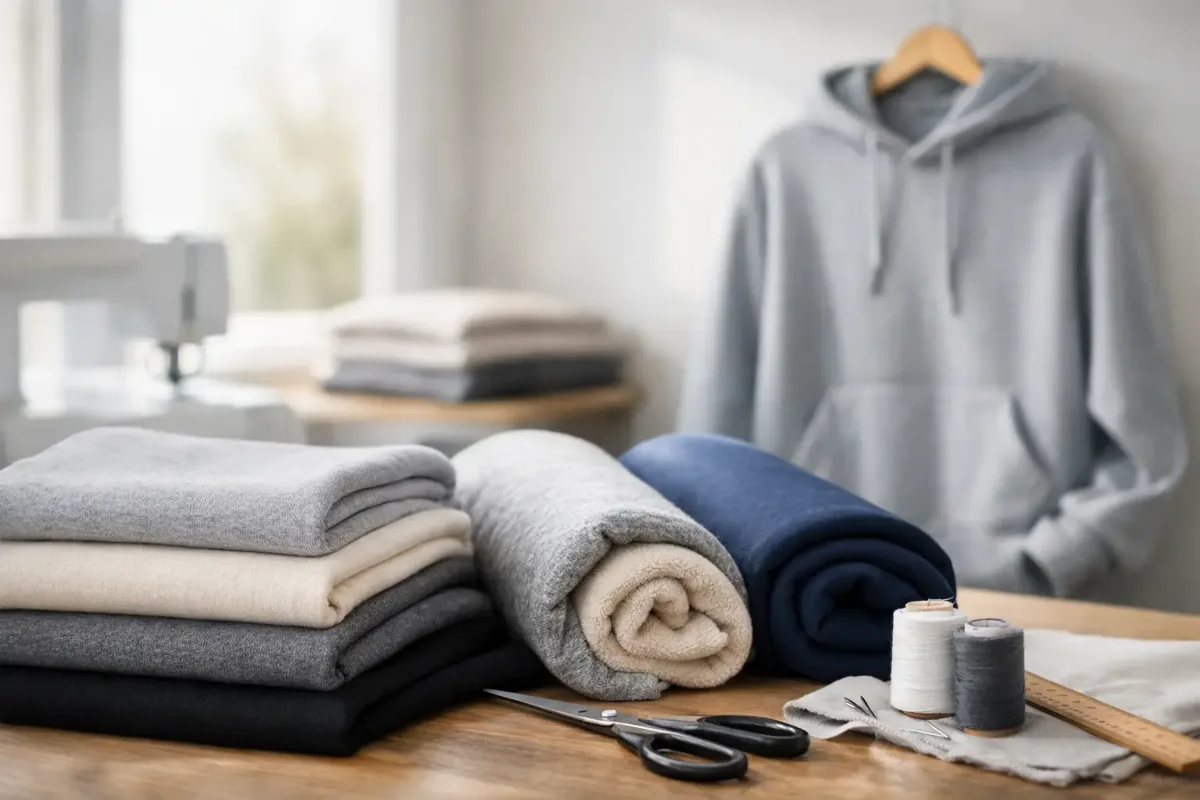
A hoodie can become the favourite piece you reach for again and again, or it can feel too heavy, too floppy or too warm after the first wear. That's exactly why the question of which fabric to use for a hoodie is no small matter. The fabric decides how your hoodie hangs, how cosy it is, how easily the hood and ribbing come together, and whether the finished garment looks sporty, snuggly or lightweight.
For most sewing projects, the first trail leads straight to sweatshirt fabrics. That's right, but only partly. Not all hoodies are the same. An oversized, cosy jumper for winter needs a different fabric from a light children's hoodie for spring and autumn or a sporty everyday style. Once you know what the hoodie is for, choosing the fabric becomes much easier.
Which fabric is right for a hoodie?
The short answer: usually sweatshirt fabric or French terry. The better answer: it depends on the weight, the reverse side, the stretch and the look you're after. These are exactly the points that separate a hoodie that gets worn all the time from one that ends up staying in the wardrobe.
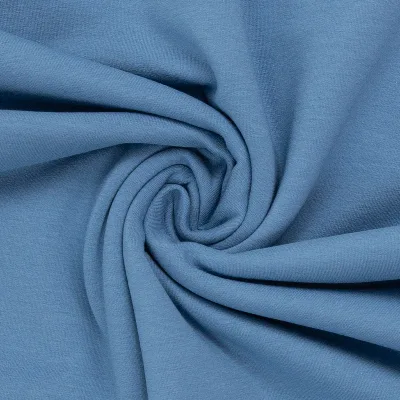
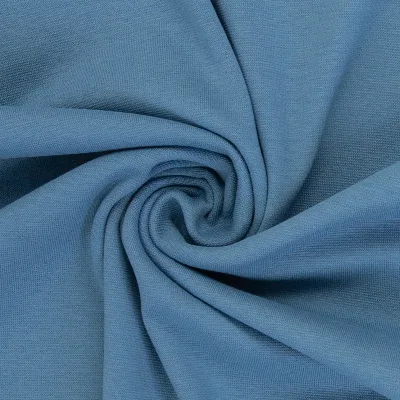
Classic brushed sweatshirt fabric has a fluffy, napped reverse and feels soft and warm. It's especially well suited to cosy hoodies, loungewear and children's clothes for cooler days. French terry, often called summer sweat, has small loops on the reverse instead of a brushed surface. This makes it a little lighter, less warm and often more comfortable for in-between weather or for anyone who doesn't like things quite so thick.
Both types are generally easy to sew, especially if the pattern is designed for stretch fabrics. If you haven't been sewing for long, a good-quality sweatshirt fabric is often a wise choice, as it's more forgiving of small inaccuracies than very thin or particularly slippery materials.
Sweatshirt fabric, French terry or something else?
Sweatshirt fabric is the classic choice if you want to sew a typical hoodie. It has body, keeps you warm and gives the garment its familiar shape. A slightly firmer sweatshirt fabric often looks lovely on hoods, kangaroo pockets and dropped shoulders. It shouldn't be too heavy, though, or the hoodie will quickly become bulky and unflattering.
French terry is the practical everyday alternative if you'd like a lighter drape. It's soft, comfortable and often just right for hoodies worn both indoors and out. Many people use it to sew matching family hoodies, as it works well for adults and children alike. It's pleasant to wear without getting too warm straight away.
Velour (nicky) can also be an option if you want the hoodie to be extra soft and cosy. The look is a little more distinctive and less sporty than classic sweatshirt fabric, but it often feels wonderfully soft to wear. If you'd like to sew a snuggly hoodie for lounging, you can get beautiful results with it.
Fleece is more suitable for hoodie projects when you specifically want warmth. For classic patterns, it's often too bulky or drapes differently from sweatshirt fabric. It can be useful, though, as a hood lining or for very warm, outdoor-inspired styles.
Jersey is sometimes considered as a hoodie fabric, but it's only suitable to a limited extent. It can work for very light hoodies, hooded tops or layering pieces. But if you want a typical hoodie with some substance, jersey is usually too thin.
The difference between brushed and unbrushed
This point is often underestimated when buying fabric. Brushed sweatshirt fabric retains heat better and feels fluffy on the inside, which makes it ideal for autumn and winter. Unbrushed sweatshirt fabric or French terry is smoother on the reverse, so it's less warm and often holds its shape a little better in everyday wear.
If you tend to get warm easily or the hoodie is meant for indoors, the unbrushed version may be more comfortable. For children who spend a lot of time outdoors, or for extra-cosy comfort pieces, brushed sweatshirt fabric is often the better choice.
Which hoodie fabric for children, women and men?
Not every pattern needs the same fabric effect. For children's hoodies, practicality comes first. French terry is very popular here because it's comfortable, allows freedom of movement and isn't too heavy. For nursery, school and the playground, it's often just right. If the hoodie is meant for cold days, brushed sweatshirt fabric is of course a good option too.
For women's hoodies, a lot depends on the style. If the design should hang loosely and softly, a slightly supple sweatshirt fabric or French terry works beautifully. For boxy cuts or hoodies with more structure, a firmer fabric is a better fit. If you'd like a more feminine, less sporty look, choose softly draping fabrics rather than reaching for thick sweatshirt fabric.
For men's hoodies, a classic, slightly sturdy feel is often preferred. A medium-weight sweatshirt fabric is usually a safe choice. Fabrics that are too thin can quickly look less high-quality, especially with simple patterns without many details.
What to really look out for when buying fabric
The name of the material alone isn't always enough. Two sweatshirt fabrics can feel completely different. That's why it pays to check a few very practical characteristics.
First and foremost is the weight. Very light fabrics end up looking more like a long-sleeved top with a hood. Very heavy fabrics make a bulky, warm hoodie that doesn't flatter every figure or suit every pattern. For many projects, a medium fabric weight is the most comfortable compromise.
Next comes stretch. Most hoodie patterns are designed for stretch fabrics. If your fabric has too little stretch, the hoodie can be uncomfortable at the neck, sleeves or hem. Too much stretch isn't always ideal either, though, as pockets, neckline or hood can distort more easily.
The fibre content makes a difference too. Cotton-rich sweatshirt fabrics with a small percentage of elastane are especially popular because they're comfortable, easy to care for and hold their shape. Pure cotton can be lovely as well, but depending on the fabric, it may be less stretchy. A polyester content can increase durability, but often changes the feel and warmth.
The hood often reveals whether the fabric is right
A little practical tip from everyday sewing: picture the hood first. Does it fall nicely without drooping limply? Does it get too thick at the neck seam? Could you even make it double-layered without everything becoming too bulky? The hood quickly shows whether your fabric suits the pattern.
With very thick sweatshirt fabric, a double hood can quickly become heavy. In that case, it sometimes makes sense to make the hood single-layered or choose a lighter material for the lining. With thin fabric, on the other hand, that lovely hoodie shape is sometimes missing.
Don't forget ribbing and coordinating fabrics
A hoodie is rarely made from just one fabric. Ribbing is almost always part of it and should match the main fabric well in stretch and thickness. Ribbing that's too firm can make the neckline and sleeves uncomfortable, while ribbing that's too soft will lose its shape more quickly.
Coordinating fabrics for pocket linings, hood linings or colour blocking shouldn't be chosen at random either. A very thin jersey paired with heavy sweatshirt fabric can look uneven and distort while you sew. Your project will usually turn out more harmonious if the fabrics are reasonably similar in weight and behaviour.
If you're still unsure, a straightforward combination is often your best bet: sweatshirt fabric or French terry as the main fabric, with matching ribbing for the sleeves, hem and neckline. That gives you a well-balanced hoodie without any unnecessary sewing headaches.
When each hoodie fabric is the best choice
If you'd like to sew a classic everyday hoodie, French terry is often the most versatile choice. It's comfortable, not too heavy and can be worn for much of the year.
If you want your hoodie to be warm, soft and really cosy, go for brushed sweatshirt fabric. It's ideal for cooler days and for patterns with that classic hoodie character.
If you love an especially soft, relaxed look, velour can be a lovely alternative. For a very light hoodie, jersey will do too, but only if you deliberately want a thinner result.
If you're torn between two fabrics, the most honest question often helps: do you want warmth, lightness or structure? That's usually where the right decision lies. And when you compare fabrics online or in a shop, it's worth looking not just at colour and print, but always at the feel, the reverse side and the weight too. At Die Stoffkönigin, this is exactly where good advice makes all the difference, especially when you want your hoodie not only to look good but to be something you genuinely love wearing every day.
In the end, your fabric doesn't have to be perfect in theory; it just has to suit your project. If you keep the pattern, the season and the way you want it to feel in mind, you'll almost always find the fabric that turns into a true favourite hoodie.
Matching categories
Matching products
Swafing Eike Brushed Sweat Naturweiß 009
€7.95per 0.5 m
Unit price €15.90 / m
French Terry Flowing Bloom Marble in Gold/Red by Swafing by Sarah Mariam
€8.95per 0.5 m
Unit price €17.90 / m
Swafing Heike Fine Rib Ribbing Naturweiß 009
€4.75per 0.5 m
Unit price €9.50 / m
Swafing Eike Brushed Sweat Rauchblau 258
€7.95per 0.5 m
Unit price €15.90 / m
Modal French Terry Velvet Bloom Flowers on Emerald by Swafing by Mrs. Mint Design
€9.45per 0.5 m
Unit price €18.90 / m
Swafing Heike Fine Rib Ribbing Rauchblau 258
€4.75per 0.5 m
Unit price €9.50 / m