Which Fabrics for a Fabric Basket? The Best Choice
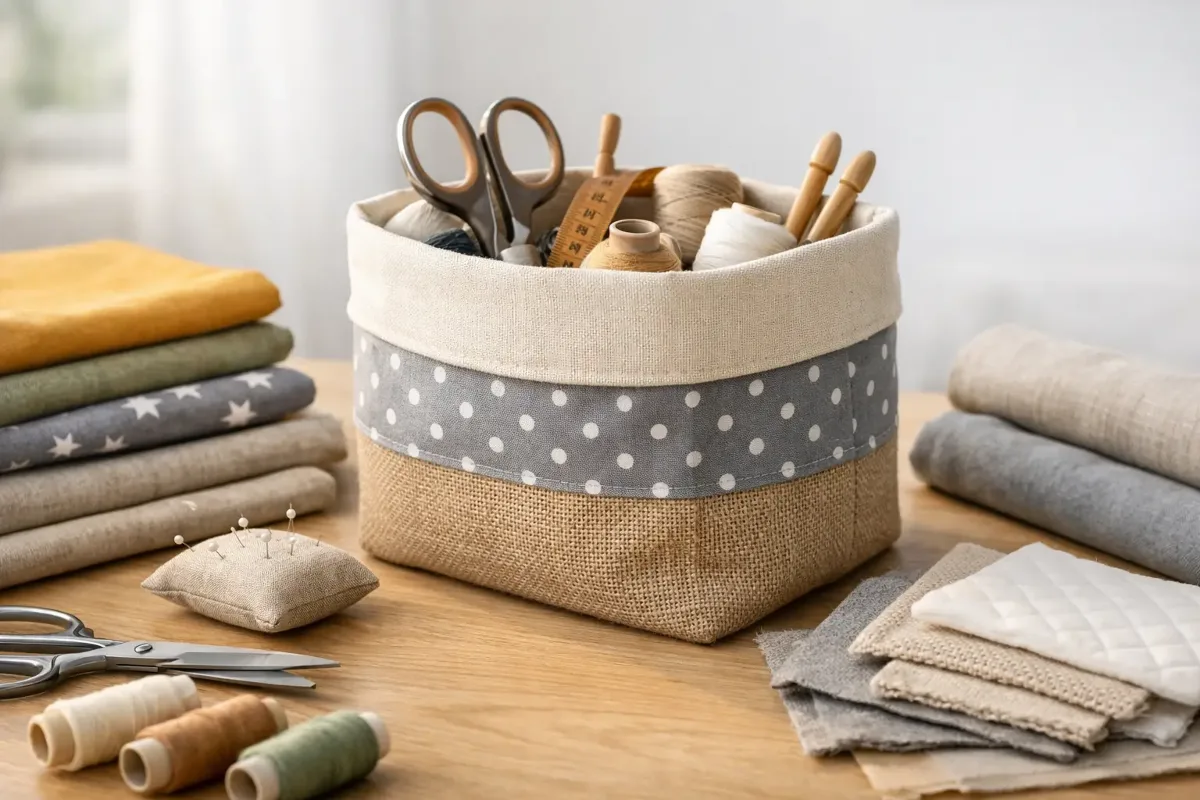
A fabric basket is quick to sew, but it needs to stand up to quite a lot in everyday life: pens on your desk, toiletries in the bathroom, toys in the children's room or sewing notions next to your machine. So choosing the right fabrics for a fabric basket isn't just about looks. Above all, how well it stands, how much it can take and how easy it is to care for all depend on the materials you pick.
The good news: you don't need any exotic specialist fabric to make a great fabric basket. What matters is combining the outer fabric, lining and reinforcement to suit how the basket will be used. A little basket for fabric clips has different requirements from a large storage basket for nappies or heavy craft supplies.
Which fabrics really work for a fabric basket
For many fabric baskets, woven cotton is the easy-going classic. It's simple to cut, presses neatly and is easy to handle, even for beginners. Woven cotton comes in countless colours and prints, which makes it wonderful for little storage helpers, handmade gifts and baskets for the children's room.
On its own, though, ordinary cotton is rather soft. A basket made from it often slumps a little, especially if it's tall or wide. That's not wrong – on a small fabric basket, a relaxed drape can even be rather charming. But if you want the shape to stand up properly, cotton needs suitable reinforcement.
Canvas is the sturdier alternative. This firm, densely woven fabric has more body of its own and works well for larger baskets and for storing yarn, sewing notions or toys. Bag fabrics and home décor fabrics with a firmer handle can also be a good choice. With very thick canvas, however, check that your sewing machine can reliably feed several layers plus interfacing. A denim needle and sewing a little more slowly often help.
Denim is another excellent fabric for a fabric basket. It's hard-wearing, timeless and especially lovely for a simple, modern look. Lighter denim is easy to sew, while heavy denim usually needs hardly any extra stabilising for large baskets. Even so, things can get tight where thick seams cross. Plan your seam allowances carefully and, for very heavy weights, choose a simple sewing pattern without lots of extra layers.
Combining outer fabric and lining wisely
A lined fabric basket doesn't just look tidy – it also lasts longer. The lining hides the seams, protects the outer fabric from the inside and, together with interfacing, gives the basket more body. The result looks especially harmonious when the outer fabric and lining are roughly similar in weight and fibre type.
A patterned cotton, for example, pairs well with a plain cotton lining. If you use a sturdy canvas on the outside, you can opt for cotton inside, as long as the basket won't be under heavy strain. For heavy contents, a second firm woven fabric makes sense as the lining. That way the top edge stays stable, even if you move or refill the basket often.
Be bold with your colour choices: a subtle outer fabric with a favourite print inside creates a lovely effect, because the lining shows when you fold the top edge over. For bathrooms, kitchens or children's rooms, darker or patterned fabrics are practical, as small marks are less noticeable. Light fabrics look fresh but, depending on where they're used, need a little more care.
Coated fabrics for the bathroom and changing table
If your fabric basket is going to hold wet wipes, cosmetics, nappies or toiletries, laminated cotton, oilcloth or water-repellent fabrics are worth considering. They can be wiped clean and offer better protection against little accidents. Sometimes a coated fabric for the lining is enough, while cotton or canvas on the outside gives you the look you want.
These materials do have their quirks, though. Only iron them on a low setting and, ideally, without direct contact. Pins can leave holes, so fabric clips are often the better choice. The surface can also stick a little under the presser foot. A Teflon foot or tissue paper makes sewing much more pleasant.
The reinforcement determines how well it stands
Even the best fabric for a fabric basket only becomes a sturdy, shapely basket with the right interfacing. Which interfacing suits depends on the fabric weight, size and purpose. For small cotton baskets, a light to medium iron-on interfacing is often enough. It gives the fabric more body without making the turning gap or the corners unnecessarily bulky.
For medium-sized baskets, a firm interfacing or a stabilising fleece wadding is often a good idea. Fleece wadding gives the basket a soft, padded feel and a cosy, textile look. It's ideal for light items such as socks, fabric scraps or baby things. If you want the basket to stand up crisply, a firmer interfacing is usually the better choice.
Very large fabric baskets benefit from an extra-sturdy base. Here you can also work a piece of stiff felt, Decovil or another shaping interfacing into the base. This stops the basket sagging under heavy contents. Important: don't automatically reinforce every surface to the max. Sides that are too stiff are hard to turn through and can crease unattractively at the edges.
Test piece first, then the big project
A small test piece is especially worthwhile with new fabric combinations. Iron the interfacing onto a scrap of outer fabric, add the lining and check how thick all the layers will be at what will become the top edge. Sew a few centimetres and see whether the stitches stay neat. This quick test saves a lot of frustration once your lovely favourite fabric has already been cut.
Pay attention to washing properties, too. Cotton and denim can shrink in the first wash. If your fabric basket needs to be washable later on, it's best to prewash both fabrics before cutting. Interfacings react differently to washing depending on their quality. A look at the manufacturer's instructions helps make sure the basket keeps its shape after the first clean.
Choosing fabric by purpose
For pens, clips and light small items, woven cotton with a medium interfacing is enough. The result stays light, is easy to turn through and leaves plenty of room for playful prints. For sewing notions such as scissors, thread and rotary cutters, the base can be sturdier. Canvas or denim with a firm interfacing stops the basket from losing its shape.
A fabric basket for the children's room above all needs to be practical for everyday use. Sturdy canvas, home décor fabric or denim can take a lot here. For young children, avoid loose ribbons, beads or buttons as decoration. For the changing table, wipe-clean lining fabrics are practical, while a fabric basket in the living room looks homely in cotton, a linen-look fabric or a beautiful upholstery fabric.
Linen and linen-cotton blends look particularly high-quality and suit a natural interior style beautifully. However, they're often softer than canvas and crease more. With a sturdy interfacing, you can still make lovely baskets from them. Pure linen can need a little more care when cutting, as the edges fray more easily. Neaten them if necessary, or carry on sewing promptly once you've cut your pieces.
Don't forget the right sewing notions
Besides the fabric, your notions make a noticeable difference. A universal needle usually works well for ordinary cotton. For canvas, multiple layers or denim, a denim needle is the more reliable choice. Use a strong sewing thread in a matching colour and press your seams carefully after each step. This keeps the edges neat and gives your fabric basket its lovely, crisp shape.
Fabric clips are especially helpful at thick spots, because they don't damage the fabric and hold the layers together securely. For straight, sturdy edges, you can edgestitch the folded top edge after turning. It looks professional and stops the lining from creeping to the outside.
If you're unsure, start with a small fabric basket as your first project and try out your fabrics at your own pace. Even small pieces of fabric can become handy little favourites – and with the right combination of fabric and interfacing, your fabric basket will keep its shape exactly where you need it every day.