How to Choose the Right Fleece Fabric for a Blanket
A blanket shouldn't just look soft, it also needs to hold up to everyday life. That's exactly why fleece fabric for blankets is so popular. It warms you up quickly, feels lovely and is easy for home sewists to work with. Even so, not every fleece is automatically the best choice: depending on whether your blanket is meant for a baby, the sofa, the car or the garden, different qualities matter.
Why fleece fabric is so popular for blankets
Fleece has one big advantage you'll notice straight away: it's light but warm. A fleece blanket doesn't weigh you down, yet it holds in the warmth nicely. That's really practical for cosy throws on the sofa or as a quick extra blanket in the children's room.
Then there's how easy it is to care for. Many fleece fabrics dry fairly quickly, hardly crease and usually don't need ironing. For families whose blankets are in constant use, that's often more important than a particularly luxurious look. We simply reach more often for materials that are fuss-free.
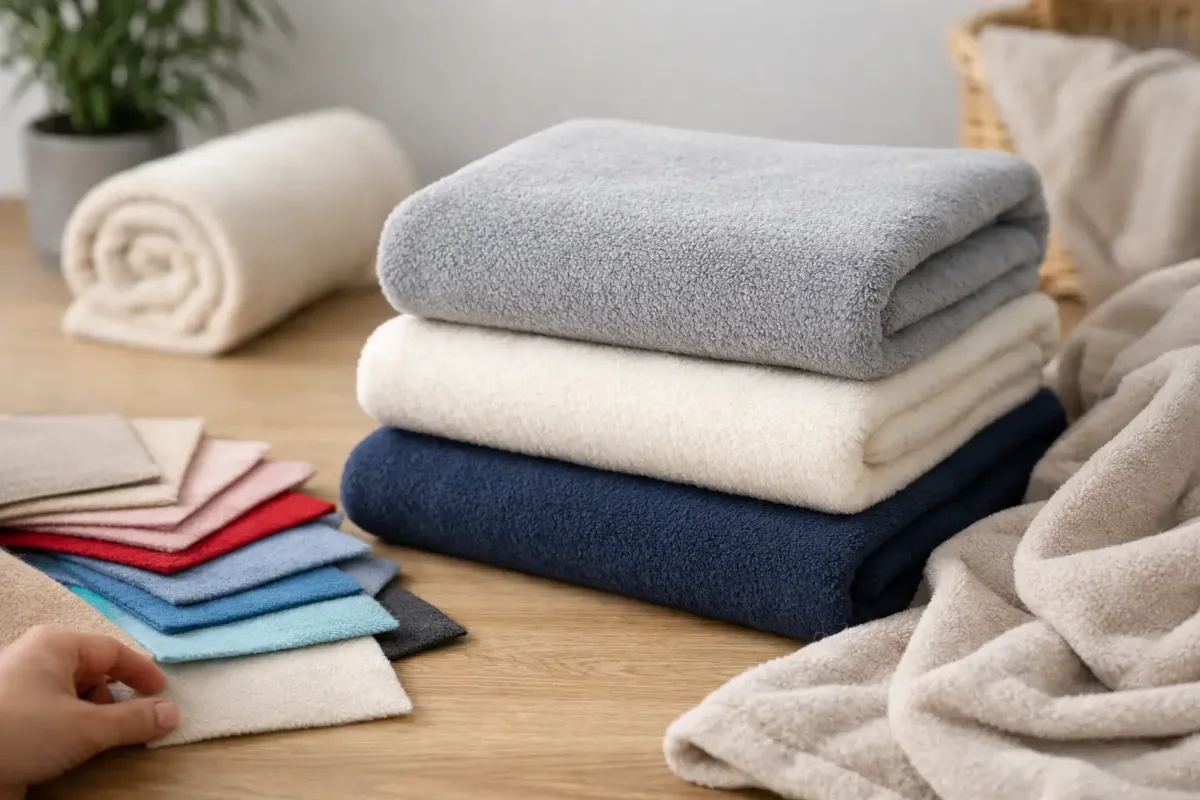
Another plus is its versatility. Fleece comes in plain colours, with child-friendly prints, in muted natural shades or in bold colours for real eye-catchers. So it's easy to match your blanket to the room, the season or the occasion.
Which fleece fabric suits your blanket project?
Not every blanket needs the same fabric. If you'd like to sew a simple sofa throw, classic anti-pill fleece is often an excellent choice. It's soft, warm and less likely to form unsightly bobbles over time. That really pays off with frequent use.
For baby blankets or blankets for toddlers, many of our customers look mainly for a pleasant surface and good washability. Here the fabric can be soft, but shouldn't be too thick and heavy. The blanket should keep your little one warm without becoming too bulky in the pram or in your arms.
If the blanket is meant to be decorative, say as a bedspread in the bedroom or as a gift, a more luxurious-looking fleece with an extra fluffy surface may be the nicer option. On the other hand, this kind of fabric can be a little more delicate than a very practical everyday fleece. So it's worth not deciding on looks alone.
Anti-pill fleece, polar fleece or cuddle fleece?
You'll come across various names that sound similar but have small differences. Anti-pill fleece is designed to last with everyday use. If you use a blanket a lot and wash it often, it's usually a safe bet.
Polar fleece is the classic, warm fleece fabric many people know from jackets, scarves and throws. It's reliable, pleasantly soft and a good standard choice for lots of blanket projects. Cuddle fleece is usually even fluffier and feels especially cosy, but depending on the quality it can also be a bit bulkier.
The rule here is clear: it all depends on what the blanket is for. For an everyday sofa blanket, a sturdy, easy-care fabric often makes more sense than maximum fluffiness. For a gift blanket, on the other hand, the cuddle factor can happily take centre stage.
What to look out for when buying
When choosing fleece for blankets, the main things to consider are weight (GSM), feel, surface and care properties. The weight affects how thick and warm the fabric is. A lighter fleece works well for transitional-season blankets or for children, while heavier fleece usually gives more warmth.
The feel is almost even more important. A fabric can look lovely in a photo and still feel too smooth, too thin or too synthetic in your hand. If you're sewing a blanket that will be used a lot, the fabric should feel pleasant and good quality. Especially with a project that sits directly against the skin, you'll quickly notice differences in quality.
Also check the width of the fabric sold by the metre. For larger blankets, a generous fabric width can be really helpful because you'll need to join fewer pieces. That saves work and often gives a calmer overall look.
The minimum order quantity matters for small projects, too. If you only want to sew a pram blanket or a small lap blanket, it's handy to be able to plan with smaller amounts of fabric. That keeps the project more affordable and reduces waste.
Sewing a fleece blanket: easier than you might think
Fleece is generally beginner-friendly. It usually hardly frays at all, which makes sewing it much more relaxed. If you haven't sewn many home textiles yet, a simple blanket is a great place to start.
For a simple cosy blanket, a neatly cut rectangle with finished or decoratively topstitched edges is often all you need. Depending on the type of fleece, you sometimes don't even need an elaborate hem. That makes the project especially appealing if you want a beautiful result quickly.
If you combine two layers of fabric, such as fleece with cotton or two different fleeces, the blanket becomes a little sturdier and often more interesting to look at, too. At the same time, though, it gets heavier and needs a bit more care when sewing. For babies or very young children, a blanket that's too heavy isn't always the best choice.
Choosing the right needle and stitch
For many fleece fabrics, a universal needle in a suitable size works well. The most important thing is that the needle is still sharp and the fabric feeds through evenly. If the layers shift against each other, sewing clips or careful pinning will help.
As for the stitch, a slightly stretchy straight stitch or a narrow zigzag often makes sense, especially if the blanket will get a lot of wear. With purely decorative blankets you have more freedom, but for well-used children's blankets a durable seam is worth more than a particularly delicate finish.
What size should a fleece blanket be?
The right size depends entirely on what the blanket is for. A baby blanket needs different dimensions from a sofa blanket for adults. Many people sew by eye at first and later realise the blanket has turned out either too small or unnecessarily large.
For the pram or the baby car seat, the blanket can stay compact. On the sofa, it's nicer if it's more generous and reaches well past your legs. For a picnic or car blanket, on the other hand, a size that folds up easily can be the sensible choice.
If you're unsure, a simple everyday test helps: lay out a blanket you already have and see what you like about it or what's missing. That way you'll plan more realistically than if you just work from standard sizes.
Caring for your blanket so it stays lovely for longer
Fleece is easy care, but it isn't indestructible. Temperatures that are too high can change the surface, and fabric softener isn't always a good idea. With fluffy qualities in particular, the feel can otherwise suffer.
Wash the finished blanket according to the fabric's care instructions wherever possible. If you want to be on the safe side, prewash the fabric before cutting. That's especially sensible if the blanket will regularly go in the washing machine later on.
Another practical tip: wash dark or bold colours separately at first. That way you'll avoid any surprises, especially if the blanket has been combined with light-coloured fabrics.
When fleece isn't the best choice
As practical as fleece is, there are projects where other fabrics are a better fit. If you're looking for a very breathable summer blanket, muslin or a lightweight cotton may be more comfortable. Fleece warms up comparatively quickly, so it isn't ideal for every season.
Fleece isn't always the first choice for very elegant home textiles either. If you want a natural, high-end look for the bedroom, you may feel happier with waffle piqué, cotton or another home décor fabric. Fleece wins on comfort and everyday practicality rather than classic elegance.
For outdoor use with lots of moisture or rough ground, an extra backing made from a sturdier fabric can be a good idea. Otherwise your blanket may be cosy, but not hard-wearing enough in the long run.
A good blanket starts with the right feel for fabric
In the end, it's not just the name of the fabric that counts, but the combination of where the blanket will be used, how warm you want it to be and your personal taste. A good fleece blanket doesn't have to be complicated. It should suit your everyday life, feel good and still be just as loved after the third wash as on the very first day.
If you like to choose your fabrics carefully, it's always worth taking a close look at quality, thickness and surface. That's exactly where a range helps that not only offers plenty of choice but is also clearly organised by use, just like at Die Stoffkönigin. Because the most beautiful blanket is usually the one that isn't tucked away in a cupboard, but is used every single day.