How to sew French terry sweatshirt fabric
A favourite hoodie, comfy trousers for the kids or a relaxed everyday dress: French terry sweatshirt fabric makes so many sewing ideas lovely to wear without adding too much bulk. Its characteristic looped back feels soft against the skin, while the smooth face really shows off modern designs, plain colours and prints. To turn this beautiful fabric into a garment that gets worn often and lasts, it all comes down to choosing the right quality and pattern, plus a few neat finishing steps.
What is French terry sweatshirt fabric?
French terry is a stretchy knit fabric that's often also called summer sweat or loopback jersey. The right side is usually smooth, while the wrong side shows fine, unbrushed loops. That's exactly what sets it apart from classic brushed fleece-back sweatshirt fabric, which has a fluffy, napped inside.
This places French terry somewhere between jersey and heavy sweatshirt fabric. It's usually warmer and a little more stable than jersey, yet lighter and more breathable than winter-weight sweatshirt fabric. That makes it a particularly practical choice for spring and autumn, cooler summer days and well-heated rooms. How warm a fabric feels in the end doesn't just depend on the type of material, though: weight, fibre content and the pattern all play their part too.
Many French terry fabrics are made from cotton with a small percentage of elastane. The cotton makes them comfortable, breathable and easy to care for, while the elastane helps with recovery. There are also versions with some polyester or with no elastane at all. It's always worth checking the product description, especially if your sewing pattern calls for a particular amount of stretch.
Which projects suit French terry?
This fabric is a true everyday hero for comfortable clothing. It looks especially good as hoodies, sweatshirts, joggers, varsity jackets and relaxed dresses. It's also popular for children's clothing: harem trousers, jumpers, dungarees and cosy sets can take plenty of rough and tumble during play and still feel soft.
French terry works well for women's and men's clothing, too. A loose jumper gets a lovely shape without looking stiff. A top with a slightly roomier fit usually hangs more nicely than one made from a very heavy sweatshirt fabric. With close-fitting patterns, however, take care: if the fabric has little elastane or only limited widthways stretch, a pattern designed for very stretchy jersey may come out too tight.
French terry is also great for hats, snoods and light scarves for in-between weather. You can use it for bags or storage baskets, but it often needs reinforcing so the project holds its shape. For hard-wearing bag bases or very structured home décor, canvas, woven fabric or coated fabrics are often the better choice.
French terry or jersey?
If you're deciding between jersey and French terry, think about how you want the garment to feel when worn. Jersey is usually lighter, thinner and often stretchier. It's perfect for T-shirts, leggings, underwear or summer dresses. French terry has a bit more weight and warmth, which often makes jumpers, trousers and transitional-season dresses look higher quality and feel more stable.
Another factor is the look. French terry is a little more forgiving of small imperfections and holds its shape nicely in loose-fitting pieces. Jersey drapes more softly and fluidly. Neither fabric is better in principle – the project points the way.
French terry or brushed sweatshirt fabric?
Brushed sweatshirt fabric is the right choice when you want the inside to be really fluffy and warm. For winter hoodies, thick joggers or cosy loungewear, it's hard to beat. French terry is better if you'd like to wear a garment for many months of the year without overheating too quickly.
For active children in particular, summer sweat can often be the more practical option. It's warm enough without becoming too heavy while they're racing around the playground. For babies, you should also make sure seams, ribbing and labels are finished as comfortably as possible.
Choosing French terry sweatshirt fabric
As well as colour and print, a few technical properties matter. First, check the fabric width and work out how much your sewing pattern needs. For large pieces such as a hoodie, the width can make all the difference, while for ribbing, cuffs or small children's trousers, smaller amounts are often enough. If you're planning a colour-blocked project, why not add a matching plain colour for the pockets, hood or sleeves?
The fabric weight, given in grams per square metre (gsm), is a good indication of how heavy the fabric is. Lightweight French terry suits tops, dresses and thin jumpers. A higher weight works well for sweatshirts or trousers. It doesn't tell you everything, though: a densely knitted fabric of medium weight can feel warmer than a loosely knitted one with similar figures.
With printed fabrics, it's also worth making a quick plan before cutting out. Large motifs look different on a small child's sleeve than on the front of a women's jumper. Stripes, checks and repeat patterns usually need a bit more fabric, because the pattern should line up at the seams. It's not a must, but it's a lovely detail if you'd like to take the extra time.
Preparing, cutting and sewing
Before sewing, wash your French terry the same way you plan to wash the finished garment. Natural fibres can shrink a little in the first wash. If the fabric shrinks after sewing, the fit may change. After washing, it's best to press the fabric smooth, but not with too hot an iron.
For cutting out, lay the fabric right sides together or, depending on the print, so that all the pattern pieces follow the same grainline. On French terry, the stretch usually runs across the grain. Place pieces such as cuffs, neckbands or waistbands accordingly, so they can stretch around the body later.
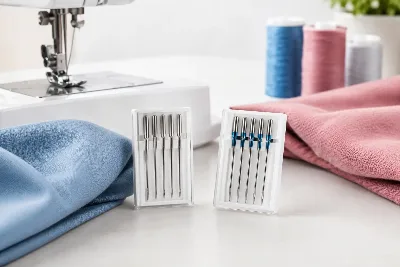
A jersey or stretch needle prevents the knit loops from being damaged as you sew. On a sewing machine, a narrow zigzag or a stretch stitch works well. If you have an overlocker, you can use it to sew and neaten the edges in one quick step. Both methods give great results. What matters is that the seam can give a little when you put the garment on, without snapping.
Test your settings on a scrap first. After sewing, gently pull the sample apart. If the thread snaps or the seam feels very stiff, increase the stitch length slightly or choose a stretchier stitch. If the fabric ripples, reducing the presser foot pressure can help. Not every machine can be adjusted in the same way – in that case, a walking foot or pulling a little less on the fabric as you guide it often makes a real difference.
Ribbing, hems and neat details
French terry is often paired with ribbing fabric. Ribbing is much stretchier and reliably keeps cuffs, hems, necklines and trouser legs in shape. You can choose it in a matching tone or deliberately go for a contrast. With a very stretchy main fabric, it's especially important to follow the pattern's guidance on ribbing length and, if in doubt, hold a small test piece up first.
Hems can be sewn with a twin needle, a coverstitch or a stretch stitch. A twin needle creates two parallel lines of stitching on the outside and a stretchy join on the reverse – ideal for a classic T-shirt or sweatshirt hem. To stop the fabric going wavy, it helps to press the hem beforehand and avoid pulling as you sew.
Hood seams, pockets and panel seams can be topstitched. This gives the garment a sporty look and stabilises the seam. Use a slightly thicker thread or a longer straight stitch if needed, but again, test on a fabric scrap first. Topstitching too tightly can restrict the stretch in that area.
Care for lasting enjoyment
Most French terry fabrics stay lovely for a long time if you wash them inside out. This protects the colours and prints. A moderate wash temperature and a mild detergent are usually a good choice for cotton blends. Tumble dryer heat can encourage shrinking and wears out elastane over time, so air drying is often the gentler option.
If you're still torn between two colours, a print and a plain combination, or you're not sure whether you have enough fabric for your sewing pattern, a quick chat for advice is well worth it. Sometimes a successful project isn't down to the most eye-catching fabric, but to the combination of the right stretch, good finishing and a pattern you genuinely love sewing again and again.
Matching categories
Matching products
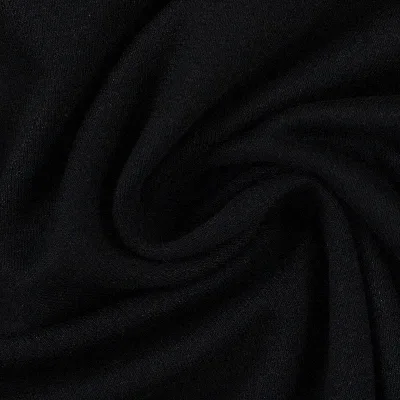
Swafing Maike French Terry Schwarz 299
€6.95per 0.5 m
Unit price €13.90 / m
French Terry Waldfreunde Foxes and Hares on Beige by Swafing by Sabine Marschall
€9.45per 0.5 m
Unit price €18.90 / m
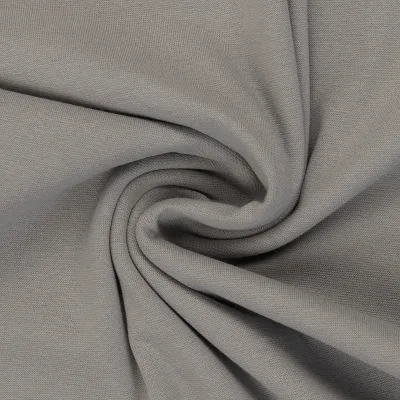
Swafing Heike Fine Rib Ribbing Grau 183
€4.75per 0.5 m
Unit price €9.50 / m
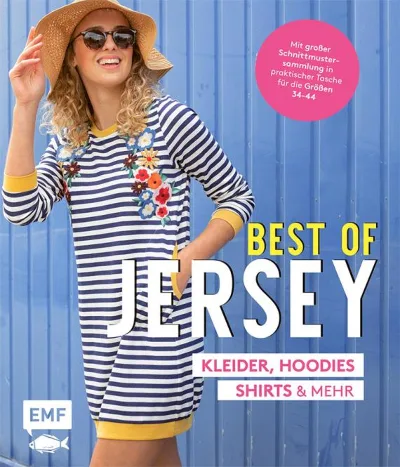
Best of Jersey - Kleider, Hoodies, Shirts
Back soon€24.99per piece
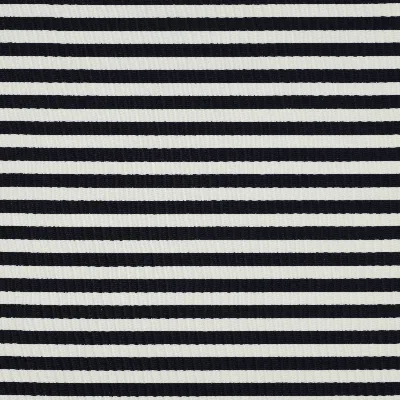
French terry, yarn-dyed stripes, navy and white
€8.45per 0.5 m
Unit price €16.90 / m
Prym measuring aid in Transparent
€2.90per piece