Planning a Sewing Project with Fabric – Step by Step
Picking a sewing pattern takes no time at all, and neither does falling for a gorgeous fabric. The frustration only starts when your jersey comes out of the wash too short, your bag slumps over because it has no structure, or the zip doesn't fit the opening you'd planned. Planning a sewing project with fabric isn't about making every detail complicated. It's about asking the right questions before you buy – so that your idea turns into something that's happily worn, used or given as a gift.
Start with what it's for
The first question isn't what colour the fabric should be, but what the finished piece needs to do. A T-shirt should move comfortably and still look good after many washes. A shopping bag needs stability, children's harem trousers can be soft and stretchy, and a cushion cover can be decorative without losing its shape the first time it's washed.
Describe your project as specifically as you can. Who are you sewing for, what season will it be worn in, how often will it be used and how should it hang? A floaty summer dress has different requirements from an everyday sweatshirt dress. With children's clothing, freedom of movement, easy care and how it feels against the skin matter just as much as the design. For home décor and bags, durability, handle and shape retention are usually more important than stretch.
Be honest about your experience level, too. An elaborate coat in slippery viscose can turn out beautifully, but it's not the ideal place to start. If you're new to sewing, you'll often have more fun with cotton woven fabric, French terry or a slightly firmer jersey, because these materials are easy to control when cutting and sewing.
Choosing a fabric to suit the pattern
Not every fabric works with every sewing pattern. First, check whether the pattern calls for a stretch or a non-stretch fabric. Jersey, ribbing, sweatshirt fabric and French terry all have differing amounts of stretch depending on their quality. Woven fabrics such as cotton, muslin, canvas or poplin, on the other hand, barely stretch at all. A pattern designed for jersey can't simply be made up in a woven fabric: the garment may end up too tight or uncomfortable to wear.
Think about drape, weight and surface
Alongside stretch, drape determines how a garment looks. Viscose has a soft, fluid drape, which makes it ideal for blouses, skirts and dresses with movement. Cotton poplin looks crisper and gives shirt-style blouses or dresses more structure. Canvas holds its shape and is a great choice for bags, storage baskets or sturdy cushion covers. Fleece keeps you warm, while softshell protects against wind and light rain – so both serve a very specific purpose.
Fabric weight can be a useful guide as well. A lightweight jersey is wonderful for a light summer top but may not be stable enough for trousers with pockets. A heavy sweatshirt fabric gives a hoodie substance, but can quickly look bulky in small children's sizes. If you're unsure, compare your planned project with a favourite piece from your wardrobe. How thick is the fabric? Is it smooth, fluffy, firm or fluid?
With patterned fabrics, direction comes into play too. Animals, vehicles, lettering or trailing flowers often have a clear top and bottom. This affects how you cut and can increase the amount you need. Large motifs also want to be placed sensibly on the front, pockets or hood. It's better to allow a little extra for this than to end up struggling with a favourite motif that's been cut in half.
Working out a realistic fabric quantity
The fabric requirements in a sewing pattern are a good starting point, but they're not set in stone. They usually apply to a particular fabric width, size and type of fabric. Many dressmaking fabrics are around 140 to 150 cm wide, but others can be considerably narrower. So always check which width the quantity refers to.
Use the largest size you need as your basis if you're sewing between two sizes or want to lengthen a garment. Add extra for very large prints, stripes, checks or directional fabrics. The same applies to hood linings, ribbing, pockets, ruffles or homemade binding.
A little extra isn't an unnecessary luxury. It helps if a mistake creeps in while cutting, if a fabric shrinks slightly in the wash or if you want to match a pattern carefully. It's especially reassuring with special fabrics that may not be available later. Thanks to small minimum quantities from 20 cm, you can plan for extras – such as a pocket fabric or colour-matched ribbing – without having to buy unnecessarily large amounts.
Before cutting: washing, grain line, pattern
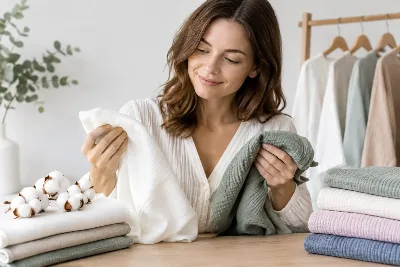
Fabrics that will be washed later should ideally be washed before cutting. That way they can shrink before they've become a finished garment. Wash them roughly the way you plan to care for the finished piece. This is particularly worthwhile when combining fabrics: if the main fabric and the ribbing shrink by different amounts, the shape can change.
After washing, lay the fabric out flat and check whether the edges have twisted. Don't ignore the grain line marked on the sewing pattern. It ensures a garment hangs straight and behaves as intended. With jersey, the direction of stretch is also crucial: a top or leggings should usually stretch across the body, not lengthways.
With stripes and checks, it's worth taking a little extra time at the cutting table. Match up side seams, pockets or centre front pieces as well as you can. Perfect symmetry isn't necessary for every project – on an everyday bag, a pattern can sit a little playfully. On a blouse with a button placket or a dress with a centre seam, however, any misalignment is much more noticeable.
Plan your notions from the start
The right fabric alone doesn't finish a project. When you choose your sewing pattern, make a note of the notions you'll need straight away. These might include thread, needles, interfacing, ribbing, buttons, a zip, elastic, cord, press studs or webbing. Also check that your sewing machine copes well with the type of fabric you've chosen.
For jersey and sweatshirt fabric, a jersey or stretch needle makes sense because it's gentle on the knit. For woven fabrics, a universal needle is often suitable, while thick bag fabrics may need a heavier needle. Blunt or bent needles should be replaced – otherwise they cause skipped stitches, damage fine fabrics or pull threads.
Interfacing is often only considered once a collar turns out too floppy or a bag starts to sag. Yet it adds stability exactly where you need it: on button plackets, facings, pocket openings, waistbands or around zips. Which weight is right depends on the main fabric. A very firm interfacing can make a fluid fabric unnaturally stiff, while one that's too light will barely make a difference on canvas.
Planning colours and fabric combinations with confidence
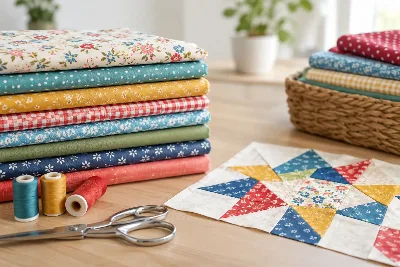
A coordinating fabric doesn't have to be exactly the same shade as the main fabric. It often looks more harmonious if it picks up a colour from the print. Look at the small details: a bird's beak, the colour of a leaf, a background tone or the colour of the lines. This can inspire the ribbing, lining or a pocket accent.
Pay attention to the character of the fabrics as well. A playful novelty-print jersey gets room to shine with a calm plain ribbing. A bold bag fabric usually looks more cohesive with a simple lining and understated webbing. Only combine different qualities where they work together functionally. Stretchy ribbing at the neckline makes sense, whereas a non-stretch cotton strip would often be uncomfortable there.
When choosing online, photos are a good first guide, but colours can look different depending on your screen. For important combinations or special projects, personal advice can save a lot of time. At Die Stoffkönigin, you can think through the fabric type, intended use and matching notions together with us – especially when a lovely idea is set to become a gift or a favourite piece.
Planning your sewing project with fabric: a quick reality check
Before your fabric and notions go into the basket or to the till, look over your project once more as a whole. Does the fabric match the pattern's recommendation? Is the quantity still enough once you allow for pattern direction and pre-washing? Do you have thread, a suitable needle and fastenings? And do you have enough time for careful cutting?
Not every project has to be perfectly prepared. A little pouch can be made on a whim, and leftovers often turn into the most charming ideas. For clothing, larger bags or intricately patterned fabrics, though, planning really pays off. You'll sew in a more relaxed way, avoid buying the wrong things and be able to focus on the best part: the moment when fabric, thread and your idea come together to create something truly your own.
Matching categories
Matching products
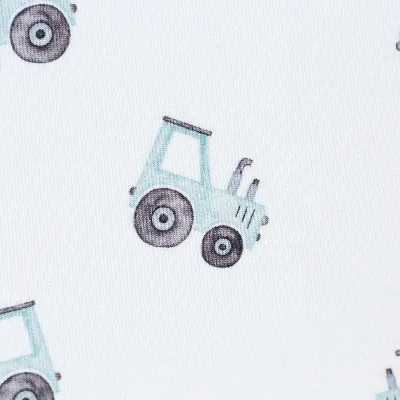
Cotton Jersey Nara Tractors on White by Swafing
€8.45per 0.5 m
Unit price €16.90 / m
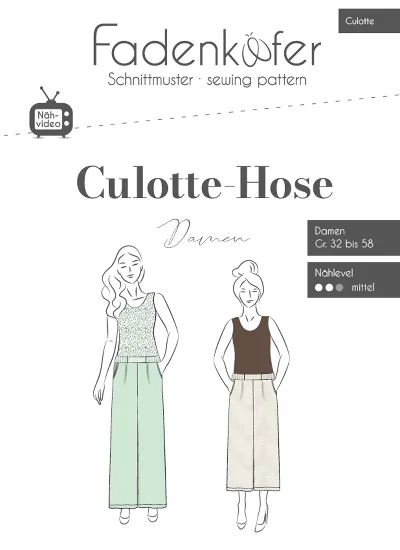
Fadenkaefer Paper Sewing Pattern Culotte Trousers
€12.90per piece
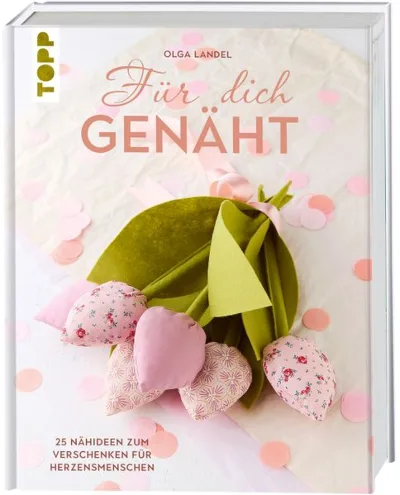
TOPP Book: Sewn as a Gift
€22.00per piece
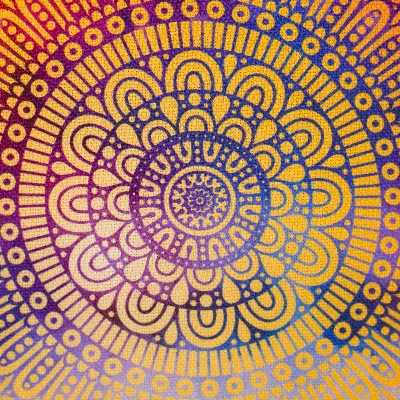
Canvas Doha Mandalas Pink/Purple by Swafing
€7.45per 0.5 m
Unit price €14.90 / m
Paper Sewing Pattern Hunde Hoodie
€12.90per piece
TOPP Book: Sewing Projects Babies Will Love
€12.99per piece