9 Ideas for Sewing Projects with Small Amounts of Fabric
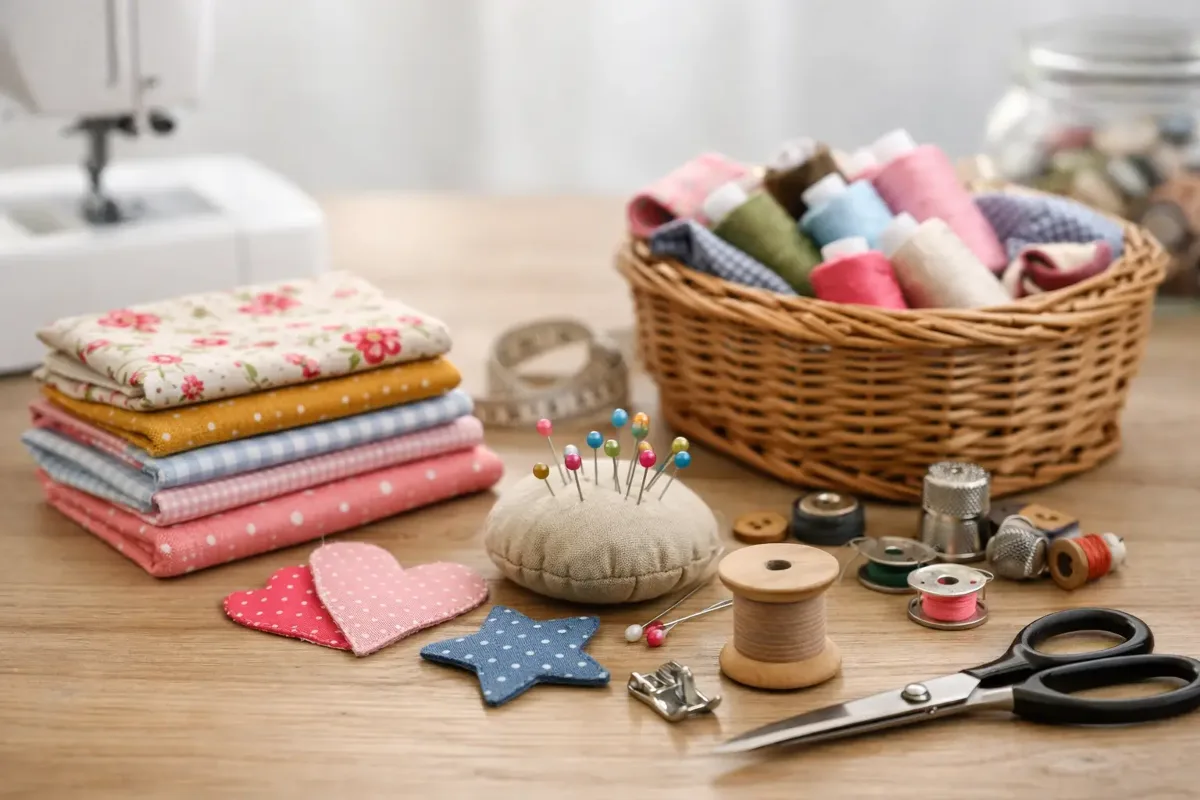
A lovely sewing project with small amounts of fabric often doesn't start with a grand plan, but with a remnant you simply can't bring yourself to put away. That little piece of whale-print jersey, the patterned canvas left over from a bag project or the last half metre of muslin can still do a great deal. With the right idea, they become personal everyday helpers, small gifts or special details for clothing and your home.
The advantage of small projects is obvious: they're manageable, quick to cut out and ideal for trying out new techniques. At the same time, they help you make good use of the fabric treasures you already have. What matters isn't so much the amount of fabric as the question: what is this material good at? A soft jersey calls for a different idea than sturdy canvas, cosy fleece or coated cotton.
Check your fabric and measurements first, then choose the project
Before you pick a sewing pattern, lay the fabric out flat and measure the area you can actually use. Narrow strips, cut-into edges or small holes don't count towards the available amount. Also make a note of whether the fabric has a direction, large motifs or a pattern that needs to be taken into account when cutting. With animals, vehicles or floral borders in particular, a small piece can run out faster than you'd expect.
The type of fabric sets the direction. Jersey is stretchy and comfortable against the skin – perfect for hats, headbands, neckerchiefs, dolls' clothes or panels on T-shirts. Woven cotton is wonderful for fabric baskets, make-up bags, bibs, placemats, patchwork and small decorations. Canvas holds its shape and is a good choice for baskets, bags, pencil cases or storage. Softshell and raincoat fabric make practical wet bags, little pouches for wet swimwear or hard-wearing seat pads.
The reverse side matters too. A thin, light-coloured woven fabric needs a lining for some bags or baskets so that seams and interfacing are neatly hidden. With stretch fabrics, the project should suit the amount of stretch. A sturdy fabric basket made of jersey will only hold its shape with reinforcement – whereas firm canvas would be completely unsuitable for a hat.
Nine ideas for small pieces of fabric
For many of these projects, remnants well under a metre are enough. The exact amount depends on size, pattern pieces and print. With a bold print, it often looks especially lovely used as an accent alongside a calmer coordinating fabric.
- Reversible neckerchief for babies and children: Jersey, muslin or cotton combine nicely. Press studs make the neckerchief practical for everyday wear, and you can choose the fabric to match a jacket or hat.
- Headband or beanie: A small jersey remnant quickly becomes a favourite for the in-between seasons. Make sure the stretch runs around the head.
- Make-up bag: Woven cotton, canvas or coated fabrics work well. With a zip, a lining and some wadding if needed, a remnant turns into a useful gift.
- Fabric basket or organiser: Small baskets keep sewing notions, cosmetics, pens or odds and ends on the changing table together. To stand up, they need a firmer fabric or suitable interfacing.
- Mug rug or mini placemat: Patchwork scraps can really shine here. A layer of wadding in between protects the table and gives the little mat a lovely feel.
- Pot holders: Several layers and heat-resistant thermal wadding are essential. Ordinary wadding won't reliably protect your hands from hot pans.
- Key ring or card holder: Sturdy canvas, faux leather scraps or woven fabric with interfacing are ideal. Small items like these are a good opportunity to try out snap hooks, labels or cork fabric.
- Clothes for dolls or soft toys: Small remnants are often enough for tops, skirts, hats or sleeping bags. It's worth taking a close look at the size of the pattern pieces and at small, neatly placed motifs.
- Appliqués and patches: A fabric remnant can transform a plain garment or cover a hole beautifully. Fusible web, a zigzag stitch or a raw edge all create very different looks.
Combining fabrics cleverly for a sewing project with small amounts
Small amounts don't mean everything has to be sewn from one fabric. Quite the opposite: combining fabrics is what makes many projects possible in the first place. A patterned remnant becomes the front of a bag, while a plain fabric takes care of the back, the lining and the side panels. That way your favourite print gets to shine without you needing more of it than you have.
Choosing is especially easy if you pick up a colour from the print. If the main fabric features mustard, petrol blue and cream, for example, a plain fabric in one of these colours can bring a sense of calm. Ribbing can stand out from it, but doesn't have to match exactly. For children's clothing, a calm coordinating fabric often works better than a second large print.
Different fabric weights can be a stumbling block. Thin cotton next to heavy canvas can quickly look distorted on a bag. Interfacing on the thinner side helps here. Jersey and woven fabric can be combined too, for example on a T-shirt with a woven pocket. For load-bearing seams or a stretchy garment, however, the construction should suit the jersey – otherwise the non-stretch section will pull when you put it on.
Planning your cutting layout and really using your scraps
A good cutting layout often saves more fabric than any particularly small sewing pattern. Start by laying the pattern pieces on the fabric without cutting. Only rotate them if the grain line and direction of stretch allow it. With woven fabric, the grain runs parallel to the selvedge; with jersey, the greatest stretch should run across the body for hats, ribbing or trousers.
Cut out the largest pieces first. From the remaining areas you can cut facings, loops, pockets, hanging loops or appliqués. Very small pieces aren't worthless either: they're great for patchwork, piping, lanyards or little fabric labels. It's best to sort scraps by type of material rather than just by colour. A jersey scrap, a canvas scrap and a muslin scrap behave completely differently when you sew them.
If you only need a little fabric for a project you have in mind, a small cut length is often just right. At Die Stoffkönigin you can choose many fabrics from as little as 20 cm. That's handy for ribbing, bag linings, appliqués or a carefully chosen coordinating fabric. For wide pattern pieces, such as a child's skirt or a bag, you should check beforehand whether the length and fabric width are really enough.
Notions that make small projects better
With mini projects, the notions often make all the difference. A matching zip turns two fabric remnants into a bag, KAM snaps fasten a neckerchief, and webbing and snap hooks transform canvas into a key ring. Fusible interfacing and wadding are helpful for neatly shaped baskets or bags, but they do different jobs.
A firm fusible interfacing stabilises fabric and stops it from stretching out of shape. Wadding adds padding, for example in mug rugs or make-up bags. Thermal wadding is designed for pot holders, while water-resistant projects benefit more from coated fabrics or a suitable waterproof inner layer. Always read the instructions for interfacing: temperature, pressing time and cooling time all affect whether the bond will last.
Your needle should suit the material too. A jersey or stretch needle makes sense for jersey, while a universal needle usually works for woven fabric. If you notice skipped stitches or the fabric puckers as you sew, it's often down to a blunt or unsuitable needle rather than the fabric itself.
Small projects deserve care too
Just because a project uses little fabric doesn't mean it has to be rushed. A small make-up bag or a child's neckerchief in particular gives you room to practise a new seam, a zip or an appliqué at your own pace. With unfamiliar materials, sew a test piece first, check the seam allowance and press between steps if the material allows. It only takes a few minutes and gives you noticeably neater edges.
And if a remnant turns out not to be enough for your original idea after all, that's not a wasted purchase. Perhaps the planned beanie becomes a headband, the bag front a card holder or a favourite print an appliqué. That's exactly where the special charm of small amounts of fabric lies: you're not simply using something up, you're giving a beautiful material the job that truly suits it.