Choosing the Right Viscose Fabric for a Summer Dress
If a summer dress looks lovely on the hanger but clings to your body, creases or hangs too heavily, the culprit is often the fabric rather than the pattern. That's exactly why it pays to take a closer look at viscose fabric for summer dresses. Viscose is one of the most popular fabrics in summer: soft, fluid and comfortable against the skin. But not all viscose is the same. For a dress you'll genuinely love to wear, drape, weight and weave all matter, along with a little sewing know-how.
Why viscose is so popular for summer dresses
Viscose offers a combination that few summer fabrics can match: it feels cool, drapes softly and often looks a touch dressier than pure cotton. Especially for dresses with movement, such as wrap dresses, tiered dresses, shirt dresses or relaxed A-line styles, it creates a beautiful silhouette without looking stiff.
Then there's everyday comfort. On warm days, most of us don't want to wear a fabric that scratches, traps heat or adds unnecessary bulk. Viscose can be really pleasant here, because it feels light and absorbs moisture better than many synthetic materials. That makes it particularly appealing for summer clothing.
Even so, it isn't the right choice for every project. If you want to sew a very structured dress that holds its shape, you'll often be happier with a sturdy cotton fabric or a linen blend. Viscose really comes into its own where a dress should hang loosely and move softly.
Which viscose fabric suits your summer dress pattern?
The most important question isn't just "Do I like the print?" but "Does this fabric suit the shape of the dress?" This is where most disappointments happen when buying fabric.
A lightweight viscose with a fluid drape is ideal for feminine dresses with gathers, ruffles, full skirts or tie belts. The fabric swings with you and doesn't add bulk. On a very straight cut, however, the same fabric can quickly look too floppy if you actually wanted a bit more body.
Slightly heavier viscose qualities work well for shirt dresses, tunics or simple everyday dresses. They still drape beautifully but are often easier to handle and less slippery under the sewing machine. Beginners in particular tend to get on better with them.
If your sewing pattern includes darts, a button placket or a collar, the fabric mustn't be too limp, otherwise the details can quickly look messy. Conversely, stiff fabrics can make dresses that are meant to be soft look boxy. So it's always worth considering the pattern and the way the fabric behaves together.
Fabric weight matters
For summer dresses, a light to medium weight is usually the best choice. Very fine viscose can be wonderfully airy, but it sometimes needs a lining, or at least the right dress shape, so that nothing bulks up or shows through. This is especially true for light colours.
Medium-weight qualities are often the easier option. They're more opaque, still drape softly and are simpler to wear day to day. For many home sewists, this is exactly the range where a dress turns out both beautiful and practical.
Woven viscose or jersey?
When you're looking for viscose for a summer dress, you'll often come across two options: woven viscose and viscose jersey. Both can work well in summer, but they behave very differently.
Woven viscose is the classic choice for airy summer dresses with an elegant drape. It has little or no stretch and is particularly suited to patterns that get their fit from ease, pleats or ties. The look is usually a little more refined and dressy.
Viscose jersey is stretchy, soft and very comfortable. It's a good option for easy pull-on dresses, T-shirt dresses or more fitted styles. Jersey is especially practical for everyday wear, travelling or quick-to-sew favourites. However, it shows your body's contours more and needs a sewing pattern that's genuinely designed for stretch fabrics.
If you're torn between the two, one simple question helps: do you want a flowing woven dress with a little more structure, or a super-comfortable dress you can just slip on? The answer often decides the right fabric type for you.
Viscose fabric for a summer dress: what to look for when buying
With viscose, a photo of the fabric is rarely enough on its own. It's important to judge the fabric as a whole as far as possible. How does it drape? How densely is it woven? Is the surface smooth, crêpey or more matte? All of this affects how the finished dress will look.
The print also plays a bigger role than many people think. Large prints often look wonderfully vibrant on fluid viscose, but can appear busy on dresses with panel seams or frills. Small prints are usually more forgiving and easier to sew. Plain fabrics show off the pattern's design more, while printed fabrics often charmingly disguise small sewing inaccuracies.
Think about how you'll use the dress, too. For a breezy holiday dress, the fabric can happily be more delicate. For an everyday dress that will be washed often and worn to the office or a family celebration, a slightly sturdier quality is usually the better choice.
If you're ordering online and still unsure, you're often better off buying a small, well-planned amount of fabric for a manageable project than going on a spontaneous shopping spree. This is where a range with small minimum quantities is especially helpful, as it lets you plan the fabric for your sewing project more realistically.
How to sew viscose successfully
Viscose has a mind of its own under the scissors and at the sewing machine. That's no reason to avoid it; you just need to know what matters. The fabric slips more easily than firm cotton and can shift slightly out of shape when cutting. So it helps to work calmly, lay the fabric out carefully and secure it well.
Sharp tools make a big difference. A good pair of fabric scissors or a rotary cutter gives you more precise edges, and fine pins or clips prevent unnecessary pulls. The right needle matters as well: it shouldn't be too thick, so the fabric doesn't end up with visible holes.
When it comes to the sewing itself, patience pays off. A slightly slower sewing speed, neat seam guidance and careful pressing between steps often make the difference between "homemade" and "beautifully handmade". If you're working with viscose for the first time, a simple dress without too many complicated details is usually the best choice.
Should you prewash viscose?
Yes, in most cases you definitely should. Viscose can shrink or change slightly in the first wash. If you cut straight away and only wash after sewing, you might be in for a nasty surprise. Prewashing isn't an optional extra but part of good preparation.
The key is to treat the fabric the same way you'll care for the finished dress later. That way you'll see early on how the material and its surface behave.
Everyday care: beautiful, but not entirely low-maintenance
A summer dress should be comfortable and not cause you worry every time you wear it. Viscose is generally fine for everyday wear but does need a little attention. It creases more than some blended fabrics and feels more delicate when wet. That doesn't mean it's fussy, just not quite as easy-going as an easy-care synthetic-blend jersey.
In return, you get a fabric that often looks noticeably more high-end than many very technical materials. If comfort and drape matter more to you than being completely crease-free, that's a fair trade. Many of our customers choose viscose for precisely this reason.
Who viscose is right for, and who it isn't
If you love wearing dresses that swing gently, drape softly and don't weigh you down on warm days, viscose is an excellent choice. It's particularly well suited to feminine patterns, summery prints and styles that should look fluid rather than severe.
It's less suitable if you want a dress that's as easy-care and hard-wearing as possible and completely straightforward to sew. In that case, cotton, muslin or a suitable jersey may be more relaxed options, depending on the project. Viscose isn't always the easiest fabric for complete sewing beginners either, but with a good pattern and a little patience it's very doable.
At Die Stoffkönigin, these are exactly the questions we come across again and again: should the dress hang loosely or have more shape? Will it be a holiday piece, an everyday dress or something for a special occasion? If you answer these honestly before you buy, you'll find the fabric much more quickly, and it will not only look beautiful but actually get worn.
The best summer dress rarely happens by chance. It comes together when fabric and pattern suit each other, and when you can already imagine, while choosing, how the dress should actually feel on a warm day.
Matching categories
Matching products
Viscose Peonies Peonies on Lime Green by Swafing by Cherry Picking
€7.95per 0.5 m
Unit price €15.90 / m
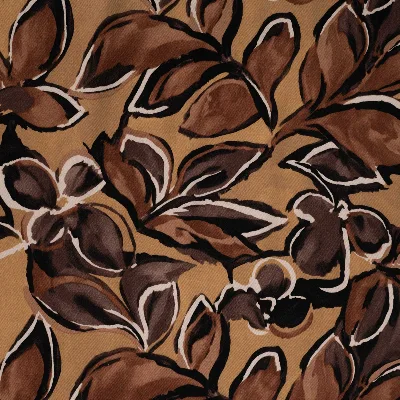
Viscose, leaves, taupe
€7.45per 0.5 m
Unit price €14.90 / m
Woven viscose, black
€6.45per 0.5 m
Unit price €12.90 / m
Woven viscose, navy
€6.45per 0.5 m
Unit price €12.90 / m
Woven viscose, white
€6.45per 0.5 m
Unit price €12.90 / m
Woven viscose, grey
€6.45per 0.5 m
Unit price €12.90 / m