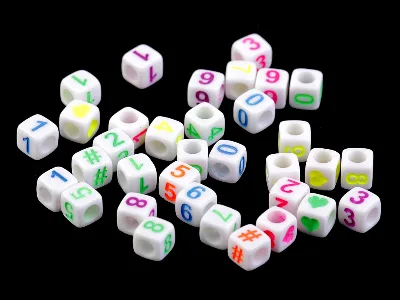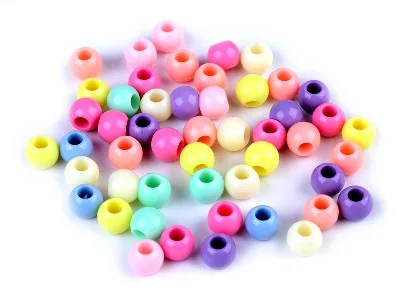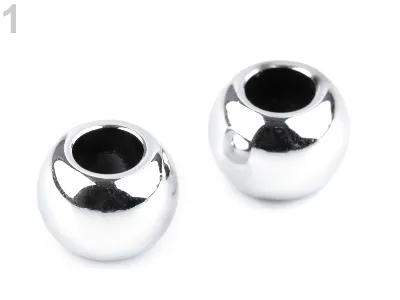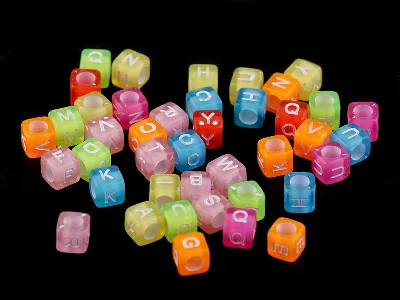
Kunststoffperlen Buchstaben/Zahlen Bunt
€0.20per piece
Free shipping within Germany from €50 · Pay securely with PayPal and Klarna

Beads add highlights where fabric alone stays too quiet. Sewn on they decorate embroidery, dresses and bags; threaded they become necklaces, bracelets and pendants for anyone who likes small, patient work.
€0.20per piece
€0.20per piece
€0.05per piece
€0.80per piece
€0.80per piece
€0.80per piece
Hole size decides the needle. Small seed beads need a particularly fine beading needle that only thin thread passes through; larger beads can be handled with an ordinary hand needle.
Use a strong thread for sewing them on, ideally doubled. Beads abrade the thread, and a broken row is rarely repaired invisibly.
On clothing, think about the reverse. The thread paths lie exposed there; a lining or a fused facing protects them and stops threads catching.
For children's crafts, larger beads with wide holes are more practical. They are easier to thread and get lost less often.
A beading needle: very fine, very long and with a narrow eye. Ordinary hand needles often will not pass through a seed bead, even when the thread would.
A strong one, ideally doubled. Beads abrade the thread; if a row breaks, the neighbours often come loose too and the spot is hard to repair.
With a lining or a fused facing. It covers the thread paths so nothing catches and the embroidery stays comfortable to wear.