Choosing the best sewing tools for beginners
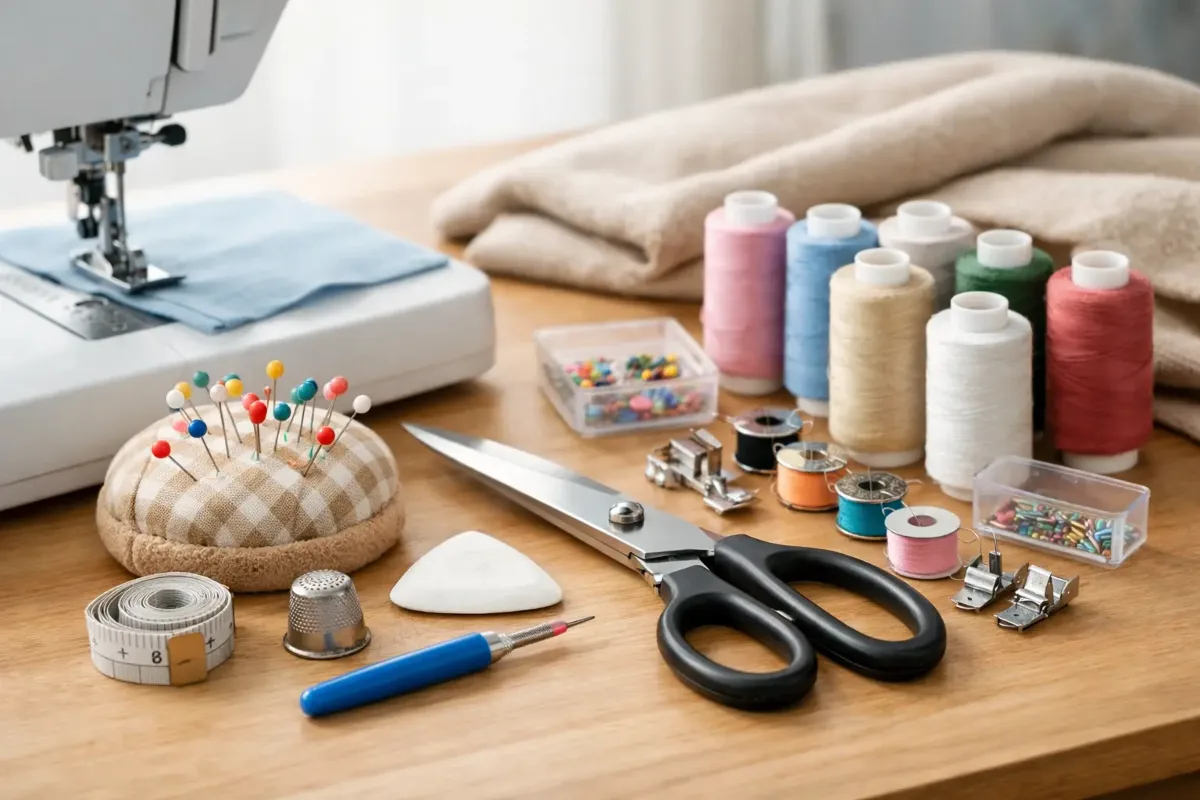
Freshly cut fabric, a lovely sewing pattern and your first seam in sight – that's exactly when you often find you're missing a small tool that would make the job much easier. The best sewing tools for beginners aren't necessarily the biggest or most expensive purchases. They're the things that help you prepare fabric precisely, guide seams neatly and sort out little mishaps without frustration.
Especially at the start, your sewing kit can grow along with your projects. If you buy every specialist tool straight away, you'll often spend money unnecessarily. With a well-chosen basic kit, on the other hand, simple garments, cushion covers, bags or children's projects turn out reliably – and you'll quickly discover which accessories suit your favourite projects.
The best sewing tools for beginners: the basic kit
Fabric scissors and small thread snips
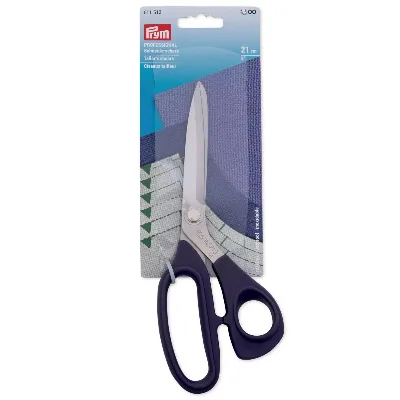
A good pair of fabric scissors is one of the few tools where quality makes itself felt immediately. They cut fabric edges cleanly without jersey, woven fabric or lining slipping between the blades. Important: these scissors are reserved for fabric only. Paper, ribbon or packaging will quickly blunt the blades.
A small pair of thread snips is a handy addition. Keep them right next to your sewing machine and use them to trim thread ends close to the seam. It looks tidier and stops loose threads from getting tangled as you carry on working. You don't need large professional scissors to get started, but they should feel comfortable in your hand and cut cleanly.
Tape measure, sewing gauge and ruler
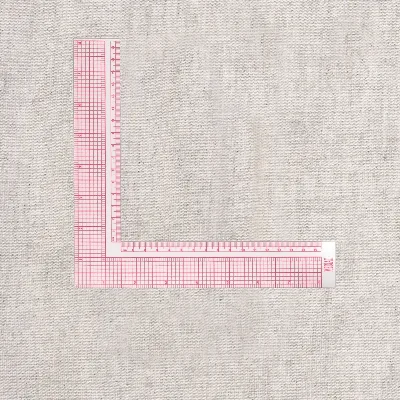
Sewing is also about measuring. You'll need a flexible tape measure for body measurements, curves and longer distances. A sewing gauge, usually around 15 to 20 centimetres long, saves time on lots of small steps: checking seam allowances, pressing up hems, marking button spacing or measuring ribbing.
For straight cuts, such as for bags, cushions or patchwork, a sturdy ruler is helpful. It's not about having as many scales as possible. What matters is that the centimetres are easy to read and the ruler doesn't slip while you're marking. If you're starting out by sewing garments from a pattern, a tape measure and sewing gauge will usually get you a long way.
Pins, fabric clips and a pincushion
Before a seam goes under the machine, the layers of fabric need to stay in place. Classic pins are versatile and inexpensive for this. They hold pattern pieces together securely, especially on woven fabrics, cotton or lightweight viscose. Choose fine, smooth pins with a clearly visible head. Blunt or bent pins should be thrown out, as they can pull threads in the fabric.
Fabric clips are an excellent addition, particularly for thicker layers such as canvas, softshell, faux leather or multiple layers of fabric in bags. They're also useful for coated fabrics, as they don't leave pin holes. On fine jersey or tight curves, pins often work better. So it isn't a question of either/or: a small selection of both is especially practical for beginners.
A pincushion or magnetic dish keeps your sewing table tidy. That way, no pins are left lying loose among fabric scraps, and you'll find them again even when things get a bit hectic during cutting.
Seam ripper: small but essential
Almost every sewist unpicks seams. Sewing on the wrong side of the fabric, a shifted edge or a thread jam in the machine happen even with experience. A seam ripper opens stitches precisely without unnecessarily damaging the fabric. Especially for your first garments or when sewing zips, it's one of the best little helpers of all.
Look for a sharp point and a comfortable shape. Use the small metal hook to cut individual stitches on the back, then pull out the top thread – it saves a lot of time. Don't pull too hard, though: jersey and loosely woven fabrics in particular can otherwise be damaged.
Tools for neat edges and accurate markings
Tailor's chalk or marking pen
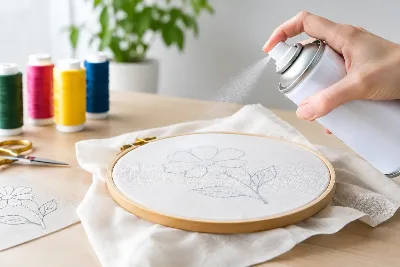
Sewing patterns include notches, darts, button positions and fold lines. To make sure these markings end up exactly where they belong, you need a marking tool that's clearly visible and removable. Tailor's chalk works brilliantly on many woven fabrics and darker fabrics. A washable or erasable marking pen is pleasantly precise on light fabrics, jersey and detailed markings.
Always test pens on a fabric scrap first. Some markings disappear with water, others with friction or on their own after a while. With delicate fabrics such as silk or coated fabric by the metre, a careful test is especially important. Also, only mark on the wrong side of the fabric unless the pattern says otherwise.
Iron and ironing surface
Many seams look more professional not because of a better sewing machine, but because they were pressed along the way. Pressing seam allowances open, pre-folding hems or fusing interfacing: the iron shapes the fabric and makes the next steps more accurate.
A standard steam iron is usually enough. It's worth having a small ironing mat right at your workspace so you don't have to walk to another room for every seam. With jersey, softshell or delicate fabrics, a thin cotton pressing cloth protects against shiny marks and too much heat. The right temperature always depends on the fibre – cotton can take more than polyester or coated fabrics.
Rotary cutter and cutting mat – when they're worth it
A rotary cutter with a cutting mat isn't a must-buy for your very first project. For long straight edges, patchwork pieces, ribbing strips or several pieces of the same size, however, it's wonderfully convenient. The fabric stays flat, and you can work very accurately with a ruler.
For curved pattern pieces such as sleeves, necklines or small appliqués, fabric scissors are often easier. If you frequently sew bags, quilts, home décor or children's clothing, you'll come to value a rotary cutter sooner than someone who only sews the occasional garment. A large enough self-healing mat is essential. Without one, the blade will damage your table and go blunt more quickly.
Don't underestimate machine needles and thread
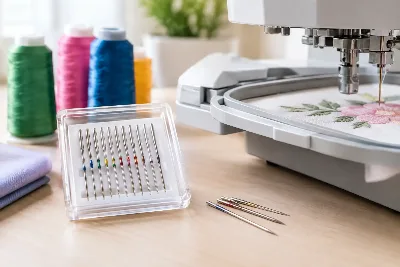
Not every sewing problem is down to the machine. Skipped stitches, thread loops or small holes are often caused by an unsuitable or old sewing machine needle. For cotton woven fabrics, a universal needle is usually the right choice. For stretchy fabrics such as jersey and ribbing, on the other hand, you'll need a jersey or stretch needle. It pushes the knit loops aside rather than piercing them.
Change your needle after a larger project at the latest, or whenever it thuds against the fabric, makes a clicking sound or skips stitches. A small set of needles in different sizes means you won't have to interrupt a project. As a rule of thumb: the finer the fabric, the finer the needle should be.
When it comes to thread, a branded all-purpose sewing thread in matching colours is worth it. Very cheap, fluffy thread can clog up the machine more or run unevenly. To begin with, you don't need a wall full of shades. Black, white, beige, grey and one or two colours to match your current project are often enough. For patterned fabrics, a thread that picks up a subtle colour from the print is usually the best choice.
What you don't need to buy straight away
Specialist presser feet, large cutting machines, eyelet presses, overlockers and extensive sets look tempting. But they only become a good investment once your everyday sewing really calls for them. A standard domestic sewing machine, a straight stitch, a zigzag stitch and the most important basic tools are enough for a surprising number of projects.
With zips, buttons, interfacing or elastic, too, it pays to buy for each project. Look at the sewing pattern and fabric type first: a hoodie made from French terry needs different supplies from a lined canvas wash bag. Small quantities are especially handy if you'd like to try out colours or make a single project.
A kit that grows with you
When you plan your first projects, don't put your supplies together by category, but according to what you actually want to sew. For a simple cushion, scissors, a tape measure, pins, thread and an iron are almost everything you need. For a jersey top, add a stretch needle and a suitable marking tool. For a bag, fabric clips, a stronger thread and possibly a zip foot are useful.
At Die Stoffkönigin you'll find fabrics, haberdashery and sewing patterns for exactly this step-by-step approach. If you're unsure about materials, needle sizes or colour choices, personal advice often helps more than an overflowing basket. Take a little extra time for measuring, pinning and pressing on your first project – then every little sewing tool will give you a bit more confidence at the machine.
Matching categories
Matching products
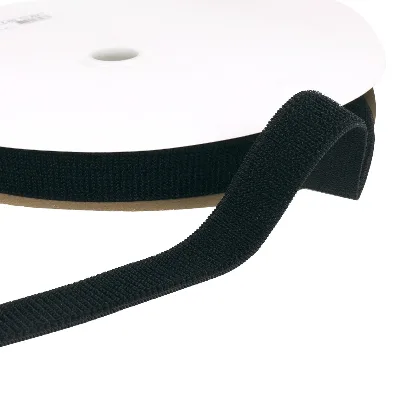
Elastic Hook and Loop Tape 25 mm in Black
€1.75per 0.5 m
Unit price €3.50 / m
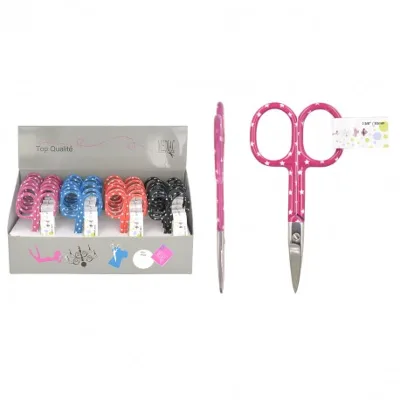
Embroidery Scissors with Stars, Assorted
€5.90per piece
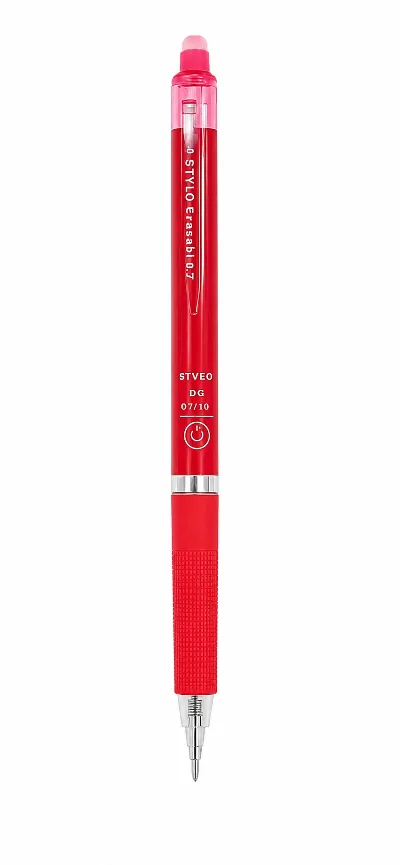
Marking Pen
€4.50per piece
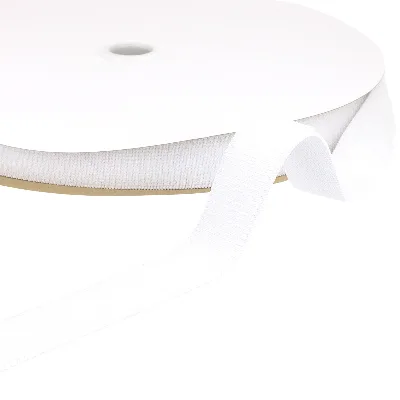
Elastic Hook and Loop Tape 25 mm in White
€1.75per 0.5 m
Unit price €3.50 / m
Prym Professional pair of scissors 21 cm in Violet
€29.00per piece
Set Square Ruler 16 cm
€9.90per piece