Which Marking Pen Works on Fabric? Types, Uses and Tips
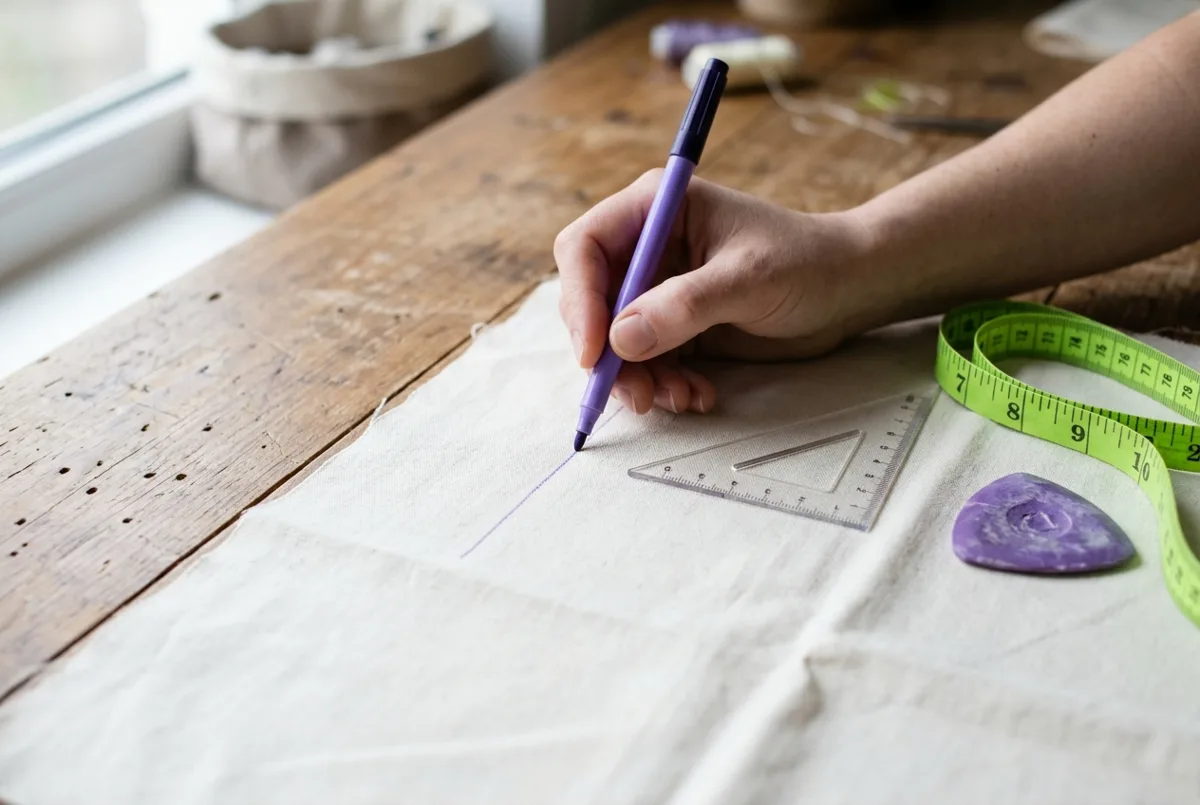
Image created with AI
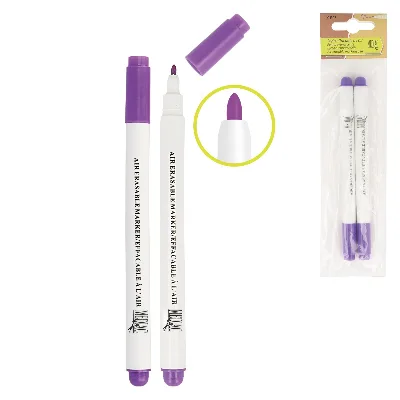
For most sewing projects, an air-erasable marking pen is the most convenient choice, such as our self-erasing fabric pen. The line fades on its own after a while, so there's nothing to wash out. That makes it perfect for markings you'll be sewing soon: darts, buttonholes, pocket placements or fold lines.
If you need the marking to last several days, you're better off with a water-soluble pen. On dark fabrics, tailor's chalk or a light-coloured chalk pencil is often the better option.
Types of marking pen at a glance
Air-erasable (self-erasing)
These pens react with air and moisture and, depending on the fabric and the room conditions, often disappear within a few hours to a few days. A purple line shows up well on light to mid-tone fabrics. The big advantage: you can carry straight on after sewing without getting the piece wet. The drawback is obvious. If you leave a project over the weekend, the line may be gone by Monday. So only ever mark up as much as you'll get through in your next sewing session.
Water-soluble
Water-soluble pens stay put until you remove the line with a damp cloth, a little water or in the wash. They're ideal for larger projects that take several days, such as quilting designs on a quilt or embroidery templates. With delicate fabrics prone to water marks, like some viscose or silk qualities, pay particular attention to whether any water rings remain when you do your test piece.
Heat-erasable – use with care
Some pens disappear with the heat of the iron. That sounds handy, but there's a catch: the ink has only been made invisible chemically and can reappear in the cold. On dark fabrics, a pale shadow is sometimes left behind too. It's best to use these pens only on the wrong side of the fabric or within the seam allowance.
Tailor's chalk and chalk pencils
Chalk is the classic choice for dark, coarse or fluffy fabrics such as wool, fleece or corduroy. It brushes out and leaves no dye in the fabric. On the other hand, the line is wider and less precise, and it rubs off quickly on smooth fabrics.
Quick guide: which marking tool for which job?
| Marking tool | How the line disappears | Good for | Not ideal for |
|---|---|---|---|
| Air-erasable pen | on its own, in the air | light to mid-tone fabrics, short projects, darts, buttonholes | projects spanning several days, very dark fabrics |
| Water-soluble pen | with water or in the wash | quilting designs, embroidery templates, longer projects | fabrics prone to water marks |
| Heat-erasable pen | by ironing | markings on the wrong side or in the seam allowance | visible areas on dark fabrics |
| Tailor's chalk / chalk pencil | brushing out or washing | dark, thick or fluffy fabrics such as wool, fleece, corduroy | fine details, smooth fabrics |
Fine line or broad stroke?
For precise work such as buttonhole markings, dart points or collar corners, you need a fine tip. This is where pens really outshine chalk. On woven fabrics like cotton, poplin or linen, a felt tip draws a clean, even line.
On jersey and other stretch fabrics, the rule is: don't press and don't pull. If you press the pen down firmly, you stretch the fabric and the line ends up distorted. Work with a light touch instead, lay the fabric flat on the table and draw short lines in a single stroke. On heavily textured fabrics such as towelling or plush, however, a fine pen tip barely shows. There, chalk, pins or tacking stitches are often the better choice.
How to mark neatly: tools and method
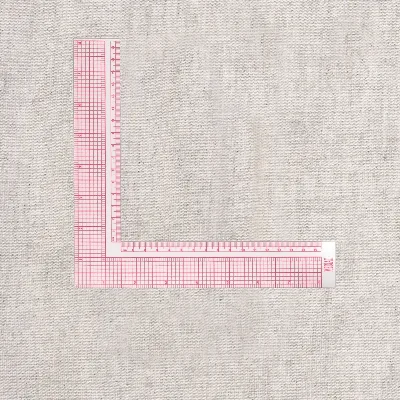
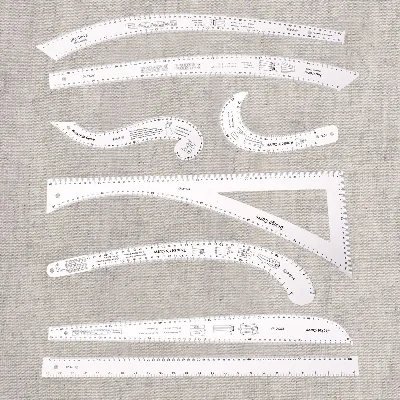
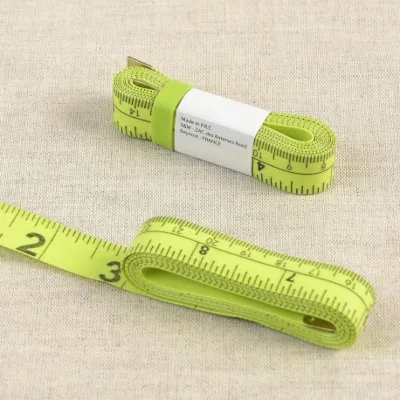
A good pen is only half the battle. For straight lines and exact spacing you need a ruler. Our set square is 16 cm long and made from 100% polyethylene terephthalate. Use it to mark right angles at corners, pockets and hems and to transfer short measurements accurately. With the eight-piece tailor's ruler set, you've got several rulers for different tasks to hand. For longer distances and body measurements, use a tape measure that's 150 cm long with both cm and inch markings. Its neon colour means you'll spot it quickly even on a cluttered sewing table. You'll find more handy tools in our Measuring, Marking and Tracing category.
Here's the best way to go about it:
- Prewash the fabric if it will need washing for the project anyway. Finishes can affect how the pen reacts.
- Test the pen on a scrap: draw, wait, iron and, depending on the type of pen, wash out. Every fabric behaves differently: what vanishes without a trace on cotton may leave a shadow on another material.
- Lay the fabric out smooth and free of creases.
- As a rule, mark on the wrong side of the fabric. The exceptions are quilting designs or decorative stitching that you sew from the right side.
- Sew promptly, especially when using an air-erasable pen.
If you have your sewing pattern as a PDF and would rather transfer it from a single sheet of paper than from lots of taped-together pages, our pattern printing service can help. To learn how to think a project through from choosing the fabric to cutting out, take a look at our guide Planning a sewing project with fabric.
Common mistakes
- Ironing over the marking: Heat can set the ink of air-erasable and water-soluble pens in the fabric. So remove the line before you iron.
- Marking too much at once: With an air-erasable pen, the line will have vanished before you get to that spot.
- Marking on the right side when there's no need: Whatever you mark on the wrong side stays invisible on the finished piece, even if a trace of the line remains.
- Pressing down on stretch fabrics: The fabric distorts and the line is no longer accurate once it relaxes.
- Using a biro or felt-tip from the drawer: These inks are made for paper and often won't come out of fabric.
- Leaving the pen uncapped: The fine tip dries out and then draws unevenly.
Try it out and get advice
Not sure which marking tool suits your fabric? At our shop in Neumarkt-Woffenbach you can see fabrics and notions in person. And if you'd rather have someone by your side while marking up and sewing, the Königliches Nähstübchen is the place for you. There you can rent a sewing space and get help whenever you get stuck.
Frequently asked questions
How long does it take for an air-erasable marking pen to disappear?
That depends on the fabric, the humidity and how thick the line is. Often the line is gone within a few hours to a few days. On thick or densely woven fabrics it can take longer. If you want to get rid of it faster, a damp cloth works for most pens.
Which marking pen gives the finest line?
For fine lines, pens with a thin felt tip are ideal, such as air-erasable or water-soluble marking pens. They're far more precise than chalk, making them perfect for buttonholes, dart points and corners.
Is a Prym marking pen better than others?
What matters is less the brand than the type of pen: air-erasable disappears on its own, water-soluble with water, heat-erasable with ironing. Choose the type to suit your project.
Which marking pen works on dark fabrics?
Purple and blue pen lines are barely visible on dark fabrics. Light-coloured chalk pencils or tailor's chalk are the better choice here. They can be brushed out after sewing.
Will a marking pen definitely come out in the wash?
Water-soluble pens usually wash out. However, if you've ironed over the line beforehand, the heat may have set the ink.
Matching categories
Matching products
Set Square Ruler 16 cm
€9.90per piece
Pattern Making Ruler Set, 8 pieces
€84.90per piece
Fading Fabric Marker in Purple
€4.50per piece
Tape Measure 150 cm neon green
€1.90per piece
Unit price €1.27 / m