Cotton or jersey – which is the better choice?
If you've ever stood in front of the fabric shelves torn between woven fabrics and stretchy ones, you've probably ended up asking exactly this question: cotton or jersey? The answer depends less on taste than on the project. A child's dress, a patchwork quilt, a T-shirt or a set of cushion covers all have very different requirements – and that's exactly why it pays to take a closer look.
Cotton or jersey – the key difference
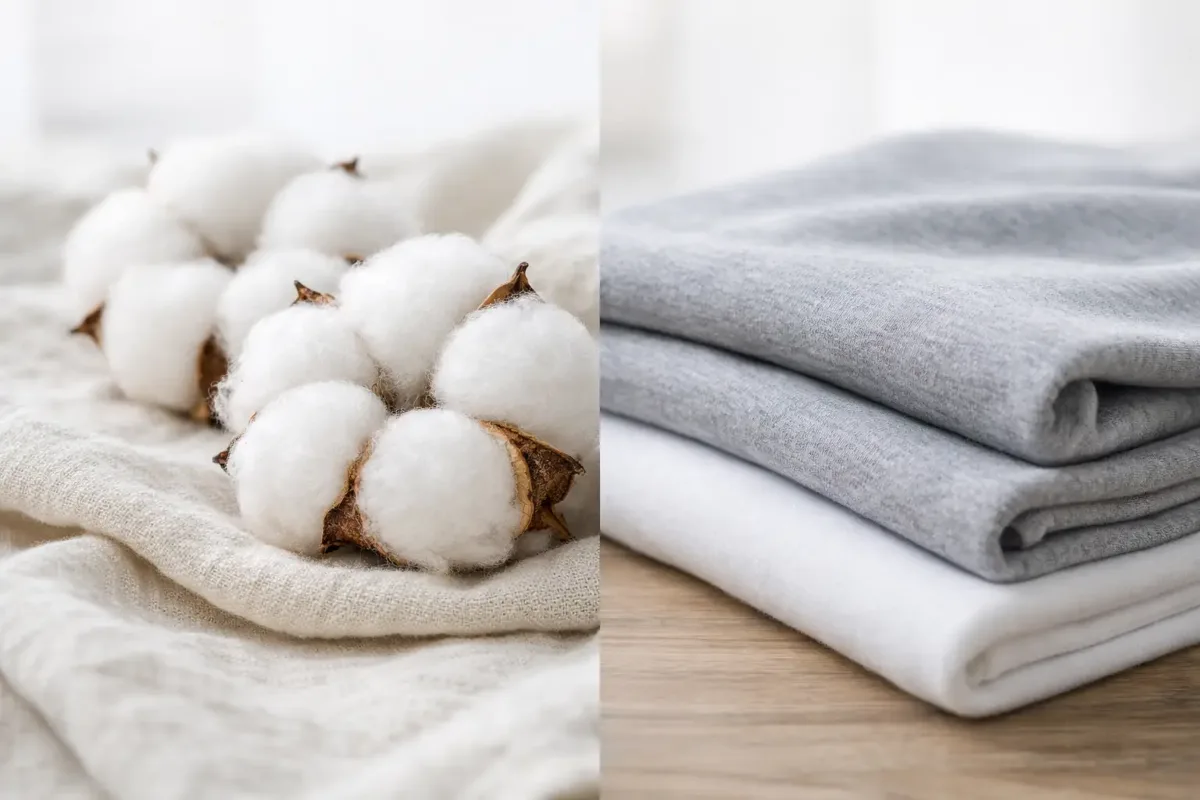
The biggest difference lies in how the fabric is made. Cotton first and foremost describes the fibre. Jersey, on the other hand, describes the way the fabric is knitted. So while comparing the two directly is perfectly normal in everyday use, technically it's a bit of a shortcut. What people usually mean is woven cotton on one side and jersey on the other.
Woven cotton fabrics hold their shape, have little to no stretch and are therefore very easy to control when cutting and sewing. Jersey is knitted, which makes it elastic, soft and often more fluid in its drape. That quality makes it especially comfortable for clothing, but it can also make sewing a little more demanding.
So if you're weighing up whether cotton or jersey is the better choice, don't just look at the print – think about how it feels to wear, how much freedom of movement you need and how much structure your project requires.
When cotton is the better choice
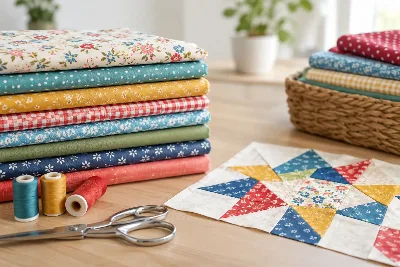
Woven cotton is a true all-rounder for any project where body, shape and crisp edges matter. That includes patchwork, bags, fabric baskets, table linen, cushion covers and light home décor. Many beginners also get on really well with woven cotton, because it shifts less while you sew and is easier to pin, press and stitch accurately.
For children's rooms, kitchen projects or simple accessories, cotton is therefore often the most relaxed way to start. The fabric barely gives, which makes cutting predictable. If you're sewing a pattern designed for woven fabric, you should stick with woven fabric – otherwise the fit can change quickly.
Cotton can also be ideal for blouses, shirts, summer skirts or lined dresses – especially when you want a defined fit. Poplin, batiste and canvas all behave very differently, of course. Not all cotton is the same: a fine poplin feels light and smooth, whereas canvas is considerably sturdier and holds its shape much more firmly.
When jersey is the better fit
Jersey comes into its own wherever movement and comfort are key. T-shirts, leggings, harem trousers, baby bodysuits, pyjamas and comfy dresses are classic jersey projects. It's particularly popular for children's clothing because it's soft, moves with the body and feels lovely against the skin.
The same goes for adult clothing. A jersey top usually fits more easily than one made from woven fabric, because the fabric compensates better for small differences in fit. So if you love sewing comfy basics, you'll often reach for jersey without even thinking about it.
The catch: jersey needs a little more attention under the sewing machine. It can stretch out of shape as you sew, go wavy or curl at the edges. With the right needle, a suitable stitch and a bit of patience, that's easy enough to deal with – but jersey isn't quite as forgiving as woven cotton.
Cotton or jersey for clothing
With clothing in particular, the cotton-or-jersey question really matters, because it's not just about looks. A pattern only works if the fabric suits the way it's constructed. A T-shirt pattern designed for jersey usually won't work in woven fabric, because it lacks the necessary stretch. Conversely, a pattern designed for cotton can end up too loose, too floppy or simply shapeless in jersey.
If you'd like to sew a summer dress, think about the style you're after. If the dress should swing freely but still hold its shape, cotton poplin can work beautifully. If it should drape softly and be comfortable, jersey is often the better match. For baby and children's clothing, jersey often wins on comfort. For dresses with a button placket, a blouse collar or precise pleats, cotton is often the better partner.
Pyjamas are a good practical example. A top and bottoms made from jersey feel wonderfully soft and move with you. For a sleeping bag or simple bedding, on the other hand, woven cotton often makes more sense, because it's more stable and lovely to work with.
How the two fabrics behave when sewing
If you haven't been sewing for long, you'll notice the difference as soon as you cut your first pieces. Cotton stays put; jersey moves. That's neither good nor bad – it just means your preparation looks a little different.
Cotton presses neatly, cuts accurately and is easy to mark. It's predictable, which is especially handy for straight seams, corners and zips. That's why woven fabric is the safe choice for lots of beginner projects.
Jersey, by contrast, needs a stretch or jersey needle and a stretch stitch or an overlocker. When cutting, the fabric should lie relaxed, without any tension. While sewing, it also helps not to pull on the fabric – otherwise the seam will stretch out of shape. If you're sewing jersey for the first time, it's worth doing a test piece. It'll save your nerves later on.
Care, durability and everyday wear
Both types of fabric are popular for everyday use, but each has slightly different strengths. Woven cotton is often very easy-care and hard-wearing, making it a reliable choice for home textiles and bags in particular. However, it can crease and, depending on the quality, has less give when worn.
Jersey scores on the comfort factor. It's soft, clings gently and is usually less stiff. At the same time, it can be more sensitive to incorrect washing or heavy pulling. Some jerseys lose their shape faster than good-quality woven fabric, while others keep their shape for a long time – this is where quality makes a real difference.
With both fabrics, prewashing is important. Cotton can shrink, and so can jersey. If you wash before you sew, you won't get a nasty surprise after the first wash. For clothing especially, it's practically a must.
Which fabric suits which project?
If you're still unsure, it often helps to look at the specific project. For bags, cushions, table runners, aprons, patchwork or fabric baskets, cotton is usually the obvious choice. For T-shirts, beanies, children's trousers, dresses in comfy styles or nightwear, jersey is usually the better option.
There are also mixed cases, though. A changing bag can have a canvas outer and a cotton lining. A dress can have a jersey bodice and a cotton skirt. It's exactly these combinations that make sewing so exciting, because fabrics don't have to work against each other – they can complement each other.
You can see this clearly in the Die Stoffkönigin range: not every fabric is meant for everything, but there's a suitable quality for almost every project. If you choose by intended use rather than just by print, you'll get a great result much more quickly.
Cotton or jersey for beginners?
If you're just starting out, woven cotton is often the easier way in. You'll see neat results sooner and learn the basic techniques without the added factor of stretch. That makes a big difference, especially for your first bags, cushions or simple skirts.
That said, jersey isn't just for experienced sewists. A simple T-shirt, a beanie or a pair of harem trousers can make a great first project too. What matters is keeping the project manageable and using the right tools. Starting with a very thin, slippery jersey makes life unnecessarily hard – a slightly firmer jersey is often much easier to sew.
Making the right decision
The cotton-or-jersey question is best answered with another question: what do you want to make – and how should it feel? If you need stability, a defined shape and fuss-free sewing, cotton is often the right choice. If you want stretch, softness and great comfort, jersey is usually the way to go.
There's no universal winner. The better fabric is always the one that suits your project, your sewing pattern and the way you like to sew. Sometimes the intended use makes the decision crystal clear. Sometimes simply touching the bolt of fabric helps: does it feel like the thing you want to make?
That's often where the best fabric choice begins – not with a rigid rule, but with a clear picture of the finished piece. Once you have that picture in mind, the question of cotton or jersey quickly becomes a very practical decision.
Matching categories
Matching products
Canvas Doha Mandalas Pink/Purple by Swafing
€7.45per 0.5 m
Unit price €14.90 / m
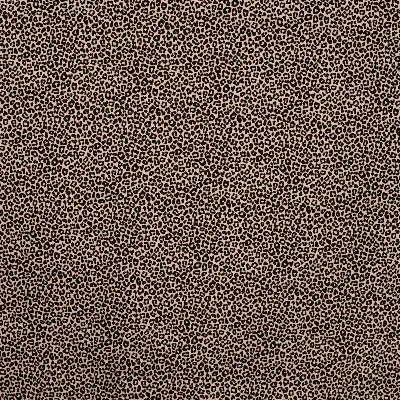
Cotton jersey, leopard print, sand
€7.95per 0.5 m
Unit price €15.90 / m
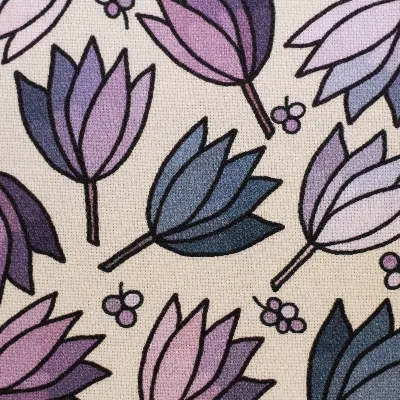
Canvas Floral Tales by Emjo Design Tulips on Cream by Swafing
€7.95per 0.5 m
Unit price €15.90 / m
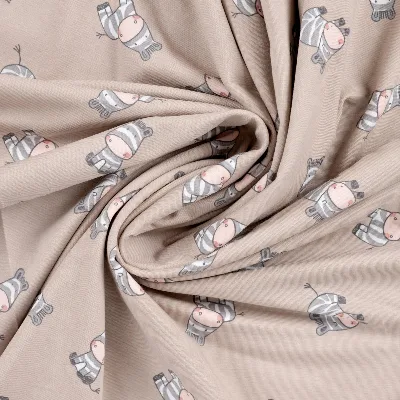
Cotton jersey, zebras, sand
€7.95per 0.5 m
Unit price €15.90 / m
Canvas Doha Leopard in Apricot/Brown by Swafing
€7.45per 0.5 m
Unit price €14.90 / m
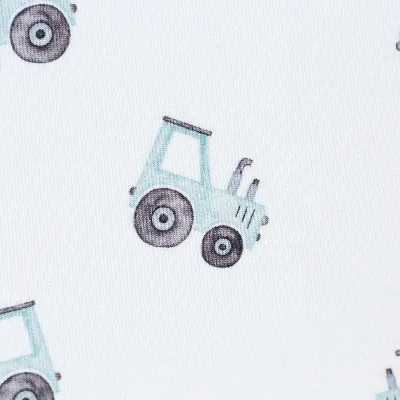
Cotton Jersey Nara Tractors on White by Swafing
€8.45per 0.5 m
Unit price €16.90 / m